Case Studies: Successful Dynamic Pricing Strategies That Improve Revenue
When researching successful dynamic pricing strategies, most case studies fall into one of two camps. One reads like a vendor brochure: uplift numbers from unnamed
Have a Revenue Growth Analytics pain point, a question, or a content suggestion?
Discover how Revology Analytics propels mid-market businesses to sustainable, profitable growth by building advanced, in-house Revenue Growth Analytics & Management (RGM) capabilities—fast.
Our senior expert-led, hands-on approach ensures you own the tools, insights, strategy and processes needed to thrive long-term.
We would love to hear from you.
Let’s chat!
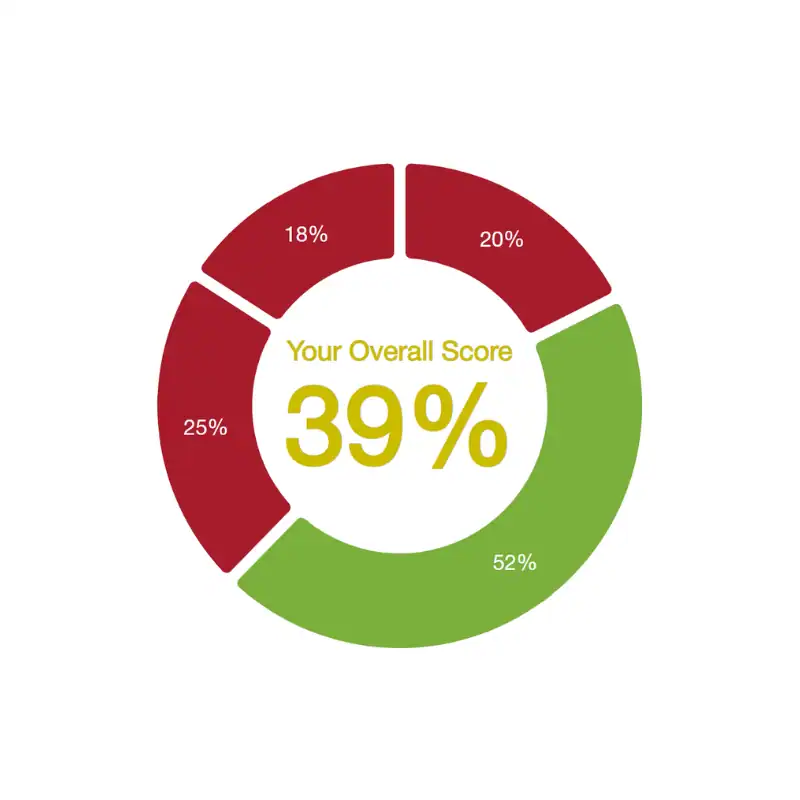
Gain exclusive access to the latest insights from over 150 commercial leaders on the state of Revenue Growth Analytics in 2025, based on our expanded Revenue Growth Analytics Maturity Scorecard™.
Access our comprehensive advisory services, where Pricing and Revenue Growth Management transformations are at the core.
We also specialize in Sales & Marketing AI Enablement and Commercial Analytics transformations. In 90–120 days, our senior practitioners embed advanced solutions, equipping organizations with enduring, in-house growth engines that drive measurable results.
We would love to hear from you.
Let’s chat!
Discover how Revology Analytics propels mid-market businesses to sustainable, profitable growth by building advanced, in-house Revenue Growth Analytics & Management (RGM) capabilities—fast.
Our senior expert-led, hands-on approach ensures you own the tools, insights, strategy and processes needed to thrive long-term.
We would love to hear from you.
Let’s chat!
Explore Revology Analytics’ curated thought leadership on various Revenue Growth Analytics and Management topics.
Our case studies, white papers, webinars, and toolkits illuminate best practices and emerging trends. Gain actionable insights to refine your holistic Revenue Growth Management strategies and capabilities, fueling sustainable, profit-focused decisions across your organization.
We would love to hear from you.
Let’s chat!
Discover how Revology Analytics propels mid-market businesses to sustainable, profitable growth by building advanced, in-house Revenue Growth Analytics & Management (RGM) capabilities—fast.
Our senior expert-led, hands-on approach ensures you own the tools, insights, strategy and processes needed to thrive long-term.
We would love to hear from you.
Let’s chat!
Gain exclusive access to the latest insights from over 150 commercial leaders on the state of Revenue Growth Analytics in 2025, based on our expanded Revenue Growth Analytics Maturity Scorecard™.
Access our comprehensive advisory services, where Pricing and Revenue Growth Management transformations are at the core.
We also specialize in Sales & Marketing AI Enablement and Commercial Analytics transformations. In 90–120 days, our senior practitioners embed advanced solutions, equipping organizations with enduring, in-house growth engines that drive measurable results.
We would love to hear from you.
Let’s chat!
Discover how Revology Analytics propels mid-market businesses to sustainable, profitable growth by building advanced, in-house Revenue Growth Analytics & Management (RGM) capabilities—fast.
Our senior expert-led, hands-on approach ensures you own the tools, insights, strategy and processes needed to thrive long-term.
We would love to hear from you.
Let’s chat!
Explore Revology Analytics’ curated thought leadership on various Revenue Growth Analytics and Management topics.
Our case studies, white papers, webinars, and toolkits illuminate best practices and emerging trends. Gain actionable insights to refine your holistic Revenue Growth Management strategies and capabilities, fueling sustainable, profit-focused decisions across your organization.
We would love to hear from you.
Let’s chat!
Pricing Due Diligence for Investors is a specialized service aimed at private equity firms, venture investors, or acquiring companies looking to assess a target company’s pricing strategy and revenue potential before making an investment or acquisition. Much like financial or operational due diligence, this involves a rapid but thorough evaluation of how well the target company is managing pricing and where opportunities exist to create value through pricing improvements. We analyze historical pricing data, discounting practices, customer and product profitability, and the competitive pricing landscape to form an independent view of the target’s Revenue Growth Management maturity. The outcome is often a set of identified pricing opportunities (and sometimes risks) that could significantly impact the target’s future earnings. In essence, Pricing Due Diligence answers the investor’s question: “Is this company optimizing its pricing, and if not, how much upside (or downside) is there?
This diligence frequently reveals untapped pricing opportunities – for instance, the target might be underpriced in certain segments or not leveraging value-based pricing. By quantifying these, investors see a clear path to revenue and EBITDA uplift post-acquisition. It’s not uncommon to identify a few percentage points of margin expansion potential simply by bringing the target’s pricing in line with market value or tightening discount policies.
If a company has significant pricing upside, an investor can factor that into their valuation model (either justifying a higher purchase price or seeing how they will hit return targets). Conversely, if the target’s current profits rely on unsustainably high prices or heavy discounting to drive volume, due diligence flags this risk, preventing over-valuation. In short, pricing due diligence provides a more accurate picture of the target’s true earning power.
Investors gain a ready-made roadmap of pricing initiatives to implement on Day 1. Rather than waiting months to discover where to improve, they can hit the ground running with pricing improvements (price harmonization, updated price lists, new surcharge programs, etc.) that drive early wins in the investment period. This accelerates value creation within the typical private equity hold period.
The analysis can also highlight red flags – for example, if an unusually large portion of revenue comes from a few customers who enjoy heavy discounts or if there’s impending price pressure due to new competitors or regulation. Knowing these risks upfront means the investor can devise mitigation strategies or even reconsider the deal if the risk is too high. Essentially, it prevents unpleasant surprises by making pricing transparency part of the deal diligence.
We build elasticity models in a collaborative and transparent manner so that your organization truly owns the insights:
We request and parse critical pricing-related data from the target (often under NDA via the data room). This typically includes SKU-level sales data (prices, volumes), customer-level sales and margins, current price lists or policies, and any deal desk/discount approval records. We also gather market data available – industry pricing benchmarks, competitive price points – to understand the external context. Our team quickly cleans and analyzes this data to identify patterns (for example, how much pricing variance exists for the same product, or trend of price realization over the past years).
We evaluate the target’s pricing effectiveness and discipline. This means calculating metrics like average discount by customer segment, pocket margin by product (after all discounts/rebates), and identifying any margin leakage points. We often visualize the price waterfall from list price to net price to see where value is leaking (e.g., overly generous rebates, unmanaged freight charges, etc.). In parallel, we compare the target’s pricing structure to industry norms: Are they pricing in line with value? Are they using modern techniques like dynamic pricing or segmentation, or are they simplistic (one-size-fits-all pricing)? We also look at organizational aspects if info permits – e.g., does the company even have a pricing function or is it all sales-driven, which can indicate the level of sophistication.
Based on the assessment, we pinpoint concrete pricing opportunities. For example, we might find the target has not raised prices on a high-demand product in three years – a clear opportunity for an increase. Or perhaps certain customers consistently get an extra 5% discount with no volume justification – an opportunity to tighten policies. We quantify these where possible: “By reducing discount variance and bringing all customers to at least 15% gross margin, the company could gain $X million in profit.”. We consider quick wins (things that can be done in 3–6 months) versus longer-term strategic changes (like implementing a new pricing software or value-based pricing program).
Given the fast pace of deals, we typically present our findings in a workshop or report to the investor’s deal team. We highlight the top 2–3 pricing levers that would create the most value and discuss feasibility. For instance, if a price increase is recommended, we discuss how customers might react and any prerequisites (like improving value communication). We also frankly point out any concerns – e.g., “Customer concentration is high and these top customers have been given 30% discounts; any attempt to roll that back should be done carefully or could risk volume.” This candid insight helps the investor craft their negotiation strategy and post-acquisition plans.
While technically outside due diligence, our role often continues post-close, where we assist the portfolio company (now under the investor’s ownership) in executing the identified pricing improvements. Because we’ve already done the analysis, we can quickly move into implementation mode, developing the new price lists, policies, and tools needed. This ensures the thesis outlined in diligence is actually realized in practice, delivering the promised EBITDA improvements.
When researching successful dynamic pricing strategies, most case studies fall into one of two camps. One reads like a vendor brochure: uplift numbers from unnamed
This guide provides pricing, RGM, category, and commercial finance leaders with practical methods to measure and address substitution and complement effects across a product portfolio.
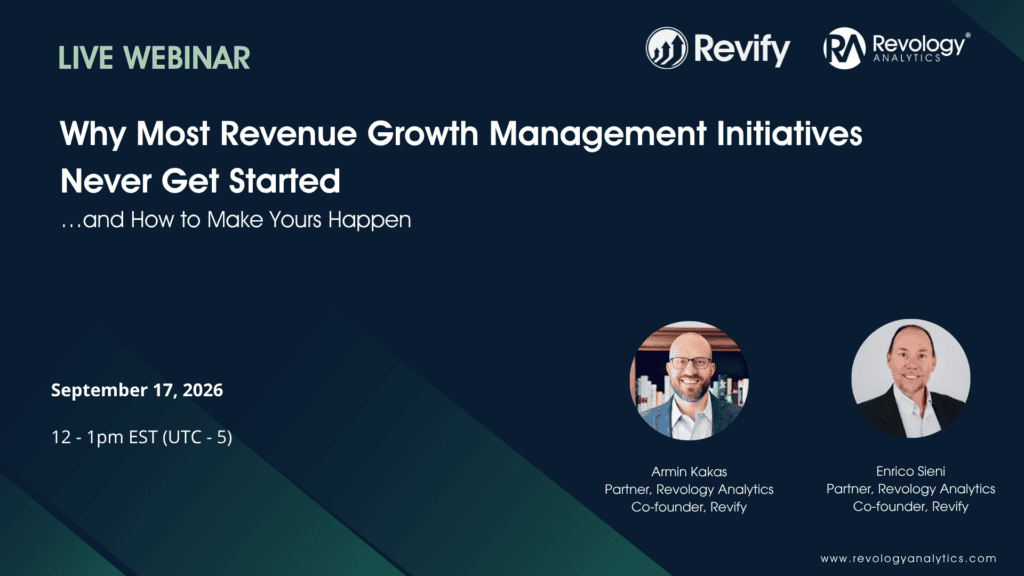
Most CPG RGM teams don’t have a data problem. They have a navigation problem. Join Armin Kakas and Enrico Sieni for a 60-minute educational webinar on the modern CPG Pricing & RGM Analytics Navigator. Six modules, five narrow AI agents, the 120-day pilot path. Every registrant gets the whitepaper the week after.
This guide provides CFOs, CCOs, pricing leaders, and RGM teams with a credible approach to demonstrating pricing impact, from baseline design through to booked P&L
A Fortune 500 global data-storage OEM was bleeding margin in its $200M U.S. B2C hard-drive business. One flagship family had taken a substantial net-pricing hit year-over-year, and roughly 45% of historical promos were returning only 0 to 20% ROI. Revology rebuilt the pricing and promotion analytics from the ground up using causal Double Machine Learning, a retailer-math ROI model, and a three-archetype segmentation framework. The target: $3M to $6M of incremental EBITDA (a 10x to 20x return on the engagement) within 12 months.
A Fortune 500 global pharmaceutical manufacturer was making emerging-market pricing decisions by feel. We built a repeatable Pricing Quick Wins engine across four pilot markets, grounded in causal elasticity modeling, automated competitive equivalence mapping, and price-pack architecture and inflation-aware simulators. The pilots identified around $8M of median revenue opportunity, with a best-case of ~$12M. Local teams now own the engine and can repeat the analysis annually as inflation and the competitive set shift.
Centered on proven best practices, Revology Analytics® provides Revenue Growth Analytics advisory services and thought leadership, driving profitable revenue growth for middle-market companies.
Over 225 companies took our scorecard to improve their Revenue Growth Analytics & Management capabilities.
Copyright@2026 Revology Analytics LLC