
How data brokers and identity graphs quietly set personalized prices: what the evidence proves, what it doesn’t, and how pricing leaders should govern the risk.
Most companies do not decide to run surveillance pricing. They accumulate it. A pricing test here, a third-party plug-in there, a fee rule nobody synchronized across channels, a habit of buying audience segments for marketing that quietly migrate into the pricing engine. Then, on a Monday, a revenue officer drops a screenshot in Slack: two shoppers, same SKU, same minute, different all-in price. Legal asks why. Nobody can answer in a sentence.
That gap between capability and explanation is what this guide closes. Surveillance pricing is the practice of setting or shaping an individual’s price using data the customer did not knowingly provide for that purpose: third-party identity graphs, inferred income, cross-device trails, behavioral telemetry, location history, or brokered financial signals. It replaces the market signals everyone can see with signals only the seller controls.
The stakes are concrete because pricing is the highest-leverage move on the P&L. A 1% improvement in price realization lifts operating profit by 6–7% for the median firm (Revology Analytics, “Pricing Still Packs a Punch,” June 2025). Get the governance wrong, and you put that lever and your brand in front of a regulator.
Here is surveillance pricing explained for a pricing leader, end-to-end: this article maps the data-broker stack behind the practice, the seven tactics that cross the line, the evidence regulators are acting on, and the governance response a serious pricing function can defend.
Table of Contents
Key Insight: Pricing is the fastest-acting profit lever you control. A 1% gain in price realization yields a 6–7% increase in operating profit for the median firm. Surveillance pricing risks that leverage trading durable trust for short-term capture, you cannot explain.

Figure 1: The four-stage pipeline: Watching, Recognizing, Deciding, Showing. Only the first stage is visible from a browser.
Surveillance pricing explained: what it is and how it differs from dynamic pricing
Start with the distinction that the public conversation usually blurs. Dynamic pricing reacts to the market everyone can see: inventory, demand, competitor moves, time of day, and store proximity. Every shopper in a segment sees the same price at the same moment. Surge pricing on a ride-hailing app is the textbook case, and a legitimate, defensible discipline we cover in the executive’s guide to surge pricing and dynamic pricing models.
Surveillance pricing reacts to you. It stitches in signals you cannot see and did not volunteer: a device fingerprint, a probabilistic identity profile bought from a broker, an inferred income band, a location trail. The fence is invisible. You never learn whether you are the shopper getting the discount or the one getting the upcharge.
Surveillance pricing explained vs. dynamic pricing
The cleanest test is a single question: can the company explain the signal to the customer in one plain sentence?
• Vanilla personalization runs on what you and the seller can both see: a loyalty tier you joined, a senior or student rate you qualify for, and your own purchase history. The customer can usually self-qualify, and the logic survives a plain-English defense.
• Surveillance pricing runs on what the seller bought about you from a third party. The customer cannot inspect the fence, and often the seller cannot fully explain the price either, because a model trained on outside data produced it.
This distinction is the spine of the regulatory debate, and it extends the foundation laid in our earlier analysis, Pricing Surveillance: a guide to detection and governance. The mechanics below show why the line is so easy to cross without a deliberate decision.
How surveillance pricing works: the data-broker stack
The data-broker stack is the named nemesis of this story. It is not any single vendor; it is the assembled supply chain that turns anonymous browsing into a priced profile. It rides the same plumbing as digital advertising, simply routed into a price decision instead of an ad. The pipeline has four stages.
1. Signal capture (Watching). The instant you load a page or open an app, embedded JavaScript and mobile SDKs log your device, browser, screen, IP, and rough location, plus behavior such as dwell time, scroll depth, whether you sorted by price, and prior cart abandonment. The FTC’s January 2025 staff perspective named mouse movements and unpurchased cart contents as examples of inputs that can feed these systems.
2. Identity resolution (Recognizing). A hashed email or device fingerprint is matched against an identity graph. LiveRamp and Acxiom are two major North American identity resolution and data broker companies. The runtime system usually does not see a human-readable name. It sees a pseudonymous match key, such as a RampID, connected to devices, households, and audience attributes. That profile is good enough to price you.
3. Enrichment. The first-party profile is supplemented with broker segments: inferred income and life stage, card-network spend signals, credit proxies, and even driving telemetry sold to insurers.
4. Runtime decision (Deciding) and display (Showing). A real-time engine ingests the enriched profile and outputs, in milliseconds, a base price, a conditional discount, a personalized ranking, or a fee. You see one number. The shopper beside you sees another.

Figure 2: Top data brokers and ID graph providers
Identity-graph forensics in plain language
You can watch the Recognizing stage happen with nothing more than a browser’s developer tools. A few players recur on travel and retail pages:
• Adobe Audience Manager often acts as the connective tissue. On a single page load it can route one device identifier to several configured partners through identity-sync endpoints. Those partner codes are evidence of configured data-sharing routes, not proof that the data changed a price.
• Sojern is a travel-industry broker that profiles how often you travel and how flexible you are, then syncs your identifier to multiple ad-buying platforms. Its pixel often carries the retailer’s contractual account code, direct evidence that the retailer hired the broker rather than picking up a stray script.
• Tapad (owned by Experian) runs the cross-device handshake that links phone, laptop, and tablet to one household, even with no shared login.
• Adara is a travel data co-op: members pool actual booking data and query it to see what a device has booked elsewhere.
The forensic detail that matters is the account or contract parameter inside a pixel call. It is contractual evidence: it shows the site deliberately integrated the vendor, not that a stray script wandered in. What it does not show, on its own, is that the relationship changed the price.
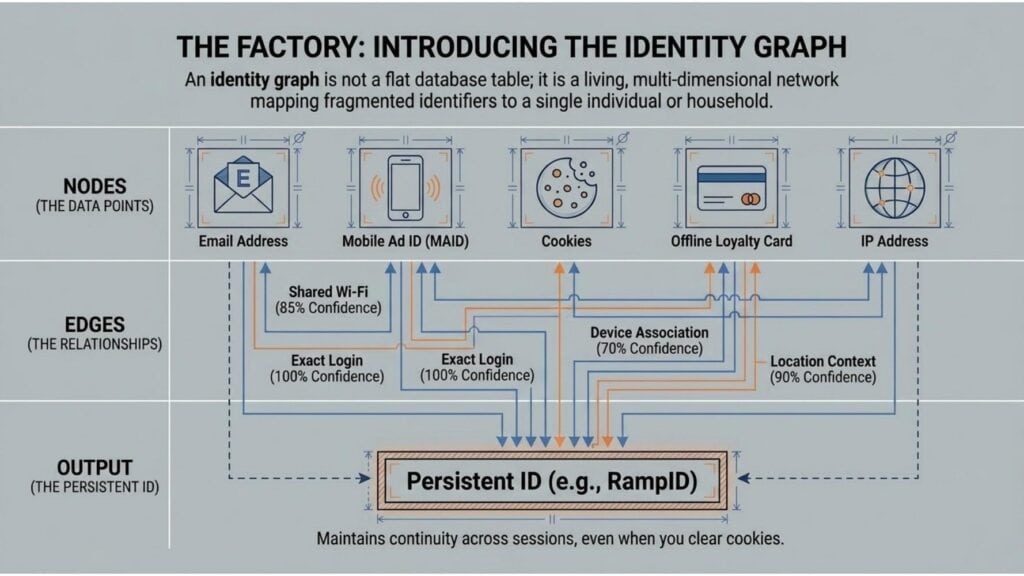
Figure 3: Identity Graphs at a high level: Nodes are the data points (email, mobile ad, cookies, loyalty card, IP); Edges are the verified or inferred links between them. The output is a persistent ID (RampID, AmpID, RampID-equivalent) that can identify you as the consumer even after clearing / blocking cookies.
Scale and simultaneity
The defining feature is speed. In a representative browser-level capture of a major travel site, with no login and no click, a single device was introduced to roughly seven data brokers through one ad platform in about a third of a second. A second broker broadcast that device to five named ad-targeting platforms, several syncs firing more than once. A third ran a two-way cross-device handshake. That is roughly twenty-five identity-exchange events in a twenty-three-second window, and the trackers re-fired minutes later. That collection layer is real, fast, broad, and contractual. It still proves inputs, not outputs. The price decision happens server-side.
The 7 surveillance pricing tactics to avoid
Here is the practical core for a pricing leader. These are the seven tactics that move a pricing program from defensible personalization into surveillance pricing. Treat each as a signal category that your governance should prohibit unless you can defend it in one sentence to a customer and a regulator.
1. Third-party identity-graph matching. Resolving a shopper to a LiveRamp, Acxiom, or similar profile to attach off-site behavior and inferred attributes that the seller never observed in its own transaction.
2. Cross-device stitching. Linking phone, laptop, and tablet to one household to follow willingness-to-pay across sessions. This is the mechanism behind “shop on the phone, see a different price on the laptop.”
3. Inferred-income and financial-vulnerability segments. Buying broker segments that estimate income, life stage, or financial stress and using them as willingness-to-pay proxies.
4. Geofenced and in-store-proximity pricing. Moving a price as a shopper crosses the parking lot or enters a store, using location as a captive-demand signal.
5. Behavioral telemetry as a willingness-to-pay signal. Treating dwell time, scroll depth, price-sort behavior, or prior cart abandonment as evidence of urgency, then pricing against it.
6. Card-network, credit, and telematics enrichment. Layering transaction-spend signals, inferred-creditworthiness segments, or driving telemetry into the price.
7. Unexplainable model output. Deploying an ML pricing model whose individual-level output no one in the company can explain in a single sentence.
Five forces let these tactics accumulate: a mature data-broker supply chain, off-the-shelf identity graphs, ubiquitous ad-tech pixels, deep information asymmetry between seller and shopper, and weak governance that never names which signals are off-limits. The first four are market conditions you cannot change. The fifth is yours to fix.
What a tracker-inspection capture does and does not prove
Honesty about evidence is what separates credible analysis from alarm. A browser-level, tracker-inspection capture proves the inputs: that a site loads specific brokers, shares a device identity widely, and does so under contract. It does not prove the output, namely that a given shopper was shown a personalized price. The pricing decision happens server-side, inside systems that no browser can observe. The capture shows the wiring, not the number.
Two further cautions keep the analysis defensible:
• Not every price gap is surveillance pricing. Rule drift (unsynchronized fees and promo rules across channels), legitimate cost drivers (distance, weight, taxes, service level), and routine A/B tests all produce differences that look like discrimination in a snapshot. The tell is duration: experiments run days to weeks, while a true willingness-to-pay signal produces persistent gaps that move with the user, not the calendar.
• Personalized discounts can help some consumers. Dubé and Misra (2023, Journal of Political Economy) found that more than 60% of customers in their study paid less under personalized pricing than under a uniform price. That is the serious counterargument. The problem is asymmetry. When you cannot see the fence, you cannot tell whether you are in the group saving money or the group paying more. As Brandeis economist Benjamin Shiller put it, much AI pricing happens “underwater, unseen because firms disguise it well.”
See how your pricing compares
Our 2025 report looks at how more than 150 business leaders handle pricing and promotions. See what the best companies do differently, and where most fall short.
The evidence: surveillance pricing across the economy
The public record moved from anecdote to enforcement in 2025, which is why this belongs on a pricing leader’s risk register.
Key Data Points
• FTC Section 6(b): The FTC issued 6(b) orders to eight pricing intermediaries in 2024: Mastercard, Revionics, Bloomreach, JPMorgan Chase, Task Software, PROS, Accenture, and McKinsey. Its January 2025 staff perspective analyzed initial submissions from six respondents and reported that those intermediaries collectively serve at least 250 clients across grocery, apparel, financial services, travel, and B2B distribution. The FTC documented the data inputs; it did not rule the practice illegal.
• Instacart, 2025: A joint investigation by Consumer Reports, the Groundwork Collaborative, and More Perfect Union documented price differences of up to 23% for the same items in the same stores and time windows, and estimated that frequent shoppers could pay roughly $1,200 more per year under the tested practices. Instacart later said it would end those item-price tests.
• Target: An NBC-affiliate KARE 11 investigation found the retailer’s app charged $148 more for a Dyson vacuum when a shopper stood inside the store than in the parking lot, one of four price jumps across ten tested items. Target updated the app after the report.
• Hotels: In one SFGate test, a Manhattan hotel rate shown through a booking site dropped from $829 to $318 when the apparent search location changed, a $511 per-night swing tied to IP geography.
• RealPage, November 2025: The U.S. Department of Justice announced a proposed settlement with RealPage after alleging its rental-pricing software facilitated unlawful information-sharing among landlords. The proposed terms restrict the use of recent non-public competitor data and add monitoring; the agreement was pending court approval, and RealPage denied wrongdoing. Read it as an antitrust warning about pooling competitor data, not a blanket ruling that personalized pricing is illegal.
These figures suggest the practice is broad, accelerating, and now carrying real legal precedent. The question for a pricing leader is no longer whether it exists, but whether their own stack could withstand the same scrutiny. The pattern repeats across sectors, with distinct evidence in each:
• Travel and hospitality: broker-rich booking pages and IP-based room-rate variation.
• Grocery and retail: loyalty profiles running dozens of pages, electronic shelf labels, and the documented Instacart and Target cases.
• Rental housing: the RealPage hub-and-spoke consent decree and parallel litigation.
• Gig and on-demand: documented per-user price spread and federal scrutiny of experimentation platforms.
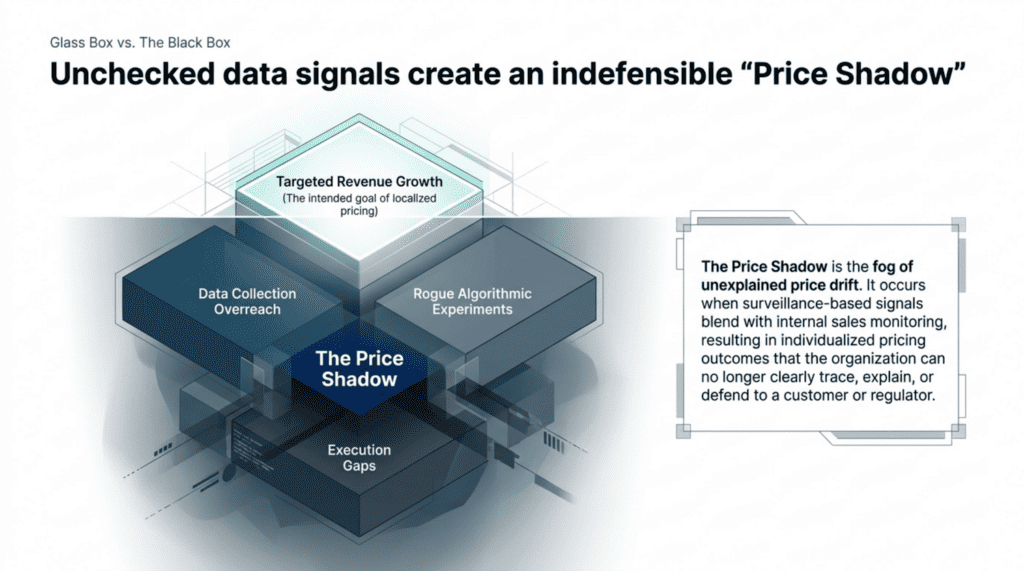
Figure 5: The 2025 evidence base, from a federal study to a signed consent decree.
What surveillance pricing means for pricing leaders
The governance lesson is the through-line of everything Revology publishes: technology is never the hero. Pricing software, identity graphs, and ML engines are necessary but insufficient. Strategy, policy, and human judgment are what make them safe and effective. A retailer can run a sophisticated, profitable, dynamic pricing function without ever crossing into surveillance pricing. The differentiator is governance, not tooling. This is the same principle behind disciplined pricing policy strategies: name the rules before the tools tempt you past them.
A defensible program rests on three pillars:
• Policy. Name the allowed pricing signals (inventory, service level, geographic cost band, contract terms, transparent loyalty tier) and the prohibited ones (precise location trails, browsing history used as a willingness-to-pay inference, third-party broker segments, device fingerprinting).
• Process. Stand up a cross-functional Pricing Council that approves every new fence and signal category before it reaches production.
• Proof. Keep model cards, experiment registers, and audit logs, and track two KPIs: the Offer Parity Gap (a net-price difference above 2% for matched shoppers without a documented fence triggers review) and the Price Dispersion Ratio (P90 ÷ P10 net price for the same SKU).
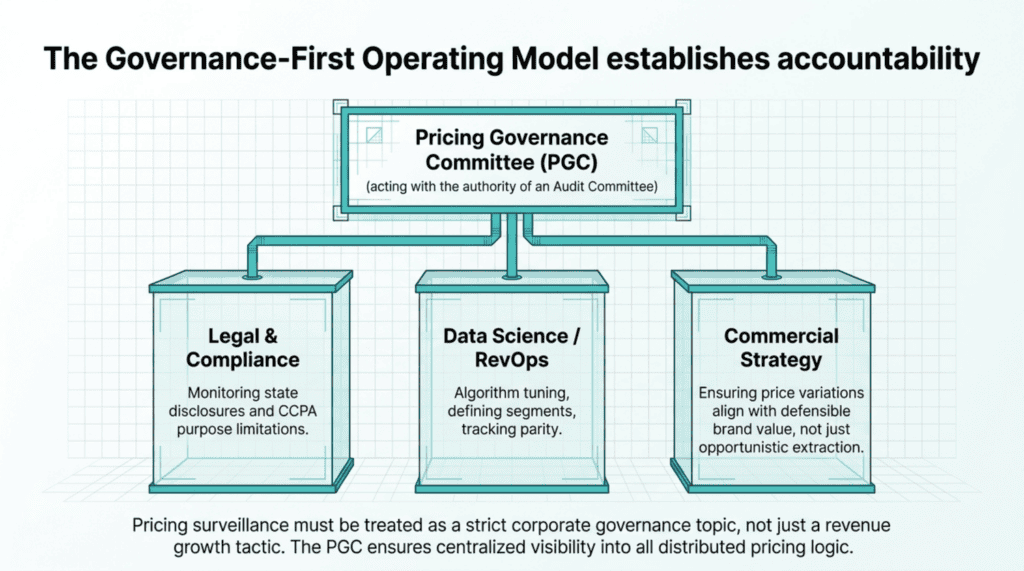
Figure 6: Policy, process, and proof: the three pillars that keep a pricing function defensible.
Detection methods: how to tell if it is happening in your stack
Detection follows a simple cadence: audit, test, monitor.
1. Audit. Map every place a price or fee is computed, and inventory the third-party scripts and data feeds touching the funnel. A browser developer tool’s pass shows which brokers load before any login.
2. Test. Build matched cohorts (same SKU, fulfillment mode, geographic band, basket size, and time window) and compute the Offer Parity Gap. Vary one input at a time (device, OS, IP via VPN, cleared cookies versus logged-in) across at least a week to rule out short-lived experiments.
3. Monitor. Control for legitimate cost drivers. If a gap persists, distinguish the two causes: rule drift produces stable gaps across rebuilds, while a hidden willingness-to-pay signal produces gaps that move with user behavior.
Worked example: auditing an anonymized hotel booking funnel
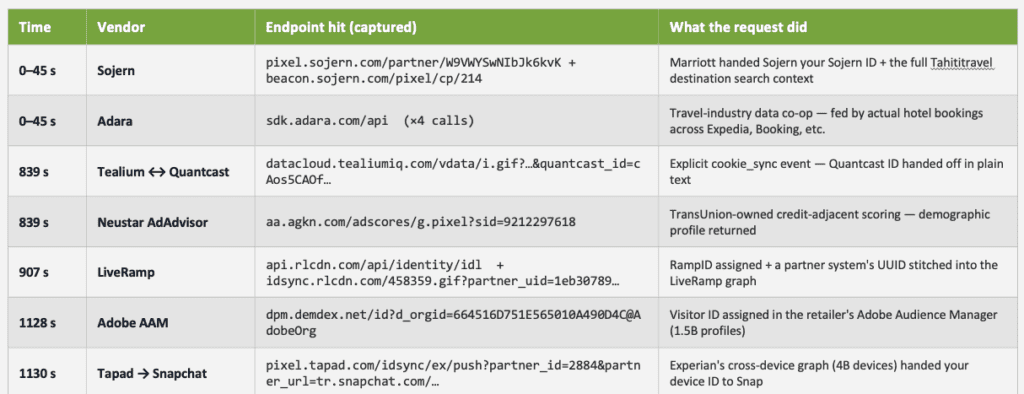
Figure 4: Inside one travel session for Marriott and Hilton: in a few seconds of browsing, our laptop was tagged in 8 separate identity systems, with information passing back and forth through multiple data brokers and identity graph providers.
Scenario setup
A regional travel brand suspects its booking funnel may be varying prices by shopper rather than by market. The pricing team runs the audit-test-monitor sequence on its own site before a board review. (Client details are anonymized; the capture mechanics mirror a public tracker-inspection of a major hotel booking page.)
Step 1: Audit the funnel
A developer tool’s capture of the homepage, before any login or click, shows an identity platform broadcasting the device to several brokers within the first second, a travel-data broker syncing the device to five ad platforms, and a cross-device handshake firing. The audit confirms the inputs exist: the collection layer is live and contractual.
Step 2: Test matched cohorts
The team runs the same room search 200 times across rich and modest ZIP-code IPs, plus an in-app proximity walk and a twenty-person same-minute multi-device test. Raw spread: 9.2% on identical room-nights.
Step 3: Control and decide
Controlling for distance-based taxes and refundable-rate mix removes 5.1 points. A persistent 4.1% Offer Parity Gap remains, moving with device and IP rather than the calendar. That is a signal problem, not rule drift or an A/B test. It does not prove an unlawful practice. It does prove an explainability gap large enough to escalate to the board.
What to communicate internally and externally
The team brings the Pricing Council a single recommendation: retire the device-and-IP signal from the rate model, document the allowed fences, and publish a plain-English pricing statement. Expected effect: the 4.1% unexplained gap closes, regulatory and reputational exposure drops, and the brand keeps its defensible dynamic-pricing levers intact.
Frequently Asked Questions
Is surveillance pricing legal?
It is not categorically illegal, and not categorically legal. Legality turns on the data used, the jurisdiction, the disclosures made, the consumer-protection facts, and whether the system shares non-public competitor data. New York’s Algorithmic Pricing Disclosure Act, in effect since 2025, requires covered businesses to disclose when a price was set by an algorithm using personal data, but it is a disclosure rule, not a ban. Several states have introduced algorithmic-pricing bills. This is not legal advice, and the reputational envelope is tighter than the legal one.
What is the difference between surveillance pricing and dynamic pricing?
Dynamic pricing reacts to market conditions everyone can see (supply, demand, competitor prices, time of day) and shows the same price to everyone in a segment. Surveillance pricing reacts to the individual, using third-party data that the shopper cannot see or did not volunteer. Dynamic pricing is defensible in plain English; surveillance pricing usually is not.
How can I tell if a company is using surveillance pricing on me?
You cannot confirm it from the price alone, because the decision is server-side. The credible method is controlled testing: vary one input at a time (IP via VPN, device, logged-in versus cleared cookies) over at least a week and look for persistent gaps that move with you rather than with demand. Browser developer tools also reveal which data brokers a site loads before you log in.
Is surveillance pricing the same as personalized pricing?
Not quite. Personalized pricing built on data you volunteered, such as a loyalty tier or your own purchase history, can be transparent and even beneficial. Surveillance pricing is the subset that relies on third-party signals you cannot see. The dividing line is whether the seller can explain the signal to you in one sentence.
Diagnostic checklist and next steps
Ask your team five questions before your next pricing review:
1. Can we list, in writing, every signal allowed to influence a price, and every one that is prohibited?
2. Do any third-party broker segments, identity-graph matches, or device fingerprints currently reach our pricing engine?
3. What is our Offer Parity Gap for matched shoppers, and who reviews it?
4. If a regulator asked us to explain, on one page, why two similar customers saw two different prices, could we?
5. Has a cross-functional Pricing Council approved our current fences?
If you are resource-constrained, start with the audit alone. Mapping where prices are computed and which scripts load is low-cost and surfaces the highest-risk gaps first. The policy and proof pillars can follow once the exposure is visible.
That is surveillance pricing explained without the alarm: a set of signals you can name, govern, and prove. Revology Analytics helps pricing and revenue leaders build pricing functions that are profitable and defensible: naming allowed signals, standing up governance, and proving parity before a regulator or a reporter asks. Book a pricing surveillance diagnostic with our Pricing & RGM Advisory team.
Want a second opinion on your pricing?
Tell us what’s going on with your pricing. One of our partners will get back to you the same day or the next.