
Table of Contents
Pricing strategies are often shaped by experience-based gut instinct rather than grounded research by a senior leader, a phenomenon usually referred to as the “HiPPO” effect (Highest Paid Person’s Opinion). Two high-profile cases illustrate how even powerful CEOs can rely on heuristics or a personal hunch.
First came Sam Altman at OpenAI, who, according to a recent tweet, personally set ChatGPT Pro’s monthly subscription at $200. According to Altman, he chose this price point because he thought they’d “make some money” at that level, only to find out later that the usage costs were much higher than anticipated (essentially, not enough subscribers at low usage levels, with most subscribers at very high usage levels highly skewing the cost to serve math). The company began losing money on a plan priced primarily on a personal guess.
The second example is from a couple of years ago: Elon Musk’s proposal to charge $20 monthly for Twitter’s verified checkmark. When best-selling author Stephen King balked at the idea, Musk famously countered, “How about $8?”. This public back-and-forth illustrated the stark reality of many key pricing decisions – based on personal preference and quick negotiation rather than deep analysis into user willingness to pay or a robust framework for capturing value.
Both examples illustrate that top-down pricing decisions can be risky, especially for new products or features. While the CEOs may have broader strategic insights, ignoring data and structured pricing research will lead to lost profits (or foregone revenues) and, at worst, further reinforce the notion that Pricing and Revenue Management is not treated as a critical strategic pillar for the company.
Why Robust Pricing Strategy and Governance Matter
The Pricing profession has long been proselytizing a couple of main points over the last two decades:
- CEOs and companies of all sizes need to recognize that Pricing is the most impactful lever for driving operating profit.
- Pricing and Revenue Management must be approached as a well-supported, governance-, framework- and insights-driven discipline.
A consistent finding in pricing research, backed by our professional observations, is that, on average, a 1% improvement in net price realization can yield an 8% to 10% lift in operating profit. This is because incremental net revenue gained from increased Pricing (either by increasing list prices or reducing discounts) goes straight to operating profit, unlike attempts to grow profit by cutting costs or boosting volume, which will have a smaller financial impact.
Well-structured pricing governance and a clearly defined revenue growth management (RGM) framework anchor this critical business function.
A dedicated Pricing and Revenue Management team – ideally working hand in hand with finance, marketing, and sales – should own decisions on price levels, discounting, clearance, and promotions and at least be a strong consulting partner on other key RGM-related topics (new product introductions, whitespace opportunities, etc.). Data must inform these choices rather than defaulting to “the loudest voice in the room” or short-term gut instincts.
In addition to good governance, systematic research into how customers perceive value helps companies set prices that maximize profits and long-term price positioning. Neglecting these steps, by underpricing a product or failing to capture differential value, can lead to substantial lost profit. Conversely, overpricing risks alienating the market or losing to competitors, offering a better value-perception equation.
As shown in the table below, a modest 1% net price realization on a $500MM revenue base translates into $5MM of incremental EBITDA and a $50MM valuation upside (+7% bump relative to baseline). With each percentage point of price realization flowing directly to the bottom line, disciplined net price management becomes one of the most powerful levers for driving both profitability and enterprise value.

Common Gaps in the Midmarket: “Pricing” is an Afterthought
Despite the best PR efforts of pricing proselytizers and professional pricing organizations, we routinely see midmarket firms (up to ~ $2B in revenues) invest minimally in their pricing functions – both in terms of human and tech capital.
It’s not uncommon to discover just one or two full-time employees dedicated to Pricing or RGM in a billion-dollar enterprise. We’ve seen a $1 billion clothing retailer with just a single FTE covering both Pricing and Promotions; another ~ $1B specialty retailer claimed only 0.5 FTE for this critical area.
These under-resourced Pricing teams lack the bandwidth to conduct thorough market research, let alone lead robust cross-functional pricing processes. If the CFO wants to know why Gross Profit $ is missing budget- from list price actions, excessive discounting, or a customer or product mix shift – teams scramble for days (sometimes weeks) to cobble together data and insights. That leaves little time for strategic analysis or building a structured set of pricing workstreams for GP$ go-get efforts.
This vacuum perpetuates a cycle of reactionary Pricing, often driven by the “HiPPO” effect, rather than insights-driven decision-making and a strategic pricing framework in place.
See how your pricing compares
Our 2025 report looks at how more than 150 business leaders handle pricing and promotions. See what the best companies do differently, and where most fall short.
Lessons from Our Revenue Growth Analytics Maturity Study
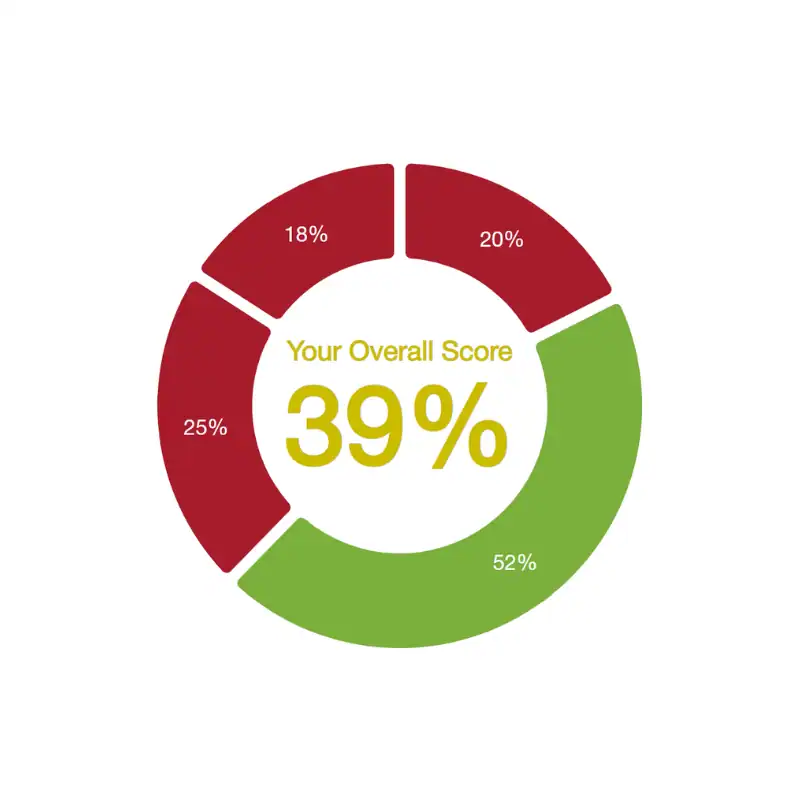
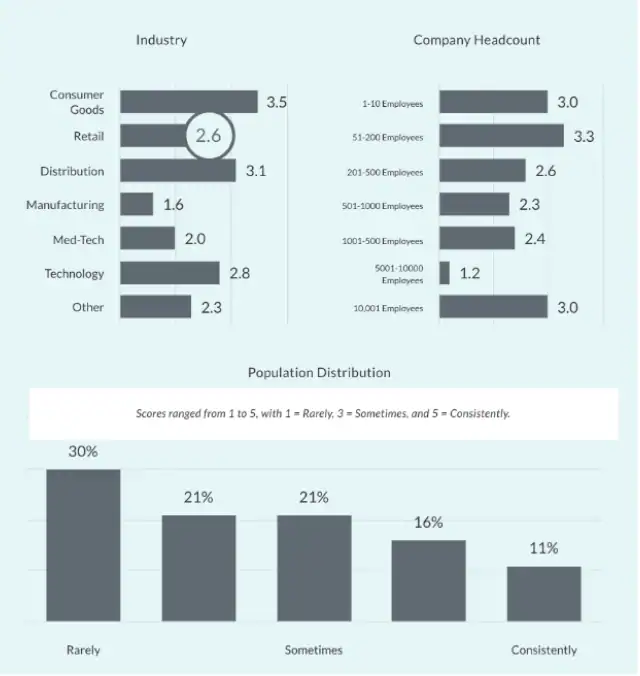
A recent Revenue Growth Analytics Maturity Report, surveying nearly 150 commercial leaders, underscores several recurring themes:
- Margin Analytics & Optimization
- Pricing Strategy and Impact Analysis: Many companies struggle to determine how to price their products effectively and understand the impact of their pricing actions on business and customers.
- Revenue and Gross Profit Erosion: Organizations often lack the analytical tools to identify ways to slow down revenue or gross profit erosion and strategies to accelerate growth.
- Customer Feedback Integration: There is a notable deficiency in adjusting prices or improving product value propositions based on customer feedback, hindering responsiveness to market needs.
Promotion Effectiveness & Optimization
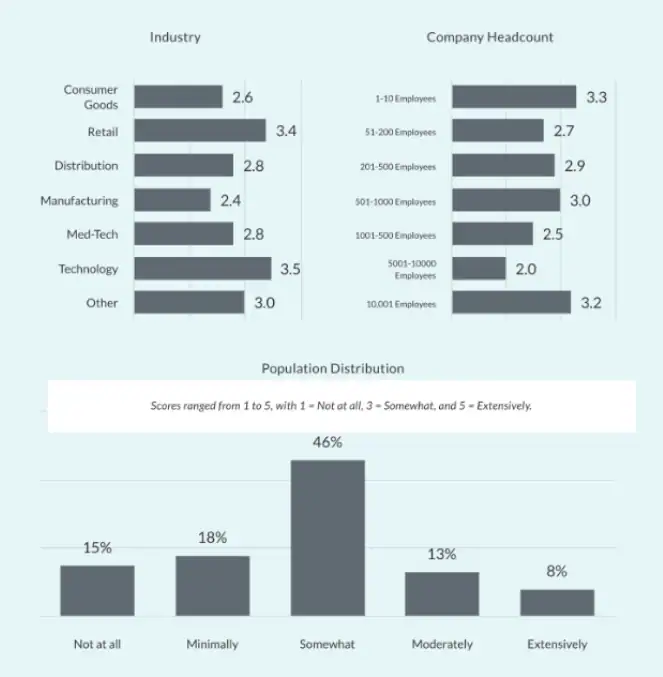
- Investment Impact Assessment: Companies frequently cannot accurately assess the business and customer impact of their promotional investment decisions.
- ROI Measurement: Measuring the return on investment (ROI) of promotional activities for the company and its customers remains a significant challenge.
Promotional Budget Allocation: There is a lack of ML-driven methods to allocate promotional budgets optimally to enhance growth and gross profit margins.
Sales & Customer Growth Analytics
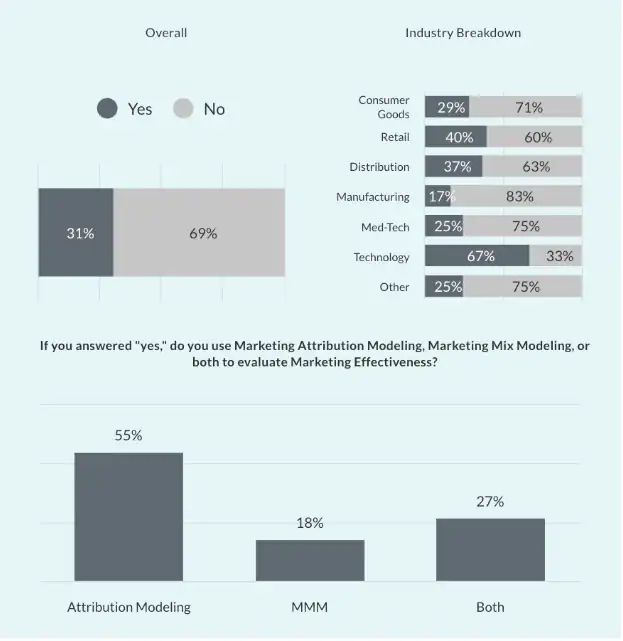
- Sales Forecast Accuracy: Many companies fall short in improving the precision of sales forecasts, which impacts inventory and financial planning.
- Customer Segmentation: Organizations often fail to identify which customer segments to focus on to optimize growth and gross profit margin.
- Cross-Functional Alignment: Insufficient alignment between Sales, Finance, and Marketing teams on plans and outcomes leads to fragmented strategies and suboptimal results.
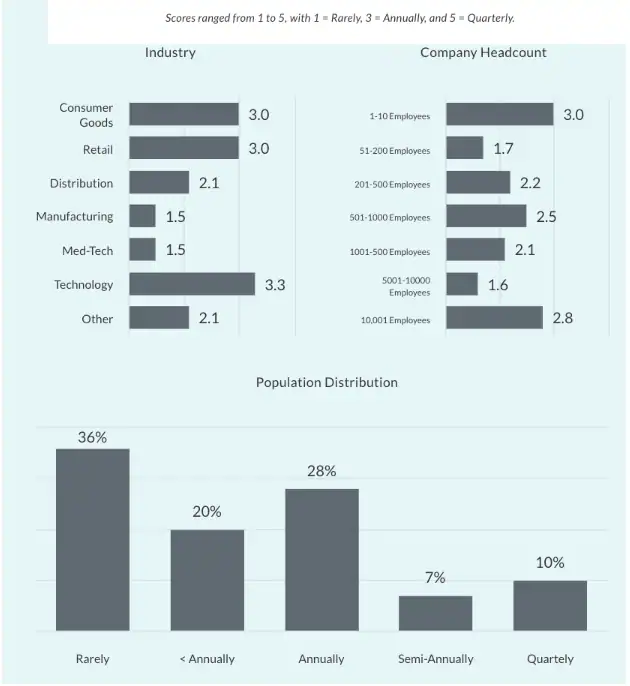
For Pricing specifically, the study indicates that many firms rarely measure price elasticity (i.e., how demand changes as price moves) or rely on robust diagnostic or predictive analytics. In simpler terms, they don’t use the data they have to optimize price levels or discounting methods. Instead, their de facto approach is guesswork or short-term incentives to push volume, losing out on potential profit.

The Other Side of Sam Altman’s “Heuristic” Pricing Choice
Given the wealth of evidence that heuristic- (or “HiPPO”)- based Pricing can be detrimental, it’s important to note that there can be another side to the story.
In Sam Altman‘s case with ChatGPT Pro, any business model around generative AI subscriptions is riddled with assumptions, given the many unknowns: usage intensity, price elasticity, perceived uniqueness of the AI model, willingness to pay, and competitor moves (especially with Anthropic or Google).
Sometimes, in cutting-edge offerings with no market precedent, you might need to pick a price that “feels right,” monitor actual usage and churn patterns, and adjust quickly.
Furthermore, publicly announcing a $200 price point can serve as market signaling, especially from the market leader, OpenAI. By planting that initial anchor, Altman potentially discourages direct competitors from severely undercutting OpenAI. It sets a reference point that might shape future entrants’ expectations. If the product is premium, the company can scale back usage or price levels more gracefully than if it had gone too low.
Yet even in these novel situations, data- and customer-research-driven processes remain vital. Quick follow-up customer research, usage metrics, and rapid test-and-learn pilots can ground an initially heuristic-based price in real-world analysis and help organizations iterate faster toward a profitable equilibrium.
Building the Right Data, Capabilities, and Execution Framework
From working with mostly midmarket firms, we’ve seen firsthand that establishing robust pricing governance isn’t just about hiring a “pricing manager” and calling it a day. Companies must invest in:
- Data Infrastructure: A centralized, purpose-built, cloud-based data warehouse that unifies transactional, customer, and competitive data is critical. Most of our study participants found real gains only after consolidating data beyond clunky spreadsheets.
- Advanced Analytics: Diagnostic and predictive analytics – sometimes leveraging AI/ML – enable teams to quantify price elasticity, run scenario analyses on price changes, discount/promo investments, or measure the ROI of promotions.
- Cross-functional collaboration: Pricing must be integrated with sales, marketing, finance, and the pricing leader role at the senior executive level. If Pricing is “three levels down” from senior executives, it lacks the organizational muscle to push through changes or challenge contradictory incentives.
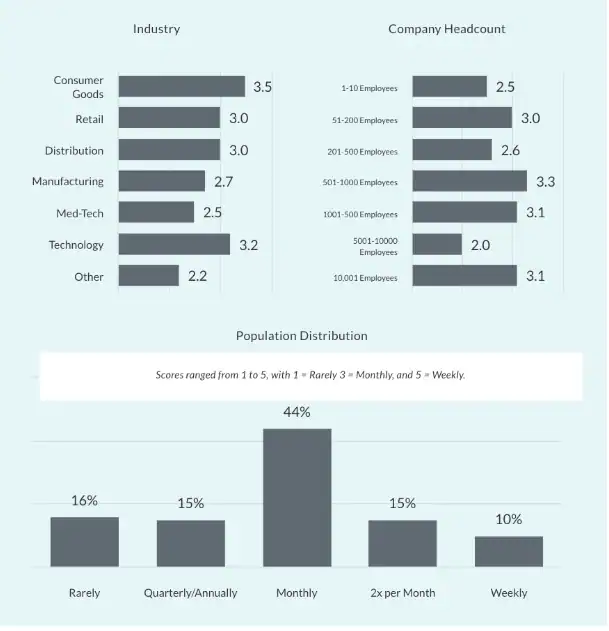
- Continuous Review and Adjustment: Pricing performance should be reviewed monthly (at least) or even weekly for more dynamic markets. Leading companies also track net price realization or price-cost-volume-mix (PCVM) in real-time, allowing them to respond fast if discounting becomes excessive or the market shifts.
Companies Must Elevate the Pricing Function
One root cause for the persistent neglect of Pricing is structural: in many organizations, pricing leadership tops out at the Director or Senior Director level. These individuals can be buried beneath EVP or C-suite executives with the final say on Pricing. Without direct and frequent senior executive involvement, the impetus to adopt new processes or invest in advanced Pricing Analytics weakens.
To change that, companies need to elevate Pricing to a strategic level – ideally with a seat at the executive table. A successful pricing transformation typically involves C-suite mandate and CFO sponsorship to ensure that Pricing initiatives and key workstreams don’t die in departmental silos or fail because of outdated compensation schemes that reward volume and top line at the expense of profit.
A Call to Treat Pricing as a Strategic Imperative
Whether you’re rolling out a new AI subscription at $200 or deciding whether to charge $20 or $8 for a blue checkmark, Pricing should never be an afterthought. It is arguably the most direct and impactful lever for shaping profitability and fueling the growth engines of R&D, marketing, and talent retention. Yet in too many companies, especially in the midmarket space, Pricing remains under-resourced, under-analyzed, and overlooked, leading to suboptimal decisions driven by gut instinct and the loudest (and highest paid) voice in the room.
The good news is that by investing in harmonized data, pricing analytics, governance structures, and continuous cross-functional collaboration, organizations can transform Pricing from a guesswork exercise to a scientifically informed domain that fuels profitable growth.
And in those rare instances, you must pick a heuristic price for a novel product. Ensure you have the infrastructure to rapidly learn, iterate, and pivot – so that even “highly paid person’s opinions” can become better informed and more reliably profitable.
As Pricing and Revenue Growth Management consultants, we have our work cut out for us. We must remain bullish in spreading the word about Pricing done right.
Frequently asked questions about HiPPO pricing decisions
What is the HiPPO effect in pricing?
The HiPPO effect, short for Highest Paid Person’s Opinion, is when a senior leader sets prices from experience-based gut instinct instead of research. Sam Altman personally set ChatGPT Pro at $200 a month, and OpenAI began losing money on the plan when usage costs ran higher than anticipated. Elon Musk proposed $20 a month for Twitter’s verified checkmark, then countered with $8 when Stephen King balked.
Why is pricing the most powerful profit lever?
Incremental net revenue from pricing, whether from higher list prices or smaller discounts, goes straight to operating profit, while cost cuts or volume growth have a smaller financial impact. On average, a 1% improvement in net price realization can lift operating profit by 8% to 10%. On a $500MM revenue base, 1% adds $5MM of EBITDA and a $50MM valuation upside, a 7% bump.
Who should own pricing decisions?
A dedicated pricing and revenue management team, working closely with finance, marketing, and sales, should own price levels, discounting, clearance, and promotions, and act as a strong consulting partner on topics such as new product introductions and whitespace opportunities. The pricing leader should sit at the senior executive level with a C-suite mandate and CFO sponsorship, because pricing buried three levels down lacks the muscle to drive change.
What happens when pricing teams are under-resourced?
They get stuck in reactive, HiPPO-driven pricing. Midmarket firms with up to about $2B in revenue routinely underinvest here: one $1 billion clothing retailer had a single full-time employee covering pricing and promotions, and a roughly $1B specialty retailer claimed half a role. Such teams scramble for days to explain gross profit misses and have little time for strategic analysis.
What did the Revenue Growth Analytics Maturity Report find?
The report surveyed nearly 150 commercial leaders. Many companies struggle to price effectively, slow revenue and gross profit erosion, adjust prices based on customer feedback, measure promotional ROI, allocate promotional budgets optimally, forecast sales accurately, choose which customer segments to focus on, and align sales, finance, and marketing. Many firms rarely measure price elasticity or use diagnostic and predictive analytics, relying on guesswork or short-term volume incentives instead.
Can a gut-feel price ever make sense?
Sometimes. For novel offerings with no market precedent, such as generative AI subscriptions with unknown usage, elasticity, and competitor moves, you may need to pick a price that feels right, then watch usage and churn and adjust quickly. A public price can also signal the market: OpenAI’s $200 anchor may discourage rivals from sharply undercutting it. Follow up with customer research and test-and-learn pilots.
What does strong pricing governance require?
More than hiring a pricing manager. Companies need a centralized, cloud-based data warehouse that unifies transactional, customer, and competitive data; diagnostic and predictive analytics to quantify elasticity and run price and promotion scenarios; pricing integrated with sales, marketing, and finance under a senior leader; and pricing reviews at least monthly, or weekly in dynamic markets, with net price realization or price-cost-volume-mix tracked in real time.
Want a second opinion on your pricing?
Tell us what’s going on with your pricing. One of our partners will get back to you the same day or the next.