Overview: Revenue growth in Practice
This article from Revology Analytics explains revenue growth in the context of modern pricing analytics and revenue growth management. It draws on real engagements with mid-market and enterprise clients to turn revenue growth from a buzzword into a measurable commercial capability. Read on for the full perspective, and see our related reading for additional depth.
Table of Contents
We need to win the trust of our Sales Team to accelerate the impact of our B2B Commercial Analytics initiatives.
Know-it-all Analytics and lack of credibility with Sales
Have you been in a situation where your Revenue Management team implemented a 5% List Price increase in February for your anchor Brands, only to see a YTD Net Price Realization of 1% by the end of September? It turns out that price discounts and free product giveaways by the Sales organization have eroded almost all of the intended Price increases.
Or have you developed an Advanced Analytics tool to be used as a consultative, insights-based selling solution to drive Share of Wallet with customers, only to see no impact by year-end? After the initial surge in tool usage after Sales training, adoption has declined from 60% to 5% by year-end.
There tends to be a common thread in both of these scenarios: we, the Revenue Analytics practitioners, tend to think that we know our domain the best. We tend to oversimplify the complex realities of the marketplace and believe that data- or ML-driven solutions can be a panacea to low Profits or Sales Productivity.
Whatever Pricing Strategies or Customer-facing analytics solutions we create, we often make the mistake of developing these B2B Revenue Growth Analytics solutions without attentively listening to and co-creating with our most valuable internal customers: the Sales organization.
We unknowingly create a scenario where we don’t have the necessary credibility with the Sales teams. And without that inherent credibility, mutual trust, and co-creation mindset, it’s tough to drive sustainable business outcomes with our analytics solutions.
Why is it critical to gain the trust of the Sales team?
The Reality
B2B Revenue Analytics can be incredibly powerful and serve as a critical competitive capability differentiator for companies. It is an area of Advanced Analytics that many traditional industries still haven’t gotten right.
The most impactful area in Commercial Analytics is delivering Margin Analytics & Optimization solutions for companies – both internal and external (customer-facing) efforts. A variety of strategies and solution deployments fall under this category: from developing a Pricing Strategy for new and existing products to building Pricing Analytics Dashboards that track execution, all the way to deploying Dynamic & Automated Pricing capabilities.
Most Margin Optimization solutions end up with suboptimal results in B2B environments, failing at the last mile delivery (aka. lack of user adoption and execution). The situation is no different from other Advanced Analytics efforts that mostly fail at the last mile delivery (around 80% of them).
Unlike B2C settings, in B2B environments, when trying to drive profitable growth through Margin Analytics & Optimization efforts, we have to rely on our Sales teams for execution.
Sales managers and their teams have a lot on their plate, particularly in industry environments characterized by constant consolidation, competitive disruption, and digital transformation. In addition to their core selling activities, we are asking the Sales leaders and their teams to execute flawlessly in the marketplace several of our analytics initiatives:
Execute our Price increase guidance in the marketplace
Reduce excessive Customer Discounting per our Insights & Guidance
Increase Share of Wallet and drive Insights-based Selling through Embedded Customer Analytics
Leverage our Customer Churn & Upsell tool to drive increased Revenues and Profits
Bundle with their regular product portfolio our premium (paid) Analytics Services that we offer to our Customers to help optimize their business operations
And the list goes on
The Mutual Misconception
There is an inherent cynicism in most companies between the Sales and Revenue Growth Analytics teams:
Sales teams think the Analytics or Pricing teams know very little about the realities of the marketplace, the competition, and their customers’ key pain points.
Analytics practitioners think that the Sales teams know nothing about Data, Insights-based Selling, or Pricing science.
The Mistake is for Analytics to Own and Fix
We make a massive mistake as Commercial Analytics practitioners when we assume that we know more about the realities of the business than the people out there grinding every day, directly driving Revenue and Profit for the company.
An overly critical, contentious relationship with Sales is harmful and ineffective in the long run. The analytics team’s impact is much more significant if we build a relationship with our Commercial teams based on natural curiosity, empathy, and a winning mindset.
It doesn’t mean that we capitulate to Sales leaders’ demands and opinions – it’s more about recognizing that without the Sales team, our solutions and strategies are ineffective at best and profit-eroding at worst.
We need to challenge the Sales teams with our Analytics solutions and insights but in a way that recognizes their expertise in our Products, Customers and Competitors. For all B2B Revenue Growth Analytics solutions, we need to build and adjust our work based on learnings and inputs from Sales.
Instead of blaming Sales for lack of adoption, the onus is on us to walk in the shoes of our Sales counterparts and gain their trust as valued analytics advisors.
The Analytics Solution Development Process
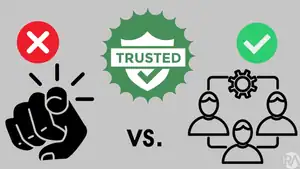
Instead of this…

…we need to involve the Sales team in the development effort from the time we kick off an Analytics initiative to the point where we Pilot it and finally launch it.
Below is a sample six-step Co-Creation Process that we follow in most B2B Revenue Analytics solution engagements with the Commercial organization (most often sales, but also Merchandising, Marketing, and Category Management).

The Payoff
By building a positive relationship with the Sales team where we both care about 1) driving positive Business Outcomes and 2) helping the sales teams win more, we can develop Analytics solutions and Pricing strategies that will be embraced and implemented by the Sales team.
If you are a $500 million manufacturer implementing a 5% List Price increase, this could be the difference between achieving a 1% ($5 million) vs. 5% ($25 million) Net Price Realization.
That extra $20 million in Operating Profit could be the difference between meeting your Annual bonus, funding more R&D, investing additional training dollars in your human capital, or potentially avoiding layoffs.
All it takes is intellectual curiosity, results- and outcomes-oriented mindset, and, most importantly, a great deal of empathy for the Sales team. Unless we gain credibility with the Sales org as a trusted advisor, our Commercial Analytics initiatives will continue to fall short of their ROI potential.
Frequently asked questions about revenue growth analytics and sales
Why do revenue growth analytics teams need the sales team’s trust?
In B2B, unlike B2C, margin analytics and optimization depend on the sales team for execution. Sales is asked to carry out price increase guidance, reduce excessive discounting, drive insights-based selling, use churn and upsell tools, and bundle analytics services, all on top of core selling. Without credibility, mutual trust, and a co-creation mindset, analytics solutions rarely deliver sustainable business outcomes.
Why do pricing and analytics initiatives fail with sales teams?
Analytics practitioners often assume they know the domain best, oversimplify complex market realities, and treat data or ML solutions as a cure for low profits or sales productivity. They build pricing strategies and customer-facing tools without listening to or co-creating with sales. Most margin optimization solutions then fail at last-mile delivery, as do around 80% of advanced analytics efforts.
What happens when sales does not execute a price increase?
Discounts and free product giveaways can erode almost all of it. In one scenario, a revenue management team implemented a 5% list price increase for its anchor brands in February and saw only 1% year-to-date net price realization by the end of September. Analytics tools suffer the same way: usage of an insights-based selling tool fell from 60% to 5% by year-end.
What is the mutual misconception between sales and analytics teams?
Most companies have an inherent cynicism between the two groups. Sales teams think analytics and pricing teams know very little about the marketplace, the competition, and customers’ key pain points. Analytics practitioners think sales teams know nothing about data, insights-based selling, or pricing science. An overly critical, contentious relationship between them is harmful and ineffective in the long run.
How should analytics teams work with sales?
Build the relationship on curiosity, empathy, and a winning mindset, without simply giving in to every demand. Challenge sales with analytics and insights while respecting their expertise in products, customers, and competitors, and adjust solutions based on their input. Involve sales from kickoff through pilot and launch with a co-creation process, and treat adoption as the analytics team’s responsibility rather than blaming sales.
What is the payoff of co-creating analytics with sales?
Solutions and pricing strategies built with sales get embraced and implemented. For a $500 million manufacturer taking a 5% list price increase, the difference between 1% and 5% net price realization is $20 million in operating profit. That money could decide whether annual bonuses are met, fund more R&D and training, or help avoid layoffs.
Related Reading
- Pricing Power for Manufacturers: In-Source and Own Your Pricing and RGM Analytics Without Breaking the Bank
- Give the Gift of Revenue Growth Analytics Skills
For broader industry perspective on pricing analytics and revenue growth management, see McKinsey’s Growth, Marketing & Sales insights.