
Are you ready to revolutionize your revenue growth strategy? Everyone wants to drive sustainable revenue growth for their company. Selling more products and services to more customers sounds simple enough. However, achieving lasting revenue gains is a huge challenge. It requires a complete overhaul of pricing, sales, and marketing operations through a data-driven, strategic approach. Let’s embrace this exciting opportunity for growth.
Table of Contents
This is where Revenue Growth Analytics (RGA) comes in. It leverages powerful analytics tools, machine learning (ML) algorithms, and artificial intelligence (AI) to extract actionable insights from sales, marketing, and customer data. With RGA, companies can identify inefficiencies, understand key drivers of results, and make informed decisions to boost productivity and profits.
The Importance of Revenue Growth Analytics in Sales & Marketing
Overview of the Current Market Landscape for Mid-Market Companies
Today’s market landscape for mid-market companies is more competitive than ever. Rapid changes in consumer behavior, supply chain disruptions, and economic volatility are constant challenges. A survey by Chubb and the National Center for the Middle Market (NCMM) found that 59% of mid-market companies rated managing inflation risk as highly challenging, while 49% struggled with recession risk. Competing against nimble startups and industry giants with massive marketing budgets adds complexity.
Many mid-market leaders find themselves asking:
What strategic initiatives should we prioritize to drive the most impact?
Where are we losing ground to the competition, and what can we do about it?
How can we get maximum ROI from our sales and marketing investments?
The Role of Analytics in Enhancing Competitive Advantage
A survey by BDO USA found that improving customer experience and reducing operational inefficiency were top priorities among mid-market firms. What advanced analytics tools can be applied to revenue growth analytics (RGA)? How can mid-market companies use machine learning and AI in their RGA strategy? What best practices should be followed for data integration to guarantee comprehensive insights for Revenue Growth Analytics (RGA)? This is where deploying in-house RGA capabilities can be transformative. With RGA, companies gain visibility into critical performance metrics across sales, marketing, finance, and operations. They can dissect which activities genuinely move the needle on profitable growth and which represent wasted effort.
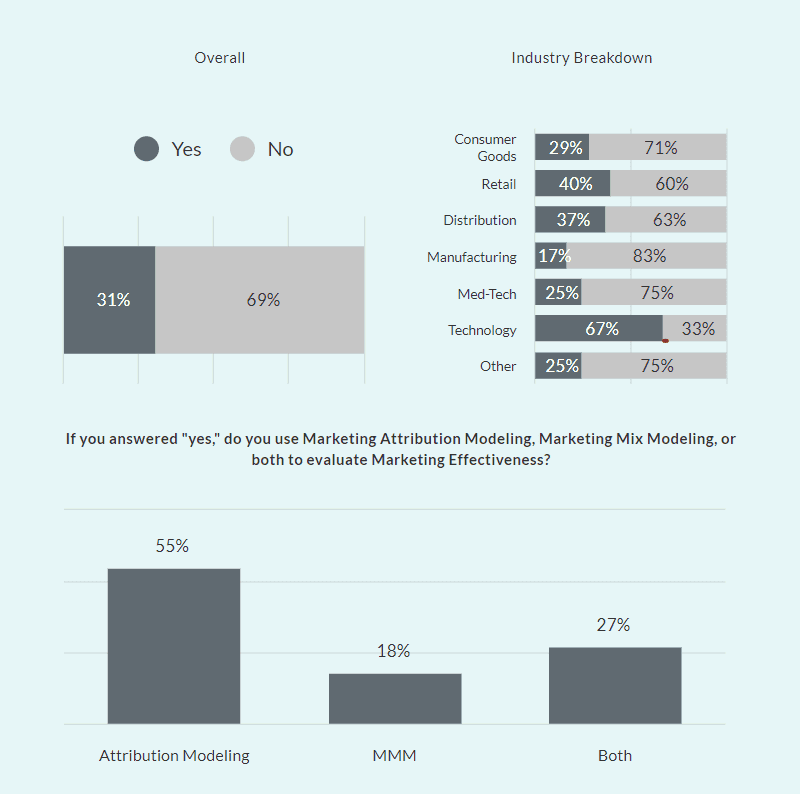
According to Revology Analytics’ Revenue Growth Analytics Maturity:
70% of companies need help quantifying their marketing investments’ return.
Only 1 in 3 CPG companies measure marketing ROI regularly.
Analytics provides an objective lens through which companies can pinpoint and remediate inefficiencies. This enables data-driven decision-making to optimize processes for maximum impact.
Benefits of Implementing RGA in Sales and Marketing
When implemented successfully, RGA can lead to substantial payoffs, including:
Increased sales revenue and profit margins.
More effective and higher-converting marketing campaigns.
Optimized lead generation and sales prospecting.
Improved sales cycle efficiency and win rates.
Reduced customer acquisition costs.
Better retention and loyalty through stellar customer experiences.
A sharper competitive edge in the market.
RGA acts as a cornerstone capability, allowing companies to zero in on the initiatives that yield tangible business impact.
Components of Revenue Growth Analytics for Sales & Marketing
Advanced Analytics Tools: Overview and Selection Criteria
At the core of RGA is a robust technology stack of advanced analytics tools. When selecting tools, companies must evaluate factors such as integration capabilities, user-friendly interfaces, predictive modeling features, and customization options. Established enterprise solution providers like Microsoft offer robust end-to-end RGA solutions leveraging Azure’s Data Warehouse, Machine Learning capabilities, and Power BI’s analytics and visualization capabilities.
Machine Learning & AI: Enhancing Sales and Marketing Processes
Incorporating ML and AI into RGA is critical for quickly surfacing deep insights. For example, AI-driven recommendation engines can automatically identify cross-sell and upsell opportunities. AI-powered product recommendations can increase shopper engagement, leading to a 26% higher average order value (AOV). ML powers capabilities like predictive audience segmentation and dynamic ad optimization in marketing.
Data Integration: Combining Various Data Sources for Comprehensive Insights
RGA requires centralized integration of an organization’s data sources, including CRM systems, marketing campaign data, financial data, and third-party market intelligence. With integrated data as the foundation, companies can unlock RGA’s predictive analytics and forecasting capabilities, leading to more reliable demand planning and inventory management.
Predictive Analytics: Using Data to Forecast Sales Trends and Customer Behavior
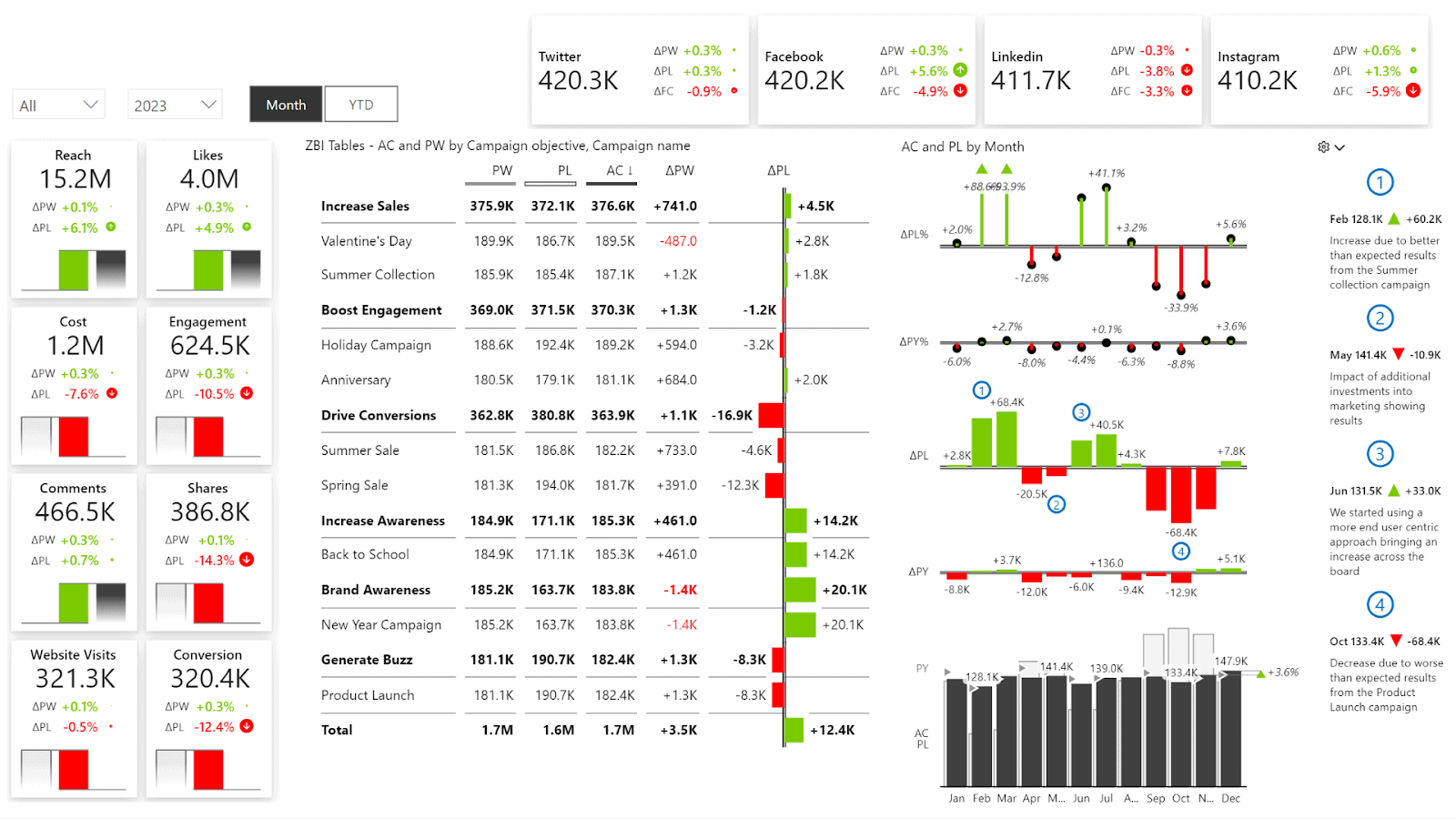
Predictive analytics is often the most potent component of RGA for driving tangible business impact. For sales organizations, it reveals which opportunities are likely to close successfully. Marketing departments can use predictive analytics for advanced segmentation, buyer persona development, and campaign forecasting, making teams more efficient and effective.
Enhancing Sales Productivity with Analytics
Identifying Sales Bottlenecks and Optimizing Processes
RGA provides tools and data visibility to dissect performance at every funnel stage, from prospecting to closing deals. Predictive analytics surfaces key signals differentiating stuck deals from those primed to close. Leadership can realign training programs and streamline processes to eliminate friction points, ultimately boosting sales productivity.
Using CRM Analytics to Improve Customer Relationships
Practical applications of CRM analytics include:
Identifying cross-sell and upsell opportunities.
Automated lead scoring.
Monitoring churn risk.
Optimizing pricing strategies.
Tracking project data to improve staffing plans.
This 360-degree view of the customer journey allows sales teams to tailor their engagement strategies for maximum impact.
See how your pricing compares
Our 2025 report looks at how more than 150 business leaders handle pricing and promotions. See what the best companies do differently, and where most fall short.
Optimizing Marketing Campaigns with Data
Leveraging Marketing Analytics for Campaign Optimization
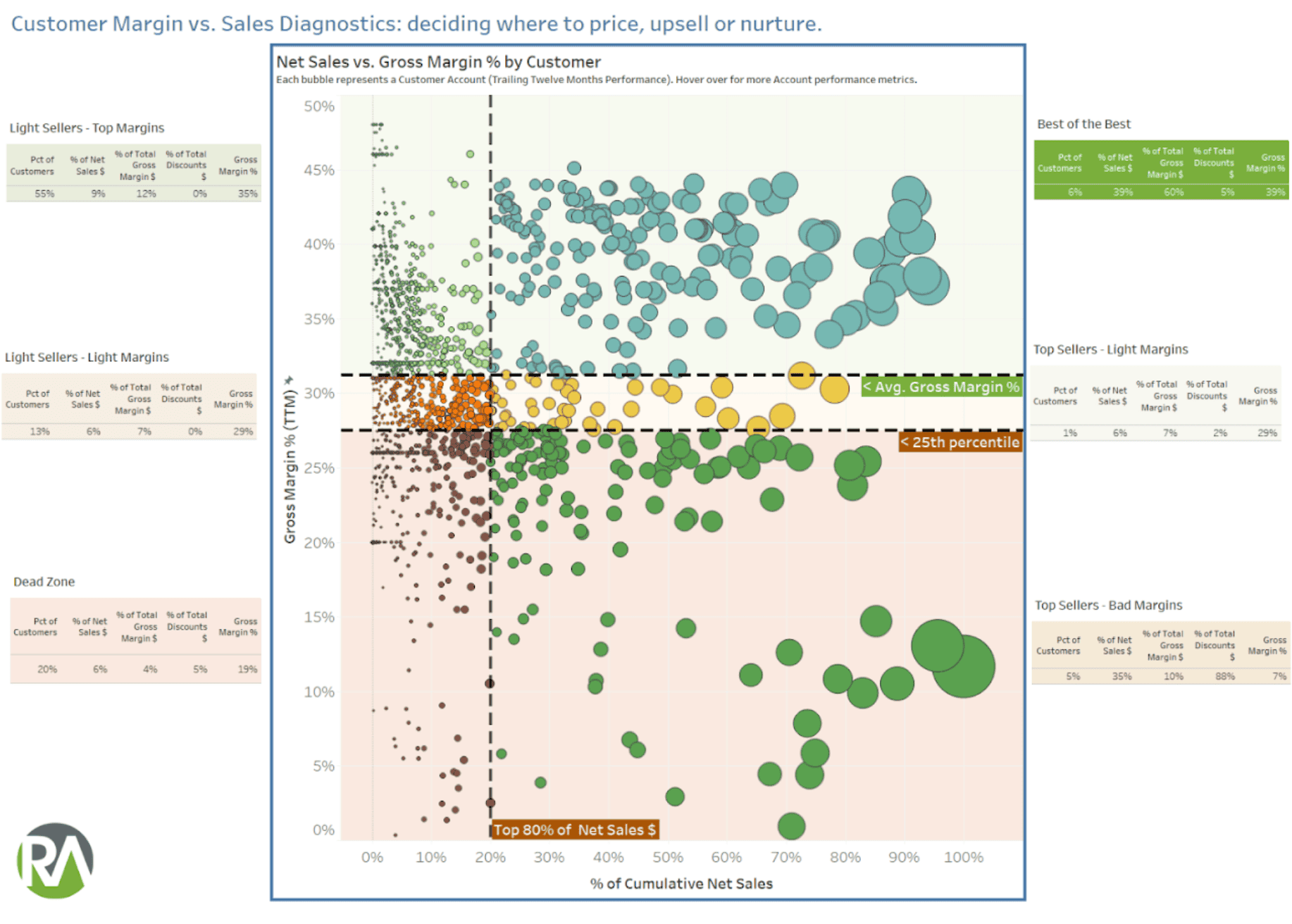
RGA’s advanced marketing analytics and attribution modeling provide visibility into the proper drivers of campaign ROI. Marketing teams can map the entire buyer’s journey, adjust channel mix and messaging, allocate budgets towards top-performing programs, and continuously optimize creative assets.
The Impact of AI on Marketing Strategies
AI powers capabilities like predictive content recommendations, anomaly detection for underperforming campaigns, dynamic creative optimization, and hyper-personalized marketing. Combining AI and ML into RGA turbocharges every aspect of marketing execution.
Building In-House Analytics Capabilities
Developing an Analytics Team: Skills and Roles Needed
Building out RGA capabilities requires assessing current analytics skills and addressing gaps by hiring data engineers, data scientists, BI developers, and analytics translators. Each role requires a technical foundation, business acumen, and communication abilities.
Integrating Analytics into Existing Business Processes
Integrating analytics into decision-making processes involves creating easy-to-use data tools and securing organizational buy-in from top leadership. Training programs should focus on data visualization, analytical skills, case study reviews, role-play exercises, and certifications integrated into career advancement paths.
Driving Transformative Growth with Revology Analytics
Unlocking RGA’s full potential is a major transformational shift, requiring strategic commitment and possibly partnering with an expert like Revology Analytics. We help clients assess their data, technologies, and growth objectives, design customized analytics roadmaps, and provide hands-on coaching.
Want to learn more about unlocking your sales and marketing potential?
Download our expert whitepaper, “Unlocking Sales & Marketing Potential with Revenue Growth Analytics: A Strategic Blueprint.” This comprehensive guide offers detailed insights, step-by-step implementation strategies, and real-world case studies.
Discover how advanced analytics can drive sustainable revenue growth and give you a competitive edge.
Contact us today for personalized assistance and to learn how we can accelerate your success with Revenue Growth Analytics!
Frequently asked questions about revenue growth analytics for sales and marketing
What is revenue growth analytics in sales and marketing?
Revenue growth analytics, or RGA, uses analytics tools, machine learning, and artificial intelligence to extract actionable insights from sales, marketing, and customer data. It helps companies identify inefficiencies, understand the key drivers of results, and make informed decisions that raise productivity and profits, with visibility into performance across sales, marketing, finance, and operations.
Why do mid-market companies need revenue growth analytics?
Mid-market companies face rapid shifts in consumer behavior, supply chain disruptions, and economic volatility, while competing with nimble startups and giants with large marketing budgets. In a Chubb and NCMM survey, 59% rated managing inflation risk as highly challenging and 49% struggled with recession risk. Revology’s research adds that 70% of companies need help quantifying the return on their marketing investments.
What benefits does revenue growth analytics deliver?
When implemented well, RGA can increase sales revenue and profit margins, make marketing campaigns more effective and higher-converting, optimize lead generation and prospecting, improve sales cycle efficiency and win rates, reduce customer acquisition costs, and improve retention and loyalty through better customer experiences, all of which sharpen a company’s competitive edge.
Which tools and capabilities make up revenue growth analytics?
RGA rests on four components: advanced analytics tools chosen for integration, usability, predictive modeling, and customization, such as Microsoft’s Azure and Power BI; machine learning and AI, for example recommendation engines that find cross-sell and upsell opportunities; integrated data from CRM, campaign, financial, and third-party sources; and predictive analytics for forecasting sales and customer behavior.
How does analytics improve sales productivity?
RGA shows performance at every stage of the funnel, from prospecting to closing, and predictive analytics surfaces the signals that separate stuck deals from those primed to close, so leaders can realign training and remove friction. CRM analytics adds cross-sell and upsell identification, automated lead scoring, churn risk monitoring, pricing optimization, and project tracking for staffing plans.
How can AI improve marketing campaigns?
AI powers predictive content recommendations, anomaly detection for underperforming campaigns, dynamic creative optimization, and hyper-personalized marketing, and AI-powered product recommendations can raise average order value by 26%. Combined with attribution modeling that maps the buyer’s journey, it helps marketing teams adjust channel mix and messaging and move budget toward top-performing programs.
What roles does an in-house analytics team need?
Assess current analytics skills, then close the gaps by hiring data engineers, data scientists, BI developers, and analytics translators, each with a technical foundation, business acumen, and communication skills. Integrating analytics into decisions also takes easy-to-use data tools, buy-in from top leadership, and training in data visualization and analytical skills tied to career paths.
Want a second opinion on your pricing?
Tell us what’s going on with your pricing. One of our partners will get back to you the same day or the next.