Main Menu
Let's chat.

Have a Revenue Growth Analytics pain point, a question, or a content suggestion?

Industry Solution · Consumer Packaged Goods

ATLAS: The Pricing & RGM Analytics Navigator for CPG

One map. One set of numbers.

Six analytical modules on one shared foundation, so Sales, Finance, Brand, and Trade stop arguing about whose number is right. Co-designed inside your stack and owned by your team in 90–120 days.

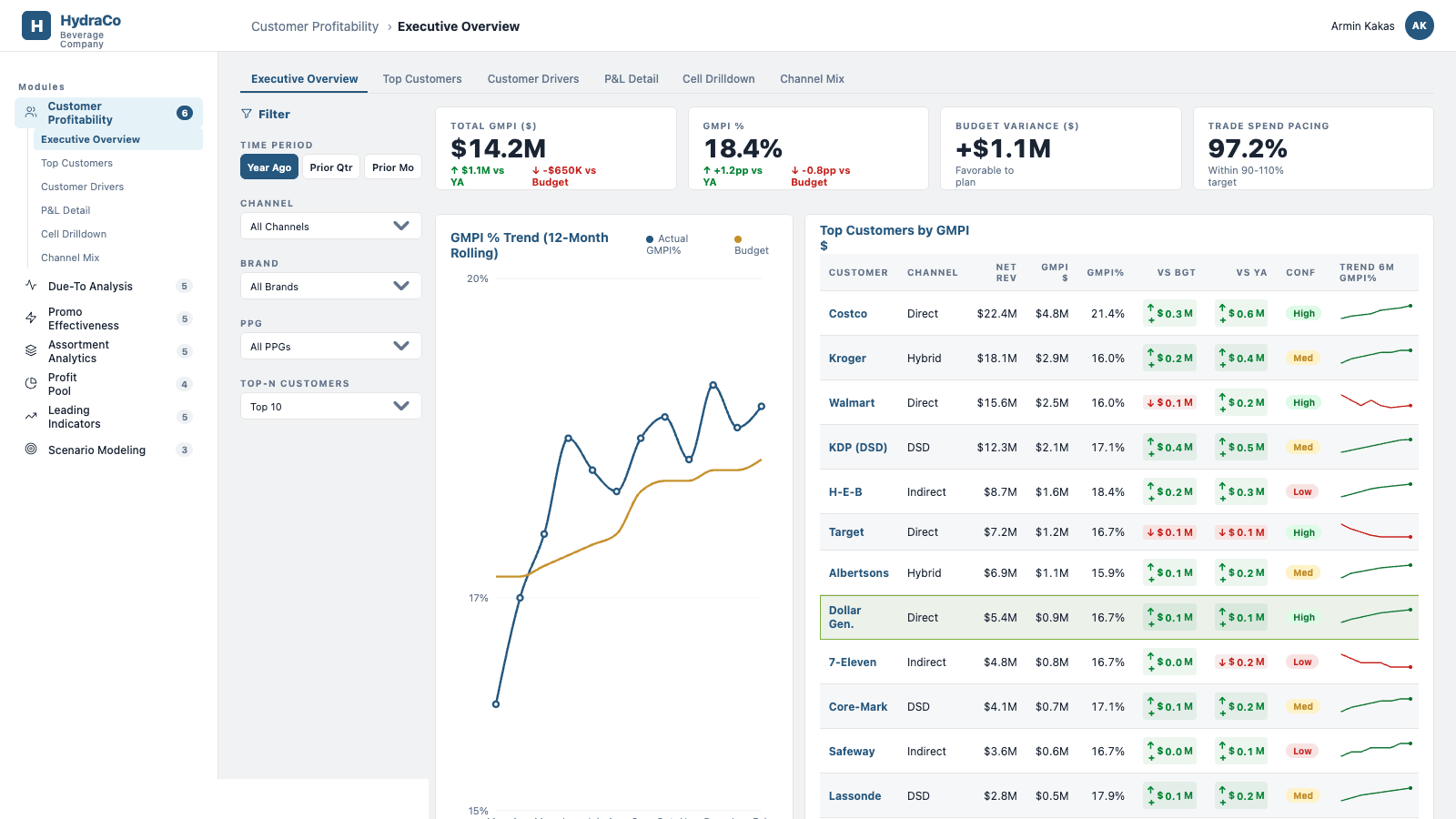
navigator executive overview

Revenue Growth Management (RGM) breaks down when Sales, Finance, and Trade each read from their own numbers. Syndicated data, ERP, trade spend, and retailer funding sit in separate views, so the promo or price decision stalls. Revology, the #1-ranked Pricing & RGM consultancy for mid-market companies, co-designs ATLAS inside your stack: six connected analytical modules on one foundation, spanning price-pack architecture, trade-promotion optimization with causal incrementality, elasticity modeling, and customer profitability that reconciles to the GL. A Claude agent layer then takes over the repetitive analytical labor. You own the engine, with no per-seat license.

Most CPG pricing teams don’t have a data problem. They have a navigation problem.

Eight tabs open on Monday morning. Three sources giving three different answers for the same number. An annual-plan-to-trade-to-latest-estimate flow that breaks by week four of the quarter. Your analysts spend roughly 70% of the week assembling the picture and 30% acting on it. Every cycle spent reconciling source disagreements is a cycle not spent on the decision that moves margin. Buying another RGM platform adds a ninth tab. ATLAS — the Pricing & RGM Analytics Navigator for CPG — is the integrated engine your team owns, and it fixes the navigation problem: one foundation, one set of definitions, and every module reading from the same source of truth.

What it is

Six modules, one foundation, one set of numbers

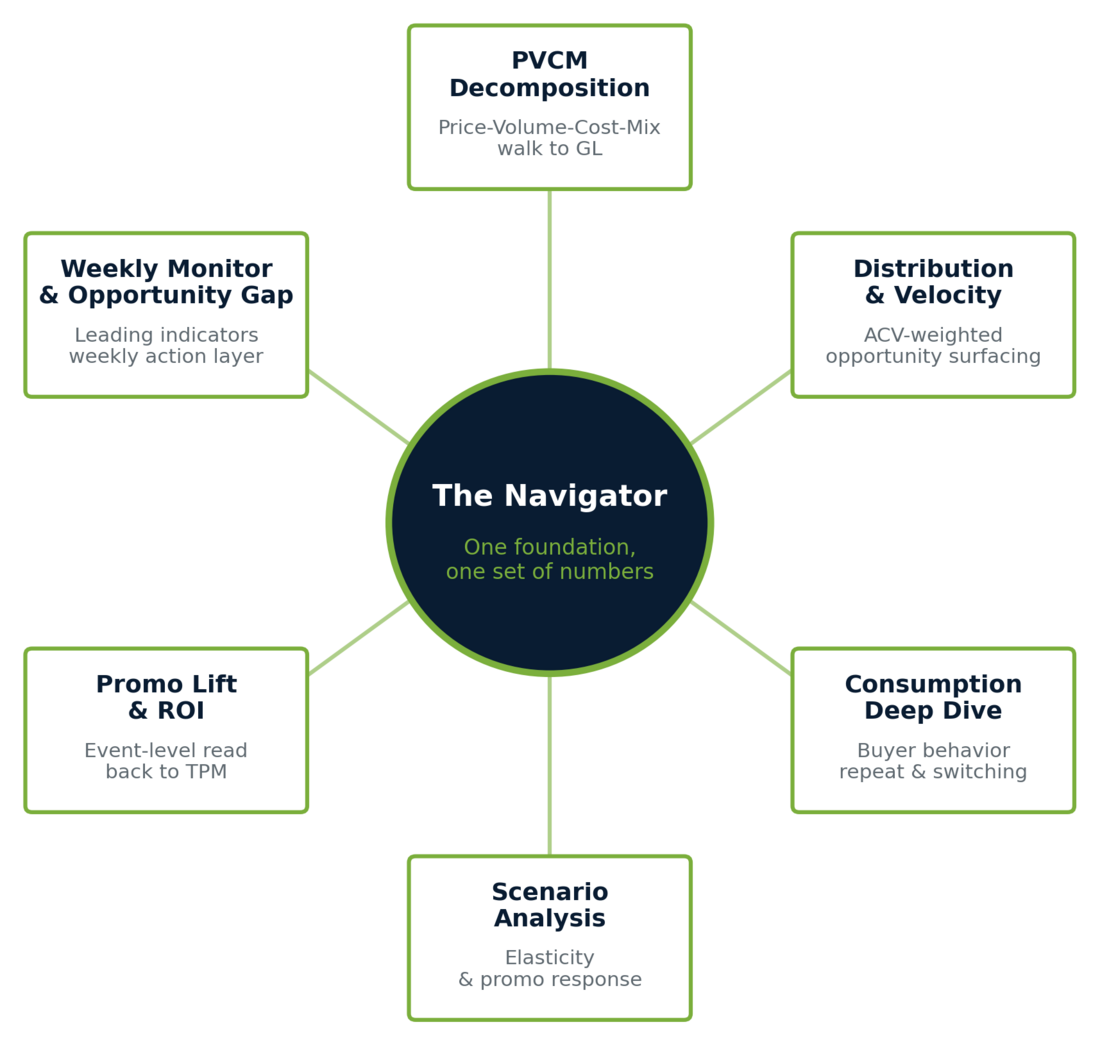
ATLAS is a six-module Revenue Growth Management (RGM) engine on a shared data backbone. Each module is built once, reconciled against the General Ledger, and exposed as the canonical view that Sales, Finance, and Brand all read from. The debate moves from “whose number is right” to “what do we do about it.”

1

PVCM Decomposition

The Price-Volume-Cost-Mix walk that reconciles to the GL, so customer profitability is a number your CFO will sign.

2

Distribution & Velocity

ACV-weighted assortment and on-shelf-availability analytics that surface where distribution gaps are quietly costing you volume.

3

Consumption Deep Dive

Due-to-volume decomposition that separates what sold from why it sold: base, promotion, distribution, and buyer behavior.

4

Scenario Analysis

Elasticity modeling, with hierarchical fallbacks for thin data, that sizes a price or promo move before you make it.

5

Promo Lift & ROI

Event-level trade-spend read that ties every promotion back to incremental volume and margin, then feeds the result to your trade-promotion-management (TPM) tool.

6

Weekly Monitor + Opportunity Gap

A leading-indicator action layer that flags the revenue gap while you can still close it, not after the quarter books.

navigator six modules

The foundation most analytics builds skip

What keeps ATLAS alive after handoff

01

Revology Flow, the master-data app.

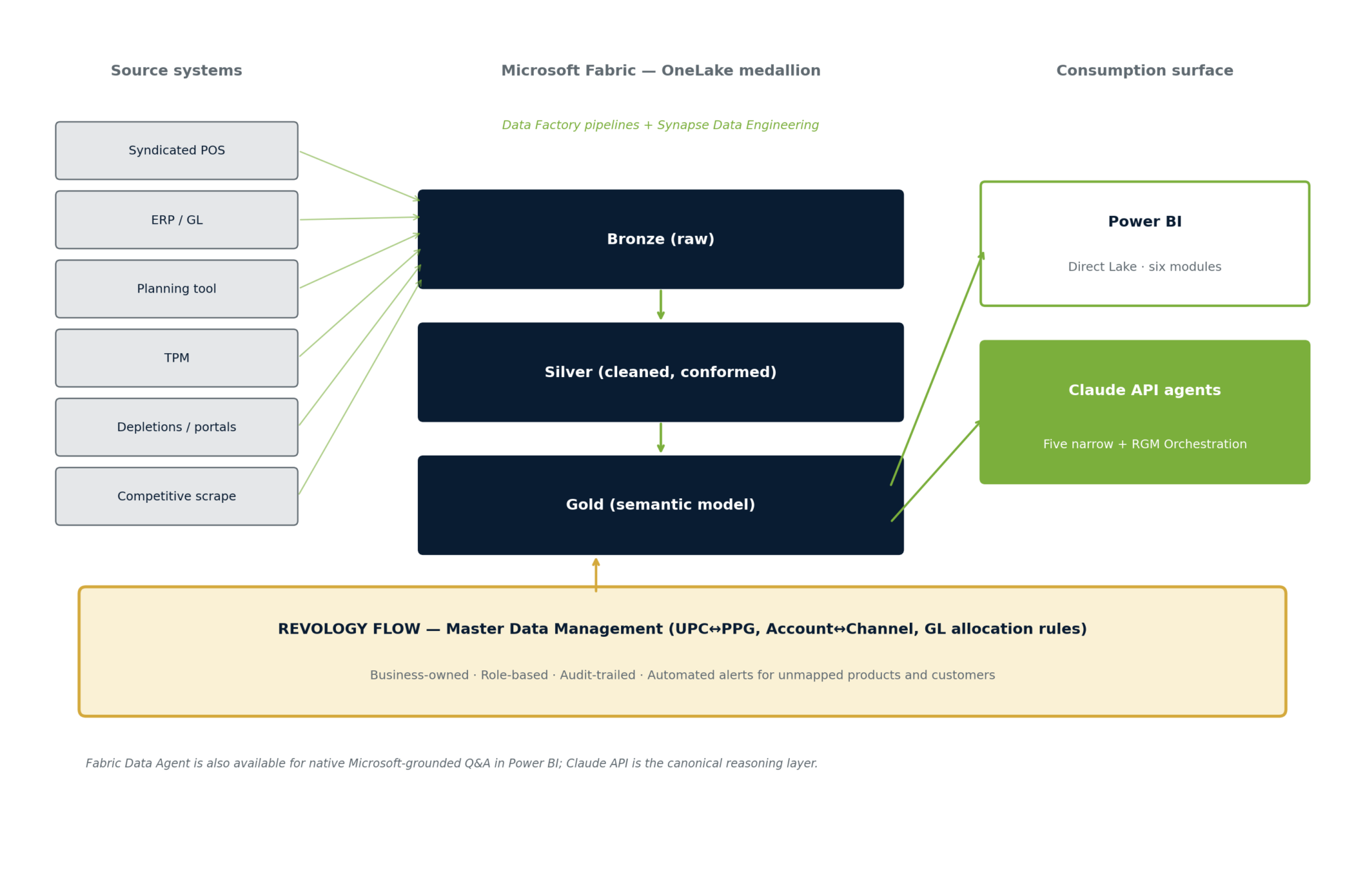
Most consultancies hand off a build with a 200-page data dictionary that goes stale in a month. We build ATLAS and Revology Flow, a lightweight, business-owned master-data app white-labeled to your company. Your Sales Ops, RGM, and Category teams manage product, customer, and channel mappings (and the GL allocation rules) through a simple web UI, with automated alerts for anything unmapped. ATLAS stays current because the people closest to the data own the mappings, not an engineering ticket queue.

02

Three-tier GL allocation.

Customer profitability and trade ROI only matter if they reconcile to the CFO’s books. Our three-tier allocation cascade handles it: direct customer-tagged costs where attribution is clean, a distributor-leg allocation for the indirect retail leg, and a company-wide residual for everything else. Your finance partner owns the methodology, which is why they trust the output.


03

Built on your stack.

At enterprise data volumes, we build on Microsoft Fabric end-to-end: a medallion lakehouse on OneLake, Data Factory pipelines, Synapse Data Engineering, and a Gold semantic model feeding Power BI through Direct Lake for sub-second performance. At mid-market scale, the same six modules run on a leaner Python + BI stack with a 10–20 minute refresh that a single analyst can maintain. The methodology is the asset. The tech stack is a choice that follows your data volume and team maturity.

 
navigator fabric architecture

Where the agent layer takes it next

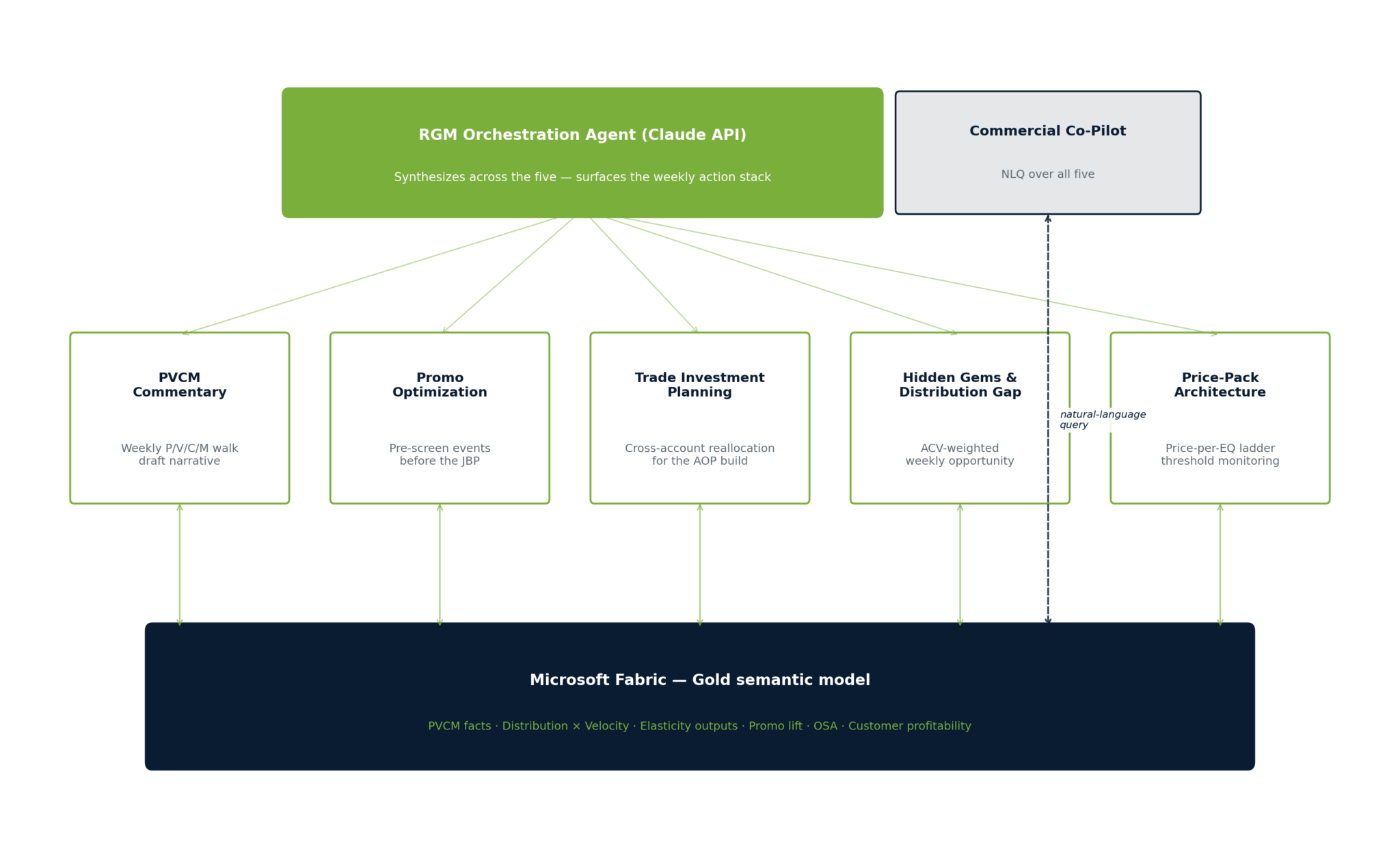
Once the foundation exists (clean data, shared definitions, GL-reconcilable modules, a semantic model), narrow Claude agents that read from that model take over the repetitive analytical labor. A PVCM Commentary Agent drafts the Monday profitability narrative within 24 hours of close. A Promo Optimization Agent recommends the next calendar’s high-ROI swaps. Further agents cover hidden-gem detection, trade investment planning, and price-pack architecture, coordinated by an orchestration layer. AI is the productivity multiplier here, added once the foundation works. It is not a product you license. The foundation is the headline; the agents are the upside.

navigator ai agents

What the build is worth

Year-1 impact, low end to high end

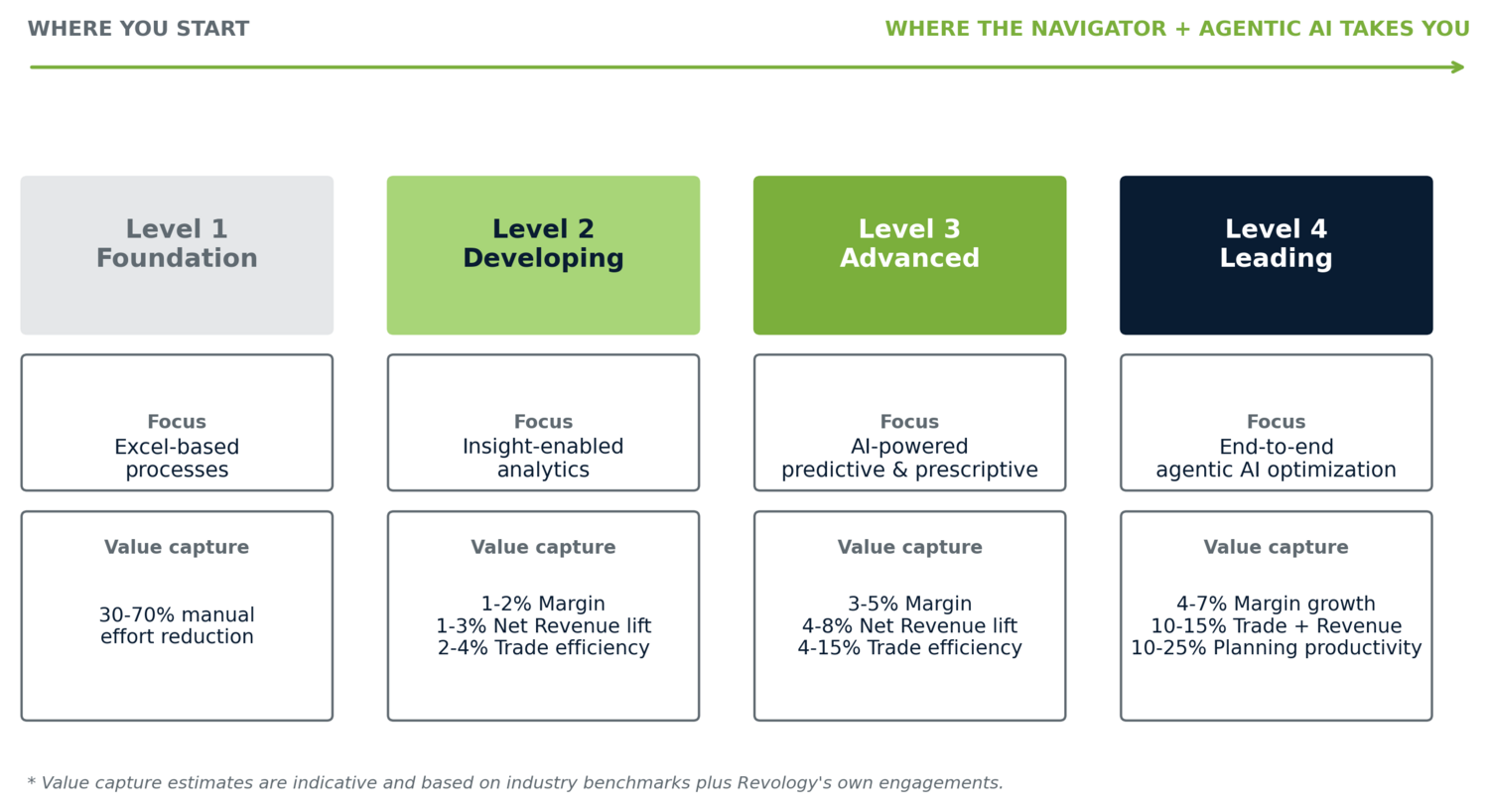
Revology’s research and engagements estimate the Year-1 impact as ATLAS’s modules come online. The range scales with your data volume and team maturity, from the low end to the high end:

LeverYear 1 — low end Year 1 — high end
Gross margin improvement+1–2% +5–7%
Net revenue lift+1–3%+4–8%
Trade-spend efficiency+2–4%+4–15%

Consistent with Revology’s signature year-one range of 200–400 bps of gross profit for CPG and distribution. Value compounds further as the foundation matures and the agent layer takes on more of the analytical load

navigator maturity ladder

What commercial leaders say after the build

“Most importantly, we did it 2x as fast and at 25% of the budget as turnkey solutions. With Revology Analytics, you’re getting both Revenue Growth Management and Advanced Analytics experts with solid domain knowledge, which is essential for these high-impact projects.”

Sr. Director, Business Intelligence — Food & Beverage CPG

“Most importantly, we did it 2x as fast and at 25% of the budget as turnkey solutions. With Revology Analytics, you’re getting both Revenue Growth Management and Advanced Analytics experts with solid domain knowledge, which is essential for these high-impact projects.”

Head of Analytics — leading auto service & tire retailer

See ATLAS in action

An ATLAS build, anonymized

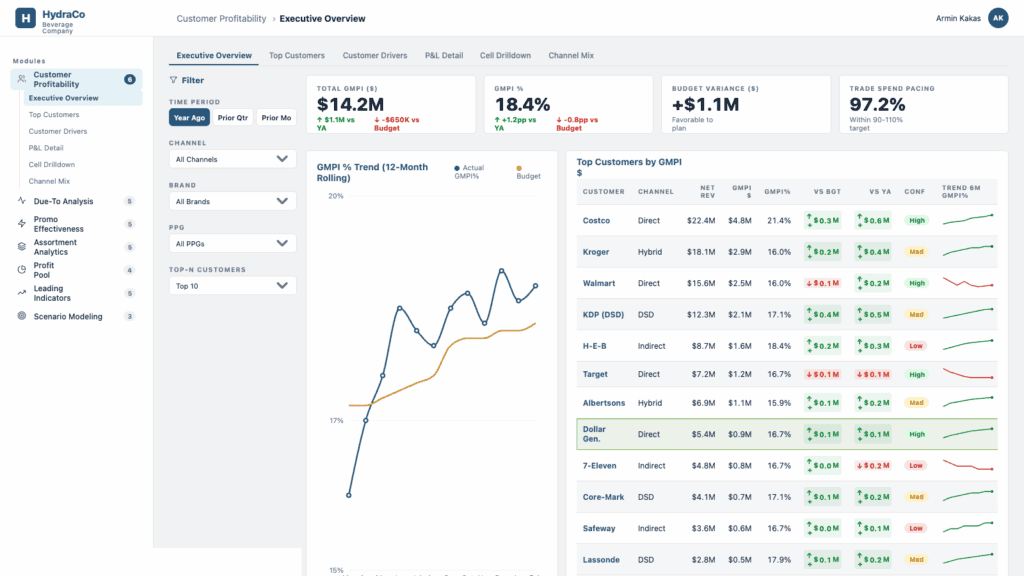
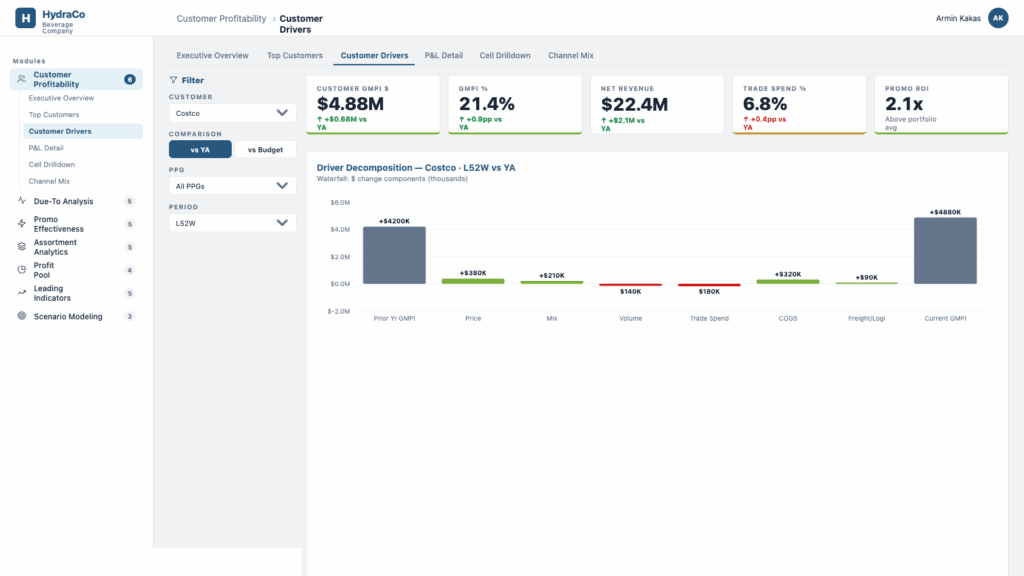
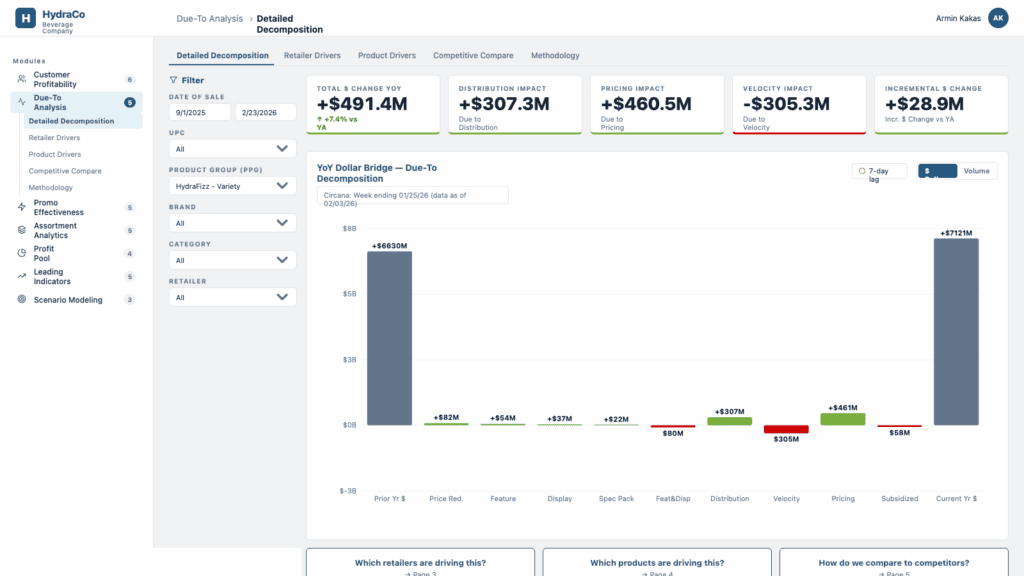
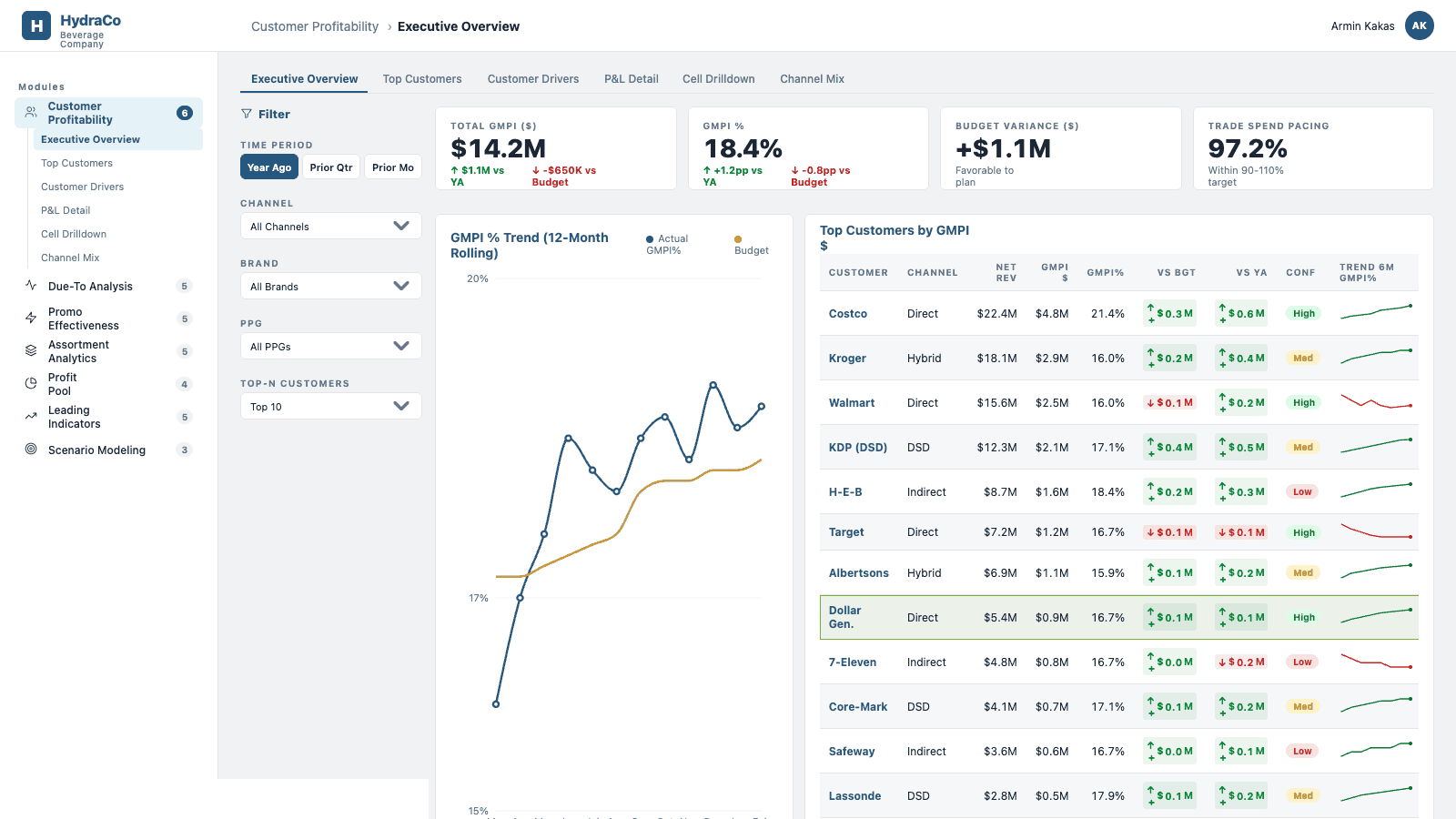
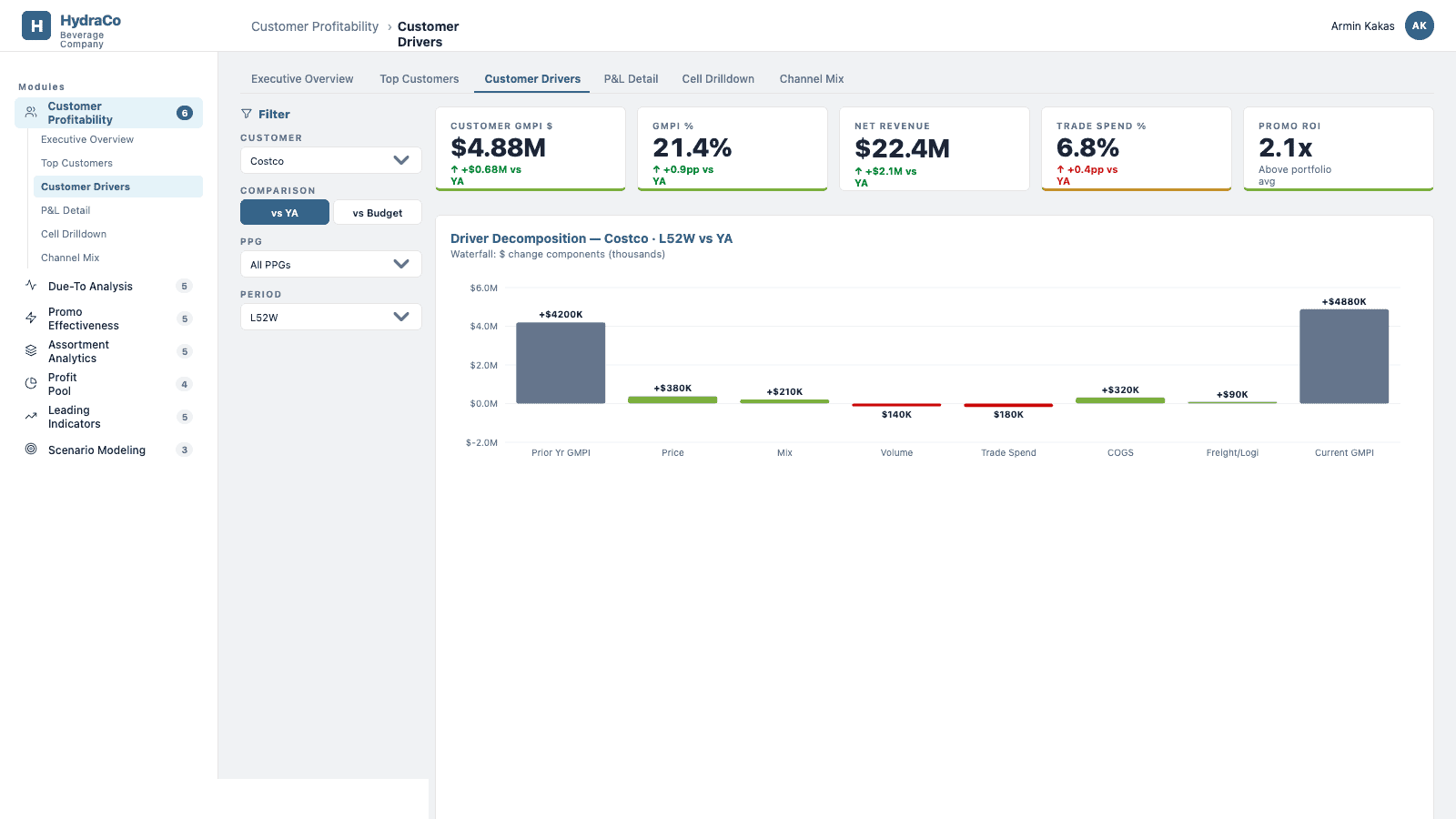
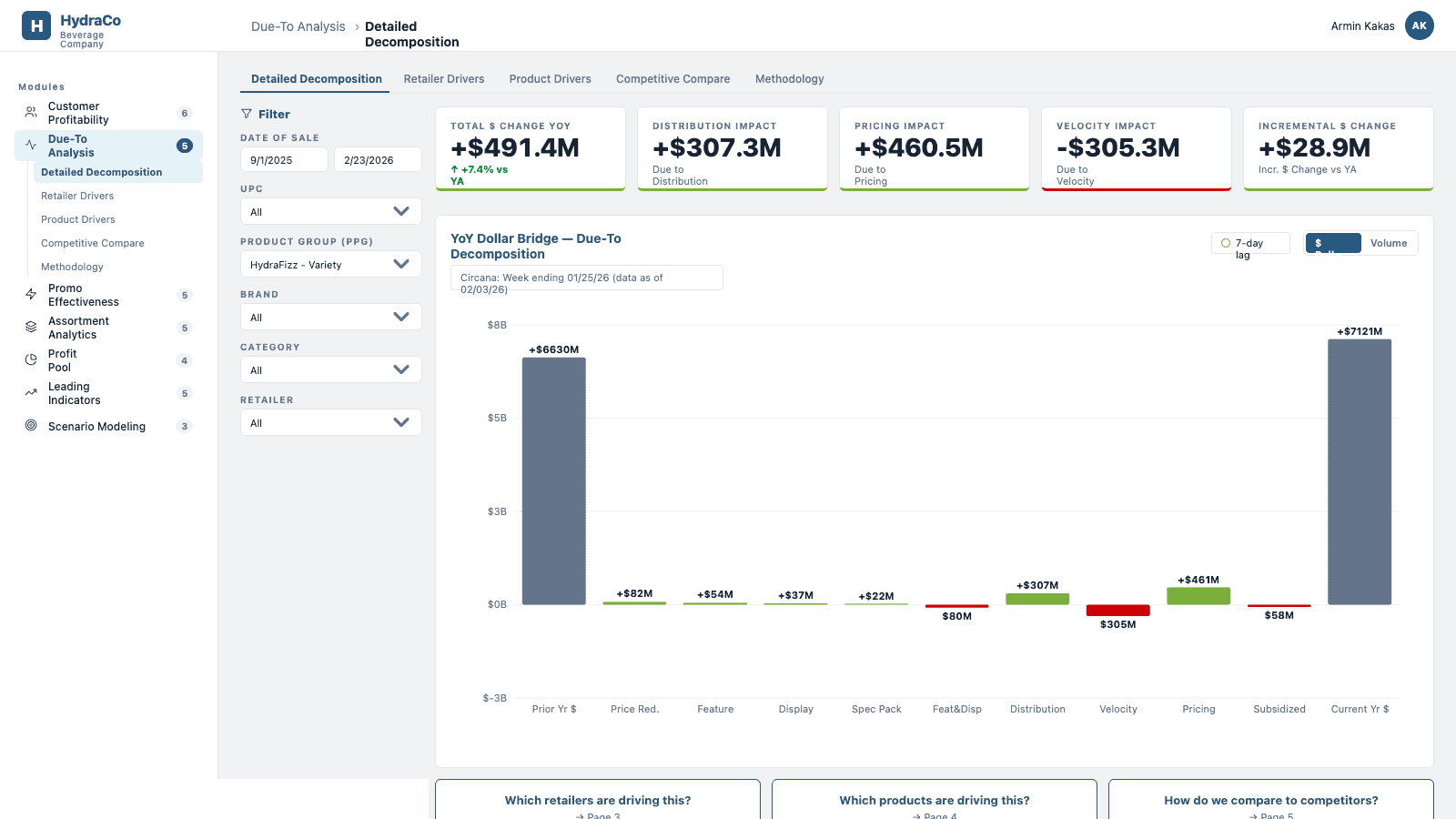
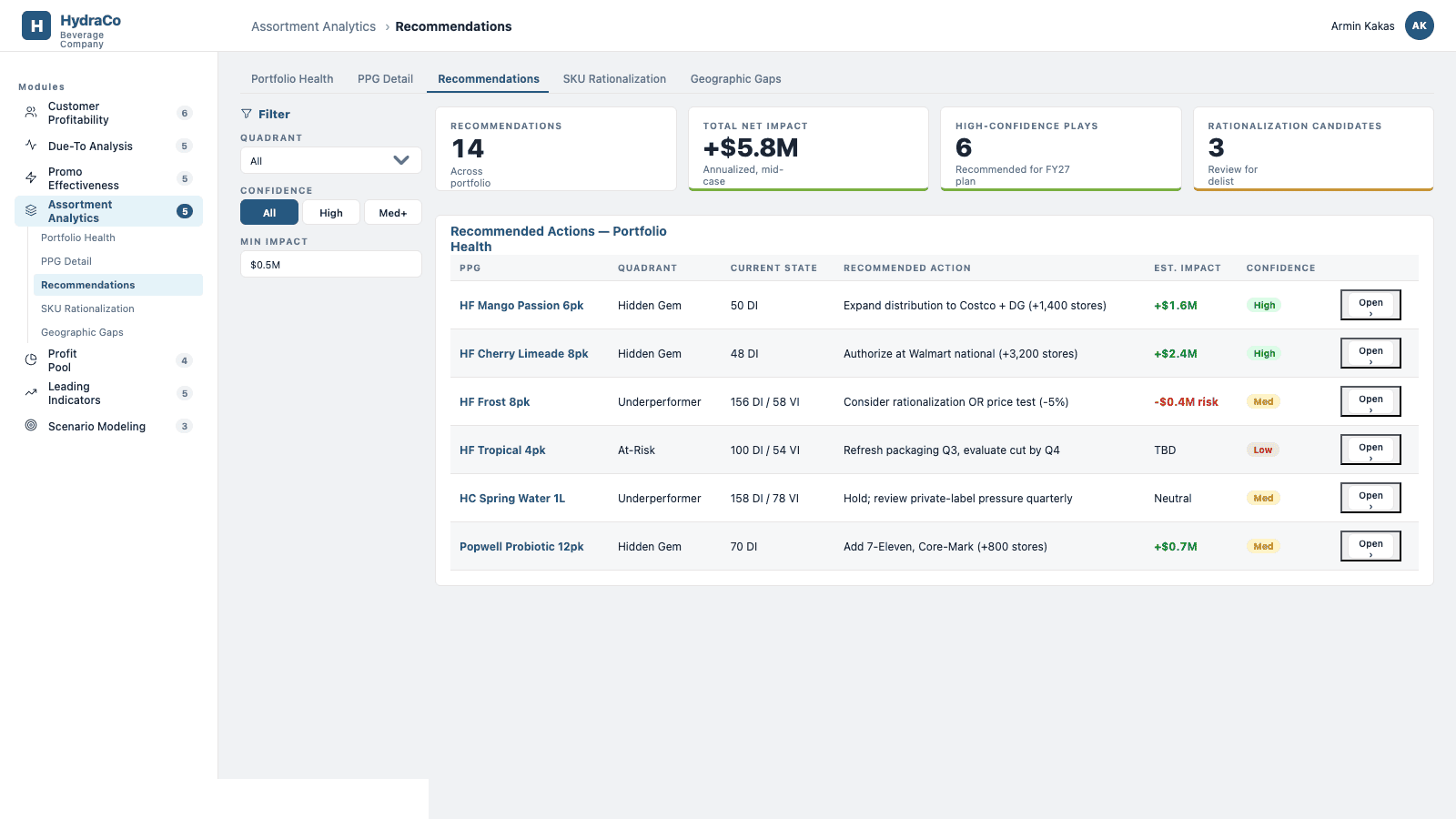
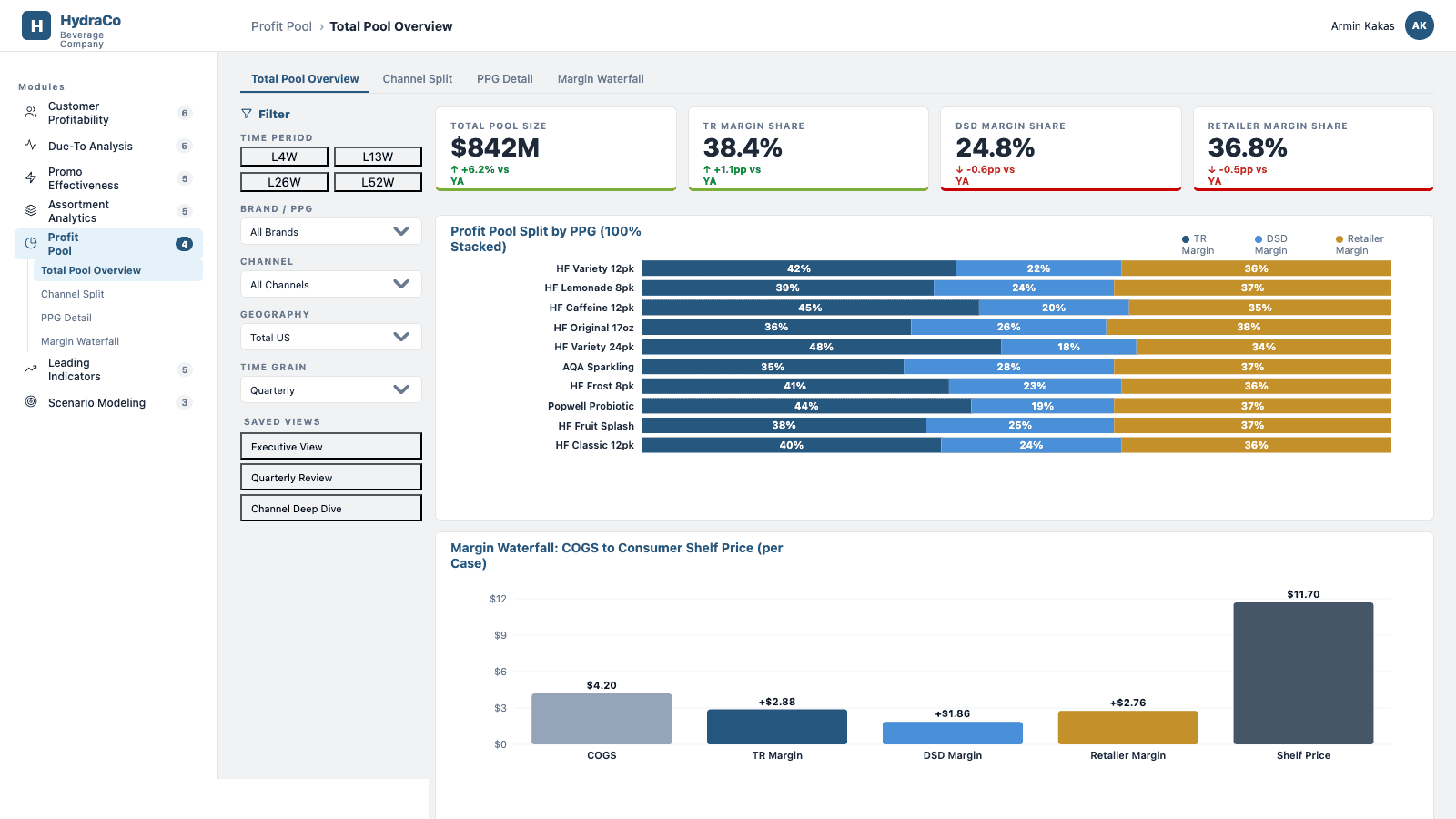
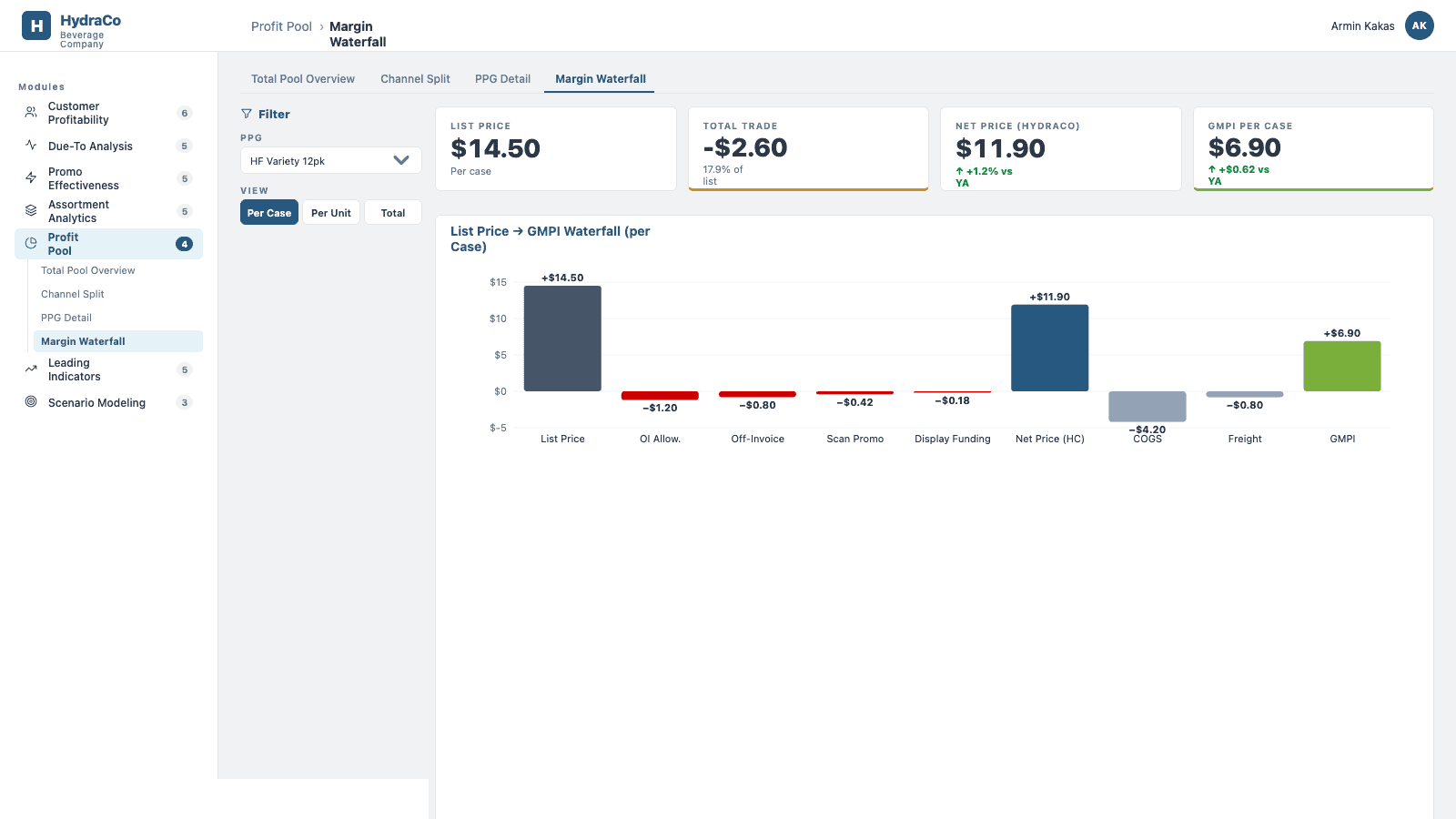
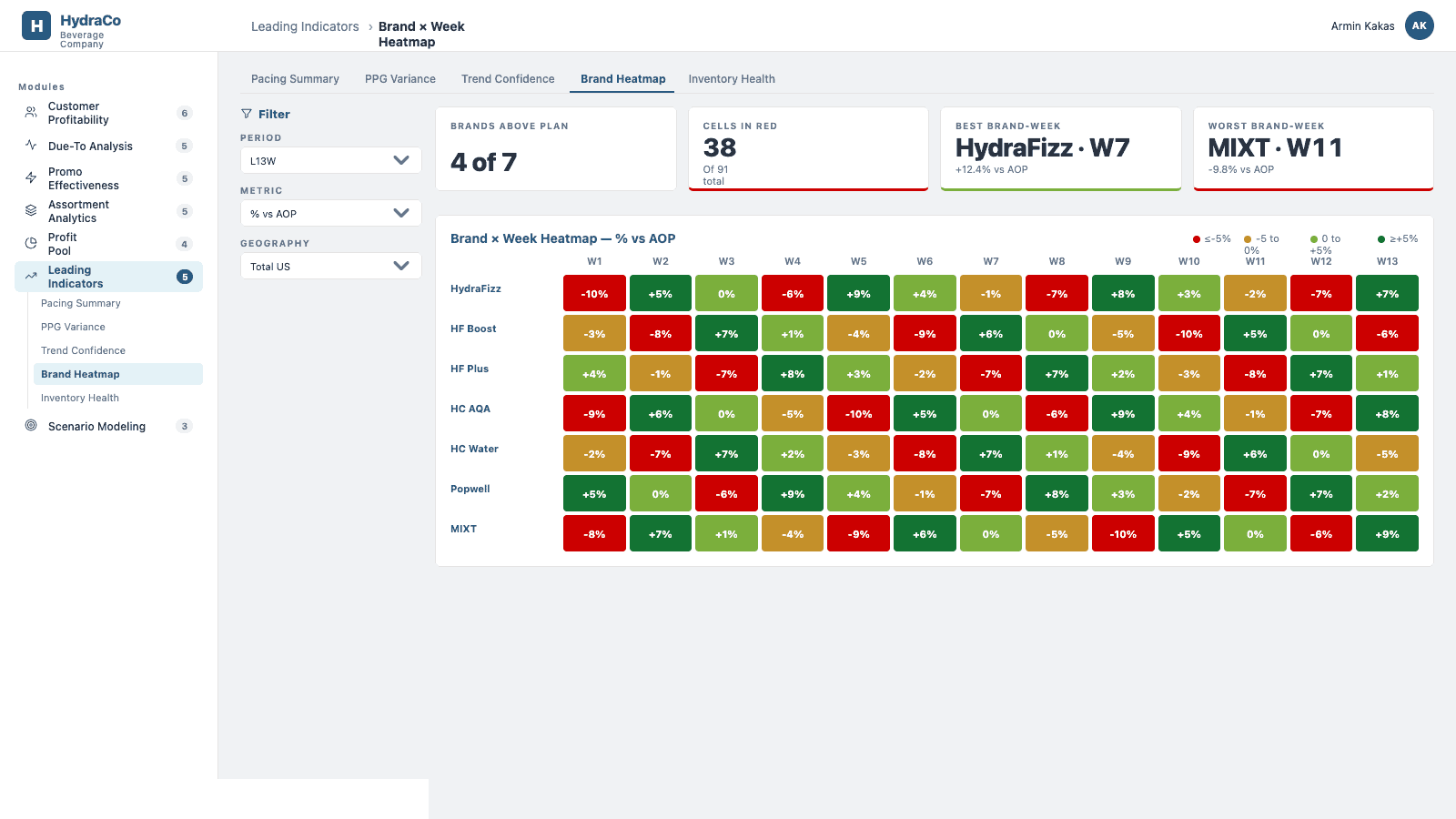
These are anonymized views of an ATLAS build. A fictional beverage brand, HydraCo, stands in for client data; the modules and layout are what your team would run.

navigator dashboard collage
Revology Analytics dashboard showing customer profitability and top customers.

Customer Profitability

Executive view

Revology Analytics dashboard showing customer profitability and driver decomposition metrics.

Customer Profitability

Customer drivers

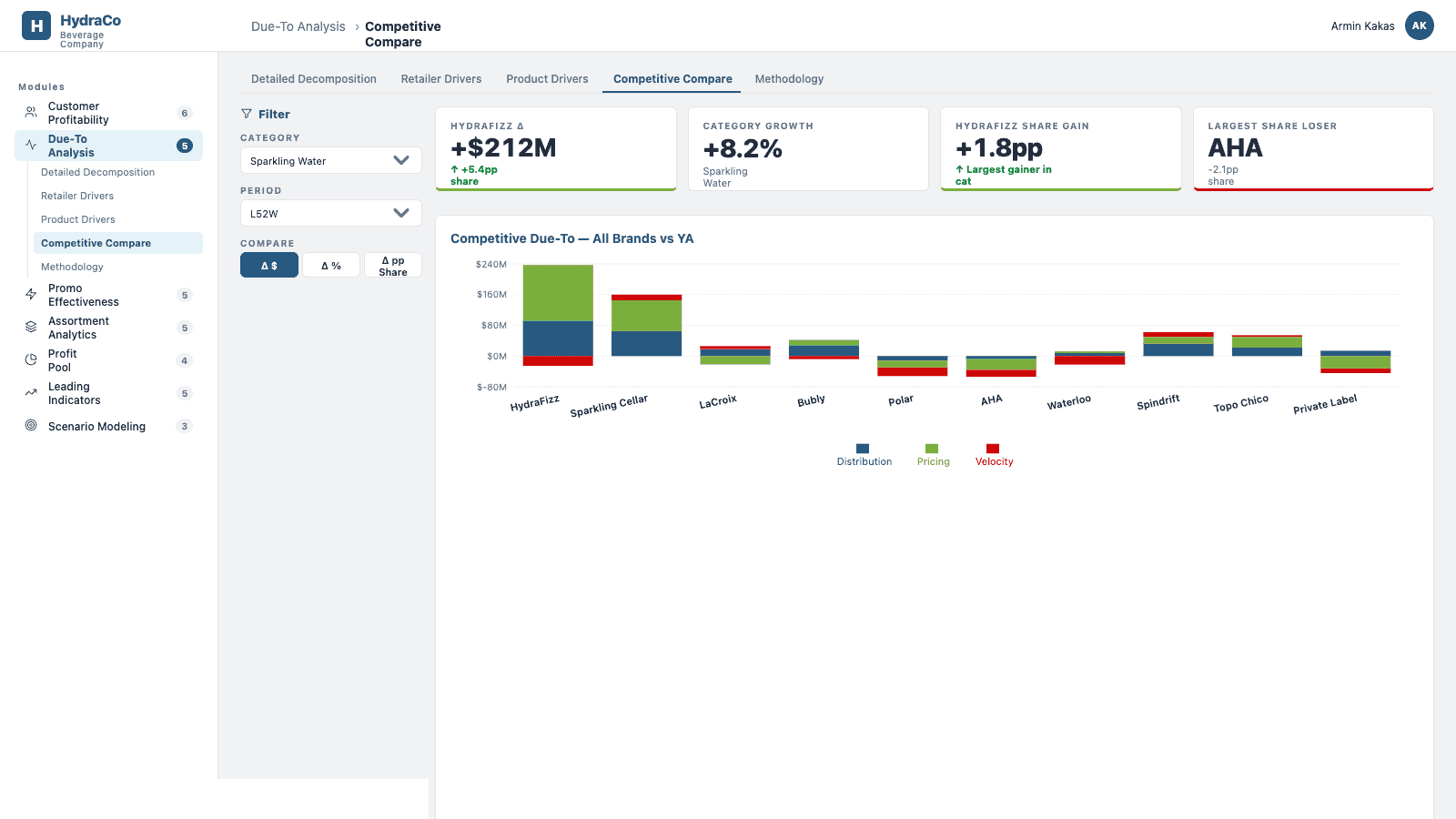
HydraCo analytics dashboard showing product performance and sales data.

Consumption Deep Dive

Due-to decomposition

Revology Analytics dashboard showing competitive pricing and market share data.

Consumption Deep Dive

Competitive compare

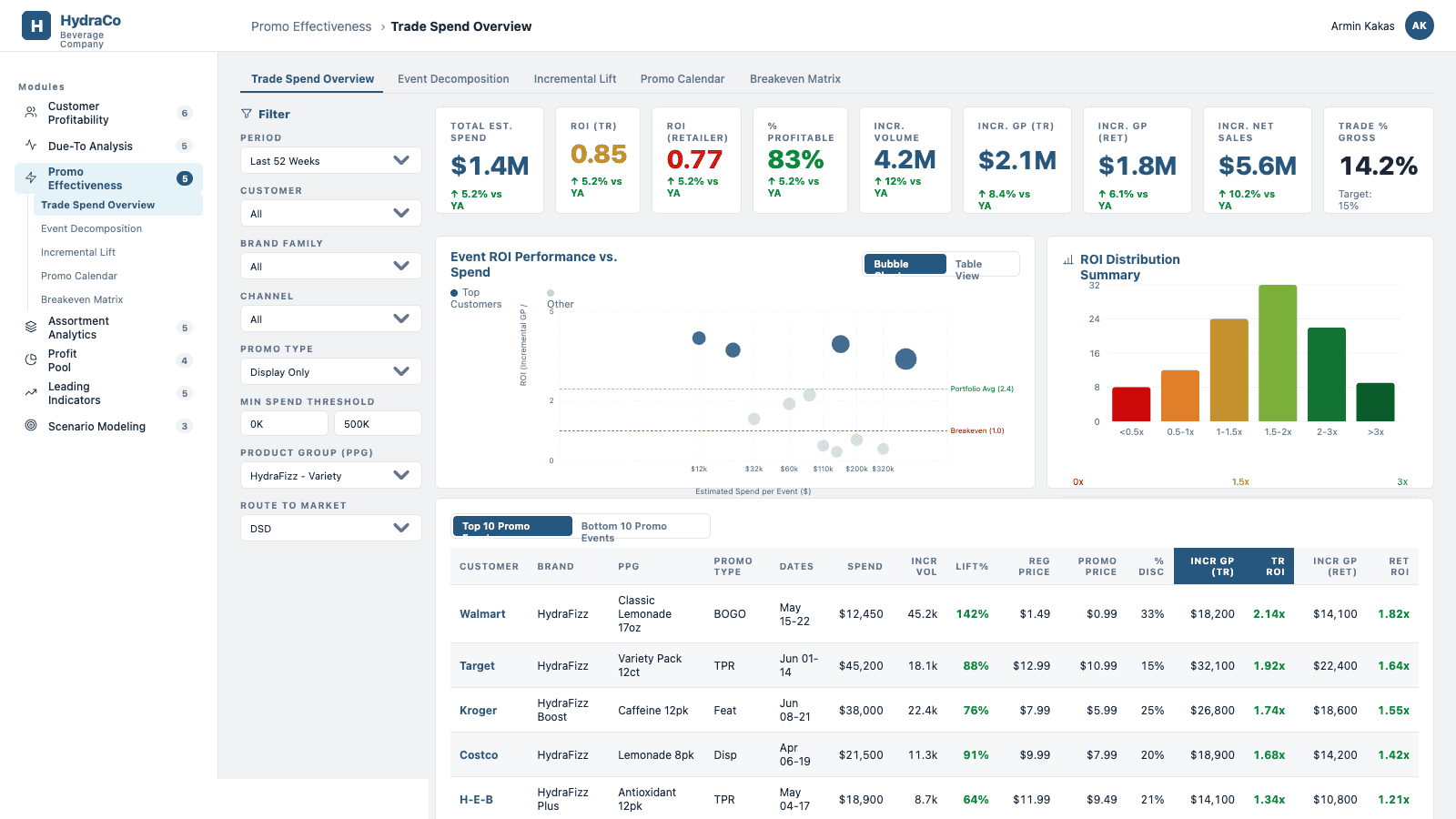
Revology Analytics dashboard showing trade spend and ROI performance metrics.

Promo Lift & ROIT

Trade-spend overview

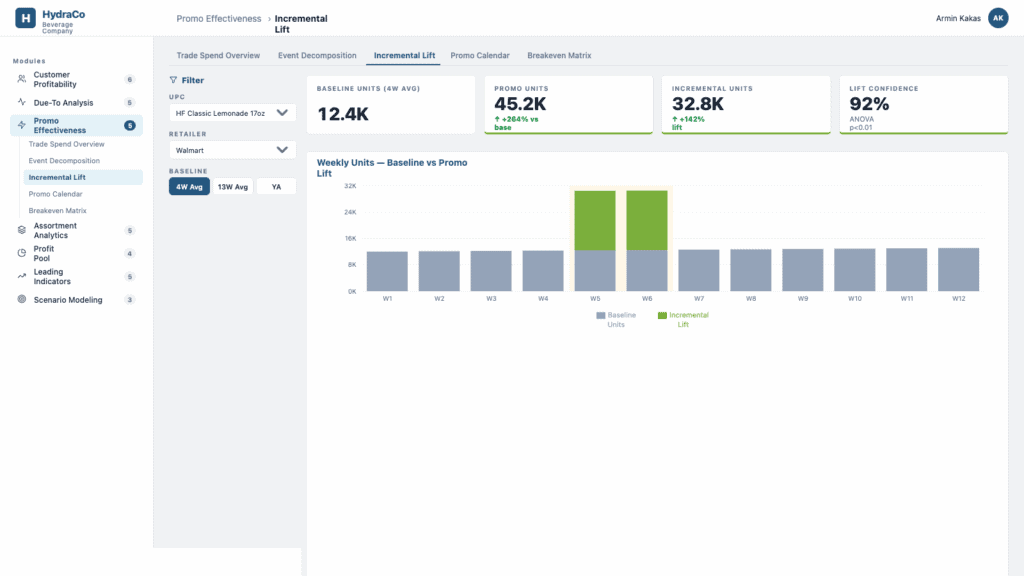
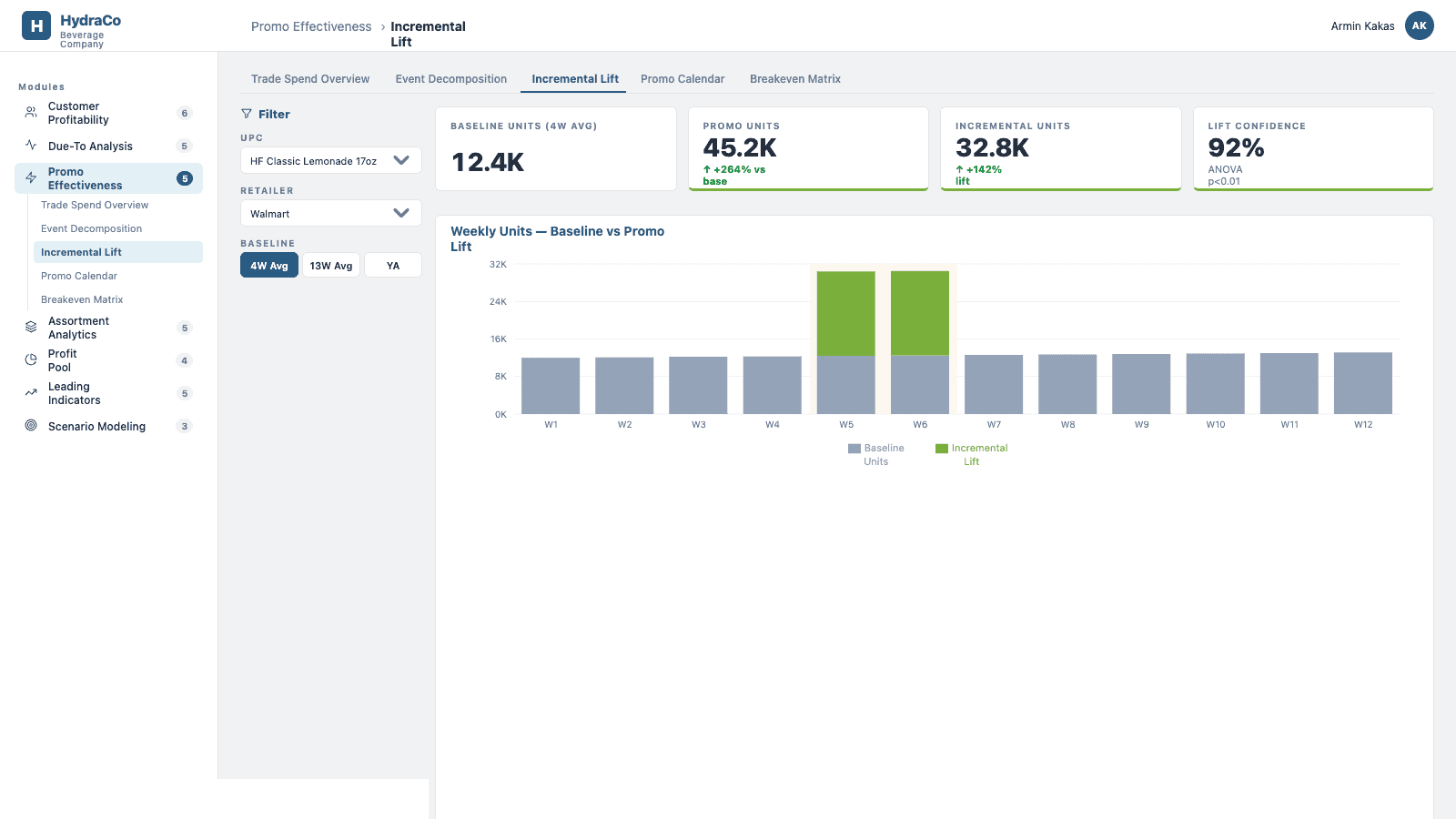
Revology Analytics platform displaying sales and promotional data.

Promo Lift & ROI

Incremental lift

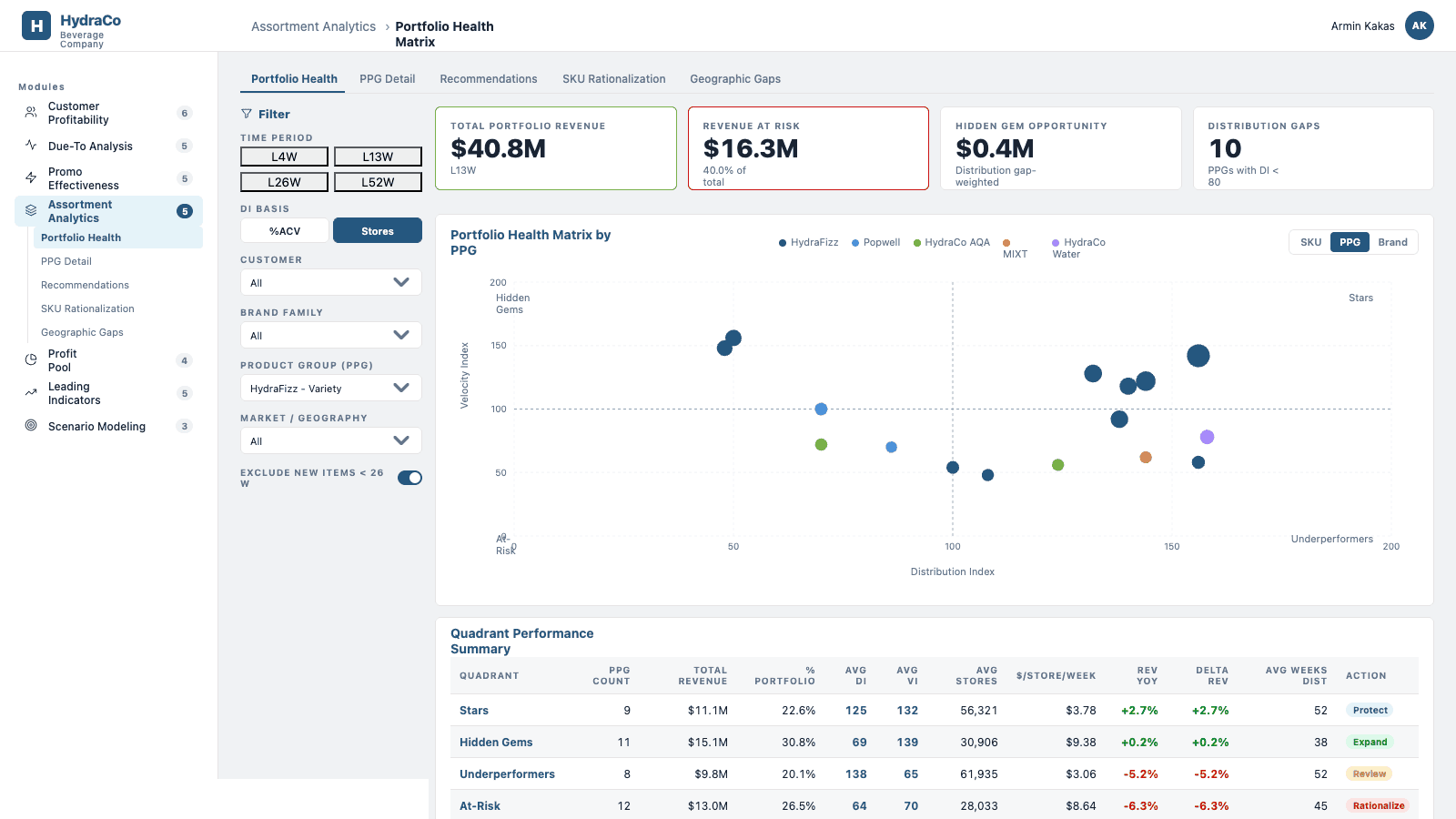
Revology Analytics dashboard showing portfolio health and performance metrics.

Distribution & Velocity

Portfolio health matrix

Revology Analytics dashboard showing recommendations and portfolio actions for CPG.

Distribution & Velocity

Assortment recommendations

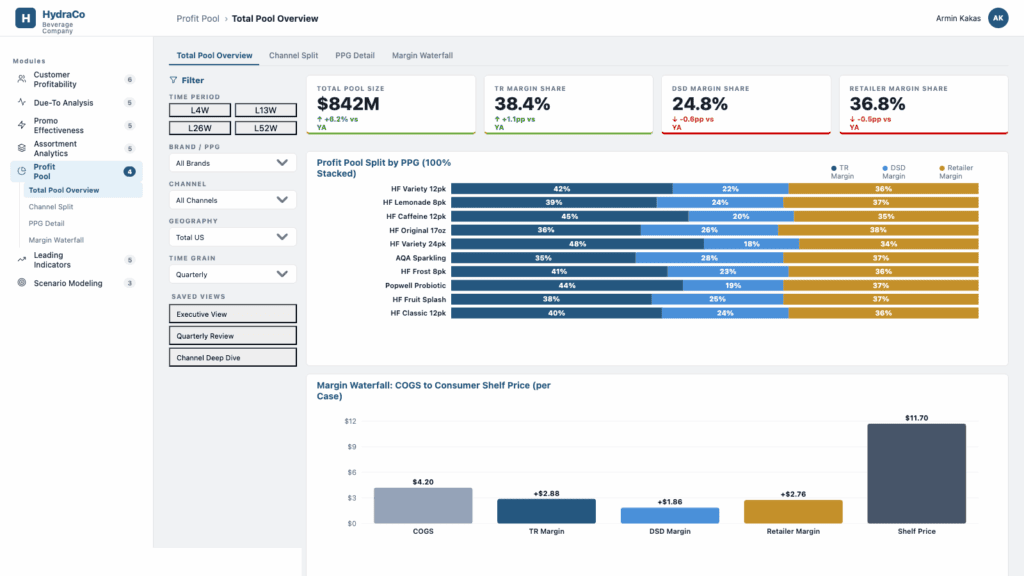
Revology Analytics dashboard showing profit split and water margin data for CPG.

Profit Pool

Profit-pool overview

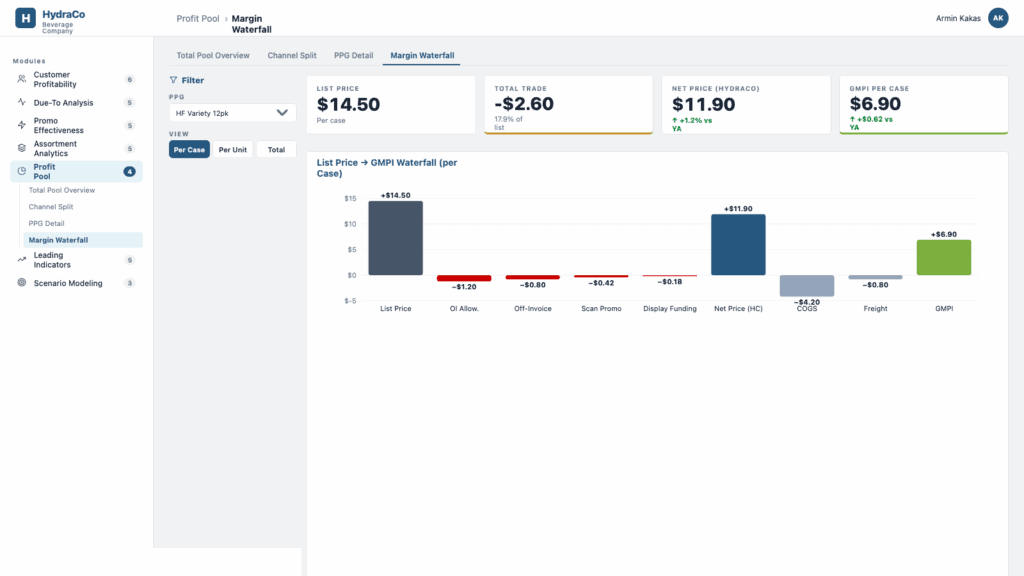
Revology Analytics dashboard showing pricing and RGM metrics for CPG.

Profit Pool

Margin waterfall

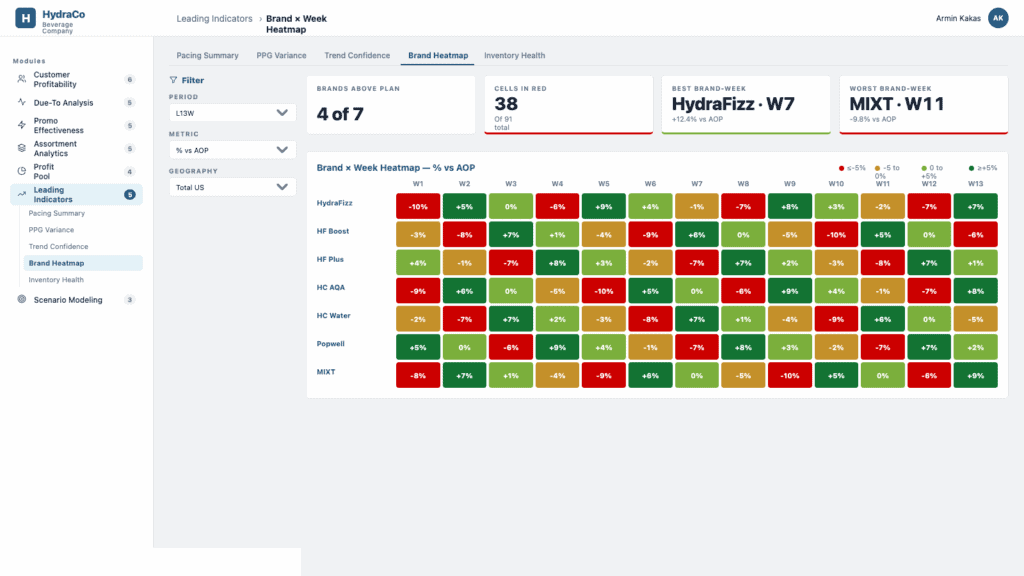
CPG brand performance analytics dashboard with key metrics and heatmap.

Weekly Monitor

Brand-week heatmap

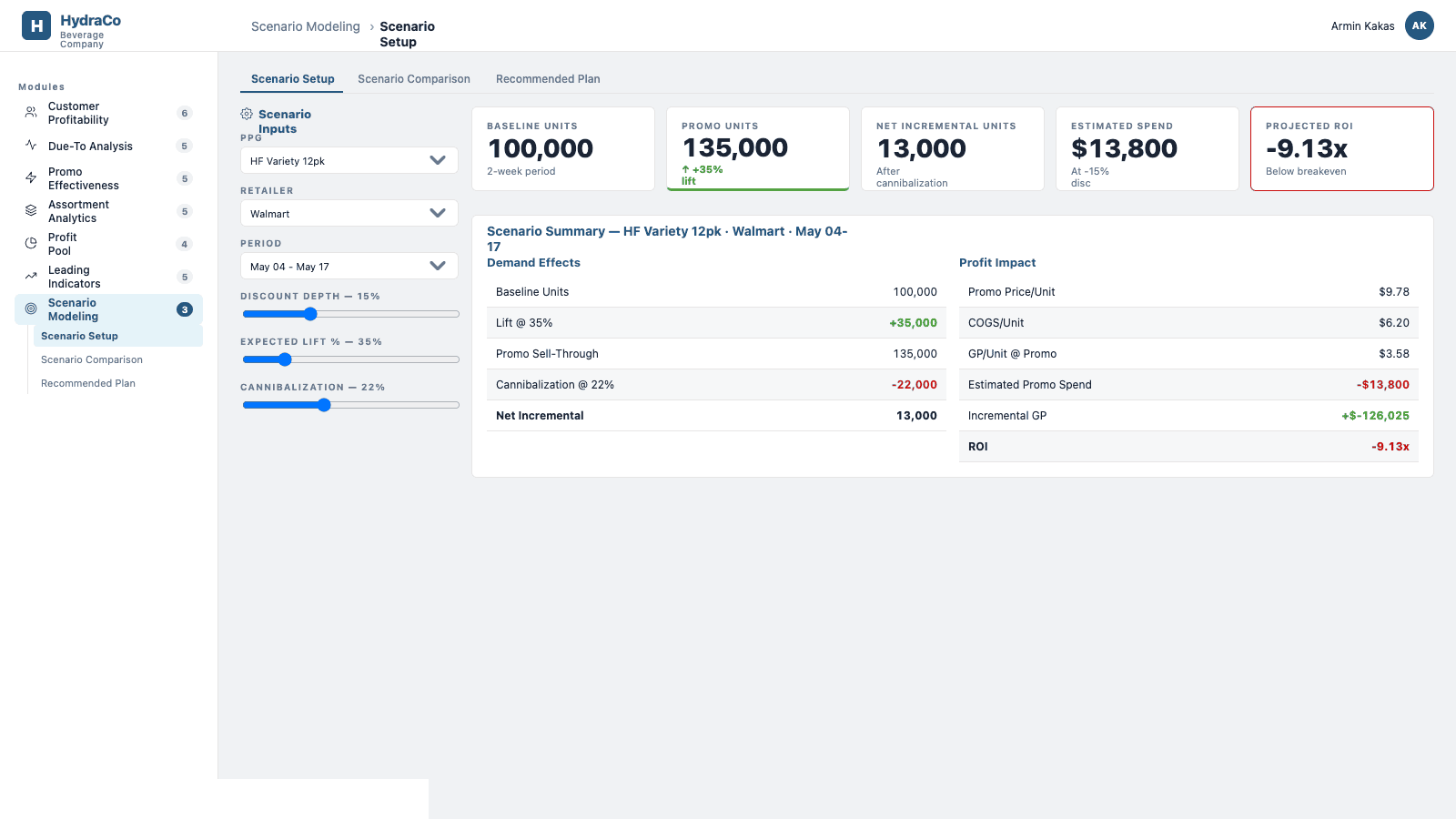
Revology Analytics platform displaying scenario modeling and financial metrics.

Scenario Analysis

Scenario setup

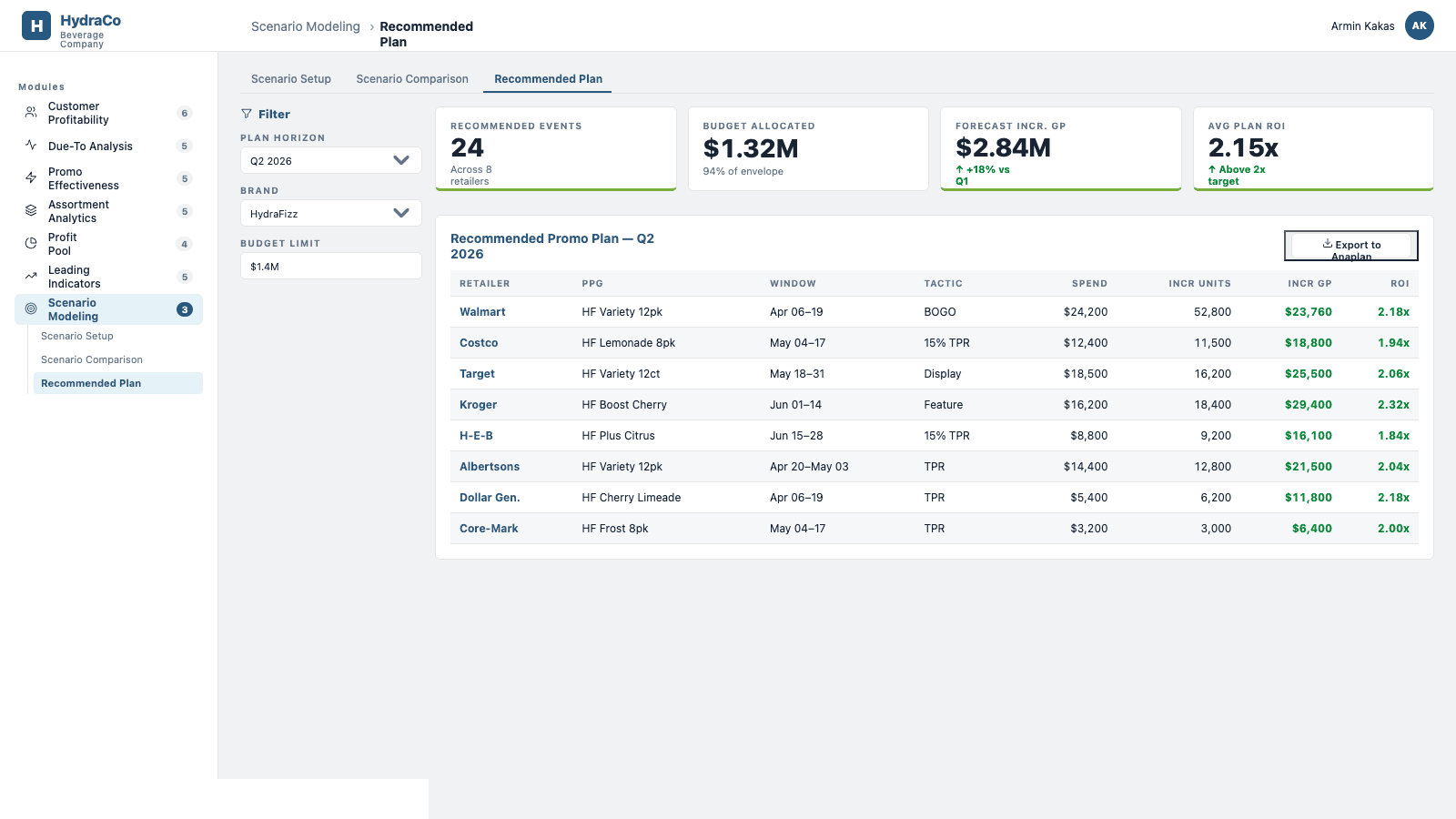
Revology Analytics platform displaying scenario modeling and financial metrics.

Scenario Analysis

Recommended plan

Who it’s for

Built for the leaders who own the number

See ATLAS against your own data.

Bring your sources and your stack to a 45-minute working session. We’ll map the highest-leverage module and what a 120-day build looks like for you.

FAQ

Revenue Growth Management, answered

What is revenue growth management (RGM)?

Revenue Growth Management (RGM) is the practice of growing profitable revenue by optimizing the commercial levers together: pricing, promotion and trade spend, price-pack architecture, assortment and distribution, and mix. Instead of running those as isolated tactics, Revology’s ATLAS Navigator operationalizes RGM as six connected analytical modules on one data foundation that your team owns.

What are the five levers of revenue growth management?

The five levers of revenue growth management are pricing, promotion and trade spend, price-pack architecture, assortment and distribution, and mix. ATLAS operationalizes all five on one shared data foundation, so a move in one lever is sized against its effect on the others.

Do we need to buy revenue growth management software?

No. You can build and own the capability instead of licensing a platform. ATLAS is co-designed inside your existing stack, whether Microsoft Fabric or a Python + BI build, with no per-seat license and no black box. You keep the models, dashboards, and data backbone.

How is ATLAS different from an RGM SaaS platform?

A platform hands you software and a login. ATLAS hands you a capability your team owns: built on your data, reconciled to your GL, integrated with the systems you already run, and carrying no recurring license.

Do we need Microsoft Fabric to run it?

No. Fabric is the right choice at enterprise data volumes, but the same six modules run on a leaner Python + BI stack for mid-market teams. We choose the stack based on your data volume and team maturity.

How long does it take to stand up?

A typical foundational build runs 90–120 days, sequenced so the highest-margin-impact module is proven first. Capability transfer happens continuously, not at the end.

How is an ATLAS engagement structured?

As a fixed-scope build, not a subscription. We define the modules, data sources, and stack in a working session, price the build to that scope, and transfer capability throughout. There is no per-seat license and no recurring fee; your team owns the engine at handoff.

Does Revology always use AI?

No, and that is deliberate. AI is a strategic enabler, not the product. When your data and operational readiness support it, we deploy advanced machine learning and agentic AI. When a simpler method reaches the goal faster, we use that and sequence the AI for when it earns its place.

Has Revology been independently ranked?

Yes. Revology Analytics is ranked #1 by PeekWire in “Best Revenue Growth Management Consulting Firms for Mid-Market Companies,” April 2026, recognized for hands-on execution in pricing, sales and marketing AI enablement, and commercial analytics transformation, and for embedding senior experts directly into the client’s team. Read the full ranking.