

Tariff Trouble? It Might Be a Symptom of Bigger Pricing Problems
Event date: April 23, 2026. 12-1pm EST Register here. Everyone is talking about tariffs. But here’s what most of the conversation is missing: the way
Have a Revenue Growth Analytics pain point, a question, or a content suggestion?
Discover how Revology Analytics propels mid-market businesses to sustainable, profitable growth by building advanced, in-house Revenue Growth Analytics & Management (RGM) capabilities—fast.
Our senior expert-led, hands-on approach ensures you own the tools, insights, strategy and processes needed to thrive long-term.
Gain exclusive access to the latest insights from over 150 commercial leaders on the state of Revenue Growth Analytics in 2025, based on our expanded Revenue Growth Analytics Maturity Scorecard™.
Access our comprehensive advisory services, where Pricing and Revenue Growth Management transformations are at the core.
We also specialize in Sales & Marketing AI Enablement and Commercial Analytics transformations. In 90–120 days, our senior practitioners embed advanced solutions, equipping organizations with enduring, in-house growth engines that drive measurable results.
Discover how Revology Analytics propels mid-market businesses to sustainable, profitable growth by building advanced, in-house Revenue Growth Analytics & Management (RGM) capabilities—fast.
Our senior expert-led, hands-on approach ensures you own the tools, insights, strategy and processes needed to thrive long-term.
Explore Revology Analytics’ curated thought leadership on various Revenue Growth Analytics and Management topics.
Our case studies, white papers, webinars, and toolkits illuminate best practices and emerging trends. Gain actionable insights to refine your holistic Revenue Growth Management strategies and capabilities, fueling sustainable, profit-focused decisions across your organization.
Discover how Revology Analytics propels mid-market businesses to sustainable, profitable growth by building advanced, in-house Revenue Growth Analytics & Management (RGM) capabilities—fast.
Our senior expert-led, hands-on approach ensures you own the tools, insights, strategy and processes needed to thrive long-term.
Gain exclusive access to the latest insights from over 150 commercial leaders on the state of Revenue Growth Analytics in 2025, based on our expanded Revenue Growth Analytics Maturity Scorecard™.
Access our comprehensive advisory services, where Pricing and Revenue Growth Management transformations are at the core.
We also specialize in Sales & Marketing AI Enablement and Commercial Analytics transformations. In 90–120 days, our senior practitioners embed advanced solutions, equipping organizations with enduring, in-house growth engines that drive measurable results.
Discover how Revology Analytics propels mid-market businesses to sustainable, profitable growth by building advanced, in-house Revenue Growth Analytics & Management (RGM) capabilities—fast.
Our senior expert-led, hands-on approach ensures you own the tools, insights, strategy and processes needed to thrive long-term.
Explore Revology Analytics’ curated thought leadership on various Revenue Growth Analytics and Management topics.
Our case studies, white papers, webinars, and toolkits illuminate best practices and emerging trends. Gain actionable insights to refine your holistic Revenue Growth Management strategies and capabilities, fueling sustainable, profit-focused decisions across your organization.
New Product Pricing & Monetization is the capability of defining how a new product or service will generate revenue – essentially crafting its monetization strategy – from launch onward. It covers setting the initial price (or price structure) for a new offering, but also deciding the broader model: for example, will the product be sold one-time, via subscription, or through a usage-based model? Will it be bundled with existing products or sold à la carte? This capability ensures that when you bring innovation to market, the go-to-market pricing reflects the product’s value, competitive dynamics, and your business goals[14]. It often involves cross-functional considerations, aligning with product development (to perhaps create feature tiers), marketing (positioning the price in promotions), and sales (ensuring price levels won’t hinder adoption). In short, it’s about translating a new product’s unique value proposition into a profitable and market-acceptable pricing approach from day one.
Setting the right price for a new product is critical to its adoption. Too high, and you may scare off early customers; too low, and you leave money on the table or position the product as low-value. A rigorous new product pricing process ensures your offering hits the market at a price that balances market share and profit – maximizing revenue uptake in those crucial launch phases.
By evaluating alternatives (subscription vs. one-time sale, freemium vs. paid, bundled vs. standalone), clients can choose a revenue model that best suits the product and customer expectations. This can unlock recurring revenue streams or ancillary revenues (e.g. monetizing add-on services) that significantly boost long-term profitability beyond a simple one-time sale. The result is a sustainable business model for growth around the new product.
A well-designed pricing strategy for a new offering can be a competitive differentiator. For instance, an innovative pricing model (like a performance-based price or a novel bundle) might attract customers away from incumbents. Additionally, understanding competitor pricing for similar offerings allows you to position your product intelligently – either as a premium option justified by better value, or as a high-value disruptor at an aggressive price – giving you a strategic edge at launch.
Companies invest heavily in R&D for new products; effective monetization ensures you recoup that investment faster. By capturing appropriate value early (including via strategies like early adopter pricing or limited-time bundles), you improve the new product’s payback period. Moreover, a clear monetization plan signals to internal stakeholders (and investors) how this innovation will drive revenue, aligning expectations and resources for a successful launch.
Our New Product Pricing methodology integrates market insight and analytics at each step to define a winning strategy:
We begin by deeply understanding the new product’s value proposition and market context. This includes analyzing the competitive landscape (prices of existing or substitute products, competitor positioning) and conducting customer research to gauge perceived value and price sensitivity. We often use techniques like qualitative interviews or concept tests where potential customers indicate what they would pay. If analogous products exist, we perform benchmarking to bracket the feasible price range. This stage ensures we have data on what the market could bear and what features or outcomes customers value most.
Next, we determine the optimal revenue model for the product. We explore scenarios: should it be sold as a standalone product, or bundled with another offering? Is a subscription model appropriate (common for software or services), or a one-time license or purchase? We also consider tiered models (e.g. offering a basic vs. premium version) and whether any usage-based or success-based pricing is viable. The decision factors in the product’s cost structure, the need for recurring revenue, and how customers prefer to buy in your industry. We document the rationale for the chosen model (for example, “Pro Edition” and “Standard Edition” with different feature sets) as part of the go-to-market plan.
With the model in place, we leverage data to set specific price points or fee levels. Using the value analysis and perhaps price elasticity simulations, we estimate revenue outcomes at different price points. For example, we might use an elasticity model to predict units sold at $100 vs. $120 price points. We also factor in psychological thresholds (e.g. does crossing $100 make it seem expensive?). The outcome is a recommended list price (or subscription fee) for each product tier. We often include introductory pricing guidance here – for instance, a launch promo price that will later be raised – if that strategy will drive faster adoption without long-term revenue sacrifice.
We perform scenario analysis to ensure the pricing strategy meets business objectives. This involves building a simple financial model projecting adoption, revenue, and margin under different scenarios (best case, likely case, worst case). We test “what-if” scenarios, such as “What if we price 5% higher but sell 10% fewer units – do we still meet our profit goal?” or “What if we bundle this new product with our flagship product at a 20% premium – how many bundlers vs. solo sales might we get?”. This rigorous vetting gives leadership confidence that the chosen pricing plan aligns with revenue growth and profitability targets for the new launch.
Finally, we align the pricing with all go-to-market elements. We work with marketing to ensure promotional materials and value communication justify the price (especially important if it’s a premium price). For the sales team, we prepare guidelines on how to sell the new product – including ROI calculators or value stories that back up the pricing. If channel partners are involved, we develop channel pricing or discount structures so partners have incentive to sell the product (without eroding its value). Post-launch, we stay involved to monitor performance against expectations, ready to help adjust the strategy – for example, if early feedback suggests the price is slightly high, we might implement a limited-time rebate rather than a list price cut, to test elasticity carefully.

Event date: April 23, 2026. 12-1pm EST Register here. Everyone is talking about tariffs. But here’s what most of the conversation is missing: the way
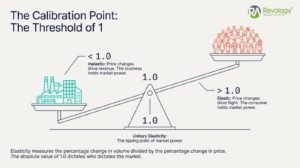
A practical guide for pricing, revenue, and risk leaders on how demand responsiveness shapes price increases, discounting, promotion design, and margin management. What Price Elastic

Discover how to select the most effective pricing approach using practical frameworks, KPIs, real-world examples, and an implementation roadmap tailored for B2B teams. Key takeaway:
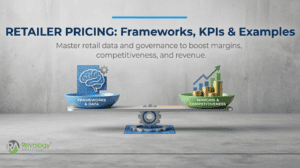
Master retail data and governance to boost margins, competitiveness, and revenue. Many retailers use the traditional cost-plus method: calculate cost, add a markup, and distribute

AI in Pricing: Hype vs. Reality. What Every Pricing Leader Needs to Know Before Investing in AI. March 26, 2026 | 12:00 – 1:00 PM EST | Live Webinar (Zoom)
Many AI pricing strategies fail because teams select a model without first understanding its costs. This guide explains how to develop pricing that protects margins,

Centered on proven best practices, Revology Analytics® provides Revenue Growth Analytics advisory services and thought leadership, driving profitable revenue growth for middle-market companies.
Over 225 companies took our scorecard to improve their Revenue Growth Analytics & Management capabilities.
Copyright@2026 Revology Analytics LLC