
Main Menu

Let's chat.

Have a Revenue Growth Analytics pain point, a question, or a content suggestion?

Advanced Price Elasticity Modeling

What it is

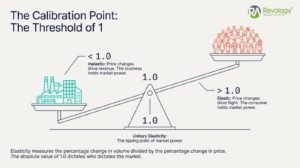
Advanced Price Elasticity Modeling quantifies how sensitive customer demand is to price changes, while accounting for competitor actions, promotions, and other market dynamics. We employ techniques ranging from classical econometric models (e.g. log-log regressions or Elasticity via ElasticNet) to cutting-edge machine learning (e.g. random forest or causal ML approaches) to isolate the impact of price on volume and revenue[20]. In practice, these models answer questions like “If we raise price 5% on Product X, how much volume might we lose?” or “Which competitor’s price drop would steal significant share from us?”[21]. By understanding these demand curves at a granular level, your team can set optimal list prices, discount thresholds, and promotional strategies with far greater confidence.

High-precision price elasticity analysis for revenue optimization.

How It Benefits Clients

Clarity on Pricing Impact

Know exactly how each product, customer segment, or channel will respond to different price points. This clarity empowers data-driven decisions on when to take markups or markdowns, backed by quantified demand responses.

Risk Mitigation

Avoid harmful price moves by quantifying “volume hurdles.” Elasticity models reveal when a price cut would require unrealistic volume gains to break even, or conversely, identify how much volume loss a price increase would likely cause. This helps you set safe boundaries for pricing actions to protect margin.

Competitive Edge

A sophisticated elasticity analysis lets you anticipate competitor reactions and plan defense or offense accordingly. Knowing your own-price and cross-price elasticities means you can predict how a competitor’s price change might affect your sales – and prepare a response in advance.

Holistic Market View

Our modeling doesn’t stop at just “own-price” elasticity. We incorporate cross-price elasticity (how substitutes affect your demand), competitive price index impacts, and even promotional lift factors for a full picture of market dynamics. This holistic approach ensures your pricing strategy considers all major demand drivers, not just your own pricing in isolation.

Our Approach

We build elasticity models in a collaborative and transparent manner so that your organization truly owns the insights:

1
Data Assessment & Planning

We start by examining all relevant data – e.g. transaction sales data, historical pricing and discount records, competitor price tracking, promotional calendars, and market data from retailers or syndicated sources. Based on this, we define the scope of modeling (which product lines, time horizons, competitor set, etc.) and ensure data quality and granularity are sufficient for robust analysis.

2
Co-Created Model Blueprint

Next, we co-develop a modeling blueprint outlining candidate variables, the model methodologies to be used (regression vs. machine learning, or a hybrid), and the specific business questions the model will answer. This step secures stakeholder alignment and buy-in before any heavy analysis begins.

3
Model Development

Using open-source tools (Python, R) or integrated analytics within your BI platform, we build the elasticity models according to the agreed blueprint. We favor transparent, reproducible code so that your analysts can understand and adjust the model over time. Each model is tailored to your data availability and can range from simple regression to complex non-linear ML models as appropriate.

4
Validation & What-If Simulation

We rigorously validate each model’s accuracy against holdout historical data and real-world outcomes. Once validated, we conduct scenario analysis (“what-if” simulations) – for example, modeling the impact on volume and profit if prices were 3% higher or lower – to ensure the model’s predictions are sensible and to help calibrate decision rules.

5
Knowledge Transfer

Finally, we deliver the models along with detailed documentation and hands-on training sessions. Because you own the underlying model code and it runs in your environment, you won’t be dependent on external vendors for updates or ongoing analysis – your team gains the capability to maintain and extend the elasticity modeling in-house.

Recent Insights