
A pharma pricing analytics engine is a governed decision-support system that integrates transaction, contract, channel, market, macroeconomic, regulatory, and competitive data to improve price setting, discount control, gross-to-net visibility, tender planning, price pack architecture, and scenario governance. It is the operating layer that makes pricing decisions reproducible across brands, markets, packs, currencies, and refresh cycles.
Most pharma teams do not lack analytics. They lack a reproducible operating system for pricing. A country team builds a workbook. A regional lead requests a competitive benchmark. A global team asks for a right-to-price view. Each answer sits in a separate file, built on a different product definition, and depends on the analyst who built the current version.
The harder question is whether the company can answer the same pricing question again next cycle across countries, pack configurations, competitors, gross-to-net terms, tender constraints, and regulatory exposure. The one-off pricing workbook is the nemesis. It can be a useful interface. It should not be the engine.
The stakes are rising. Deloitte’s 2025 Life Sciences Outlook reported that 47% of surveyed C-suite executives expected pricing and access to significantly affect strategy, with another 49% expecting a moderate impact. IQVIA’s global medicine use outlook points the same way: access, pricing, loss of exclusivity, generics, biosimilars, innovation, and country mix all shape spending and usage.
This guide explains how a pharma pricing analytics engine works, what belongs inside it, and which signals should govern a price move. The best engines decide which gaps deserve action, which need review, and which should be refused.
Table of Contents
Key Takeaways
• A pharma pricing analytics engine connects pricing strategy to execution through governed rules, models, scenarios, and decision workflow.
• Four core modules sit on one foundation: product equivalence and DDD normalization, right-to-price scoring, price pack architecture, and elasticity-based scenario optimization.
• A price gap is never a recommendation by itself. It becomes one only after it survives equivalence, right-to-price, pack architecture, elasticity, gross-to-net, tender, regulatory, and adoption filters.
• Reproducibility is the multiplier. One product master, one competitor-matching logic, one DDD layer, one elasticity layer, and one governed workflow beat a folder of brilliant one-off workbooks.
What Is a Pharma Pricing Analytics Engine?
A pharma pricing analytics engine is an operating layer that measures price realization, models demand and elasticity, evaluates contracting and discounting, monitors competitive moves, and supports compliant pricing governance. It combines data integration, business rules, statistical models, scenario simulation, and decision workflows for list price, net price, rebate, tender, channel, and price pack architecture decisions.
The distinction from business intelligence matters. A BI dashboard shows that the net price fell three points last quarter. An engine shows which accounts, packs, channels, and concessions drove the drop. It then tests what a corrective move would do to volume, margin, tender posture, and downstream price exposure before anyone takes the action to committee.
The failure most teams face is operational. The company owns many analyses, but it does not own the engine that links them. The workbook becomes the data pipeline, product master, competitor map, price waterfall, model, scenario simulator, audit trail, and committee artifact at once.
Pharma Pricing Analytics Engine Module 1: The Product Equivalence Matrix
Every comparison in pharma pricing rests on one question that is harder than it looks: Are we comparing the same thing? Syndicated market data does not automatically speak the same language as a manufacturer’s internal data. Competitor datasets use different naming conventions, product hierarchies, pack descriptors, form codes, ownership fields, channel definitions, and period logic.
The product equivalence matrix, or PEM, resolves this. It normalizes each SKU to a structured set of attributes: molecule, strength, form, route, pack, release flag, manufacturer, brand family, channel, period, and DDD assignment where appropriate. It then matches its own products to competitor products on that common basis.
Good PEM design runs a repeatable pipeline: normalize descriptors, match to a reference structure, score match quality, enrich downstream attributes, and route exceptions to review. The point is to make matching logic explicit and replayable instead of being maintained by hand in workbook tabs.

In practice: a product equivalence matrix normalizes molecule, strength, form, pack, and DDD so every brand is compared on the same basis (illustrative data).
A well-built PEM also separates the total market from pricing anchors, because those roles answer different questions. The full market is used for size, share, volume, and market development. The analysis set gives a broader competitive context for diagnostics. Pricing anchors are the narrow group of competitors that are relevant for value positioning, DDD comparison, and pricing actions.
Collapsing these roles creates predictable errors. Narrowing the competitor set too aggressively makes a brand look like it holds more share than it does. Include every product as a pricing anchor, and the benchmark becomes commercially meaningless. A pharma pricing analytics engine keeps the three roles distinct, so share questions and pricing questions do not contradict each other.
Price Per DDD and the DDD-Based Competitive Price Index
Pharma pricing comparisons often mislead when they stop at the price per pack. A brand can look aligned on a pack basis and still leak value once you normalize for strength, form, route, and dose. That is why the Defined Daily Dose belongs in the pricing architecture.
The World Health Organization defines DDD as the assumed average maintenance dose per day for a drug used for its main adult indication. WHO also notes that DDD provides a fixed unit of measurement independent of price, currency, package size, and strength.
DDD is not clinical truth. It is not the prescribed dose for an individual patient. It is also not assigned for every medicine or every use case. Used correctly, it gives commercial teams a disciplined normalization layer for therapy-level comparison where DDD is available and methodologically appropriate.
In practice, the pharma pricing analytics engine supports a ladder of comparison bases: price per pack, price per standard unit, strength-adjusted price, and price per DDD. Each basis has a job.

Price per DDD converts pack-level data into a therapy-normalized unit and indexes a brand against its anchor competitors, with a confidence tag on every comparison (illustrative data).
Price per DDD can be calculated as the pack price divided by the number of DDDs in the pack. The DDD-based competitive price index then expresses the brand’s price per DDD relative to the approved anchor set. In practical terms: own price per DDD divided by the anchor statistic, multiplied by 100.
The anchor statistic should be configured and visible. It may be a volume-weighted average, a median, or a top-three anchor view. A price index above 100 signals premium positioning versus the anchor. Below 100 signals potential headroom before other filters are applied.
A brand with two weakly comparable competitor SKUs is not the same as a brand with a clear top-three anchor set. A mature pharma pricing analytics engine tags every comparison as robust, directional, weak, or routed to review.
Pharma Pricing Analytics Engine Module 2: Right-to-Price and Value-Based Positioning
A DDD-based competitive price index can tell you that a brand sits below its competitors. It cannot tell you that the brand has earned the right to close that gap. That is the job of Module 2, which answers a sharper question: what is the brand’s right to price?
Right-to-Price replaces cost-plus habit and naive benchmarking with explicit value-based positioning. It scores a brand’s defensible position, or its Price-Quality-Worth, against the competitive set before any move is sized.
The working tool is a nine-box that plots relative price against relative value or worth. A brand in the high-value, low-relative-price cell may have real headroom. A me-too molecule in a crowded class sitting at parity may not, even when a simple price gap suggests room.
Right-to-Price bands translate that position into a posture: premium, parity, or discount. They also translate it into a direction of travel: increase, maintain, monitor, or hold. That distinction matters. Right-to-Price is a hypothesis to test, not a license to take a price.
The common failure is over-reliance on noisy competitor anchors. A single mispriced or poorly matched competitor can create a gap that value cannot support. Scoring first reorders the decision. The pharma pricing analytics engine establishes whether the brand has the position to hold or raise prices at all.

Right-to-Price nine-blocker scores each brand’s defensible position on value versus relative price, then assigns a band before any move is sized (illustrative data).
Pharma Pricing Analytics Engine Module 3: Price Pack Architecture
Price pack architecture finds leakage that aggregate brand views hide. The issue lives inside the brand family rather than between competitors. Across several cycles, countries apply inflation-linked moves, local tactical adjustments, and regulatory caps. Pack ladders drift.
A 30-count and a 90-count that should hold a clean per-unit relationship may slowly invert. A higher strength can become cheaper per milligram than a lower strength. A base pack can remain too cheap because each annual increase was applied tactually rather than architecturally.
The pharma pricing analytics engine validates the ladder on normalized bases: per standard unit, per milligram or equivalent content, and per DDD where appropriate. It checks whether the SKU family ladder is logical and monotonic. It flags inversions, gaps, and strength distortions by pack size and strength.
The output should be an executable SKU-level instruction, not a brand-level slogan. Which SKU is the reference? Which pack is distorting the ladder? What rule is being applied? How large is the gap? What action restores the ladder without giving value away?

A pack-price architecture ladder validates per-DDD and per-strength relationships, surfacing inversions and gaps against an industry-typical curve (illustrative data).
The architecture logic should avoid a subtle trap. When a larger pack appears under-discounted, the answer is not automatically to make the large pack cheaper. Value may be better preserved by correcting the underpriced base or reference SKU, subject to access, regulation, and elasticity.
A practical PPA module should classify each SKU family into a small number of postures: increase, maintain, monitor, or hold. It should also show why. Pricing leaders do not need every coefficient. They need the rule, the exception, the constraint, and the recommended action.
Pharma Pricing Analytics Engine Module 4: Elasticity and Scenario-Based Optimization
Elasticity is where many pricing workflows go wrong. The issue is often sequencing. In many teams, price elasticity is applied after a competitor gap, right-to-price gap, or pack gap has already become the working recommendation.
Elasticity should govern the recommendation. A move that looks attractive before volume response can produce minimal net improvement after demand erosion. A price-sensitive OTC brand behaves differently from a prescription product with limited switching or a brand with limited competitive response.
Modeling price elasticity well means separating the price signal from other demand drivers. A naive regression can absorb promotion, sales-force activity, distribution changes, competitor moves, channel mix, supply constraints, and seasonality into the price coefficient. The result can look precise and still be unusable.
The engine can use a double machine-learning (DML) approach: model confounders, residualize price and volume against them, then estimate the relationship between residual price and residual volume. That helps isolate price response from observed noise when data variation and assumptions are defensible.

A double machine-learning demand model isolates the price effect from promotion, sales-force, distribution, competitor, and seasonality drivers before an elasticity is trusted.
DML is not magic. It does not solve unobserved confounding, poor price variation, stockouts, unmeasured access changes, or thin history. A pharma pricing analytics engine should label each elasticity value as modeled, imputed, or assumption-entered, then apply acceptance gates before the estimate can drive a recommendation.
For brands with enough history, the engine estimates own-price elasticity directly and adds competitive cross-elasticity assumptions. For thin-data SKUs, it imputes elasticity from a broader reference set. Extreme coefficients should be bounded and routed for review.
Only then should the scenario layer run. It can compare 4%, 6%, 8%, and 10% moves, show the volume offset, net revenue, and margin effect for each, apply price-cap constraints, and mark the point where the recommendation breaks.

An elasticity simulator tests 4-10% moves against own- and cross-price response, with a built-in acceptance gate and a visible breakpoint (illustrative data).
Set drug prices the same way every time
Our free guide shows pharma pricing teams how to build one repeatable way to set prices across countries, brands and pack sizes.
Five Pharma Pricing Analytics Engine Signals That Tell You to Move Price
A pharma pricing analytics engine reads several signals together, and a recommendation survives only when they support the same decision. Five signals matter most.
The first signal is price versus inflation and FX. Has the brand’s realized price kept pace with local CPI, or has real price quietly eroded while the headline number rose? Tracking price change period over period against CPI per SKU separates nominal increases from real ones.

A price-versus-inflation view tracks each SKU’s price change against local CPI, separating real price gains from nominal ones and flagging where price has fallen behind (illustrative data).
The second signal is the DDD-based competitive price index. Where does the brand sit, per DDD, against its approved pricing anchors, and is that comparison robust enough to act on? This signal answers whether the brand is mispositioned versus comparable competitors.
Third is the price pack curve. The engine checks per-pack-size, per-strength, strength-adjusted, and per-DDD relationships to determine where a move belongs. A brand-level increase is too blunt when the leakage sits in one pack, strength, or reference SKU.
Fourth, the right-to-price gap. Does the brand’s value position support the move implied by inflation, competitors, or pack architecture? This filter prevents a benchmark from becoming a recommendation when the brand lacks a defensible worth advantage.
The fifth and final signal is the elasticity gate. Does the modeled demand response leave net margin improvement after volume erosion, gross-to-net retention, and likely competitive reaction? If the answer is no, the engine should recommend maintain, monitor, or hold.
A price gap is not a recommendation. The recommendation is the price action that survives product equivalence, real-price erosion, right-to-price, pack architecture, elasticity, gross-to-net, tender, regulatory, MFN, and adoption filters together.
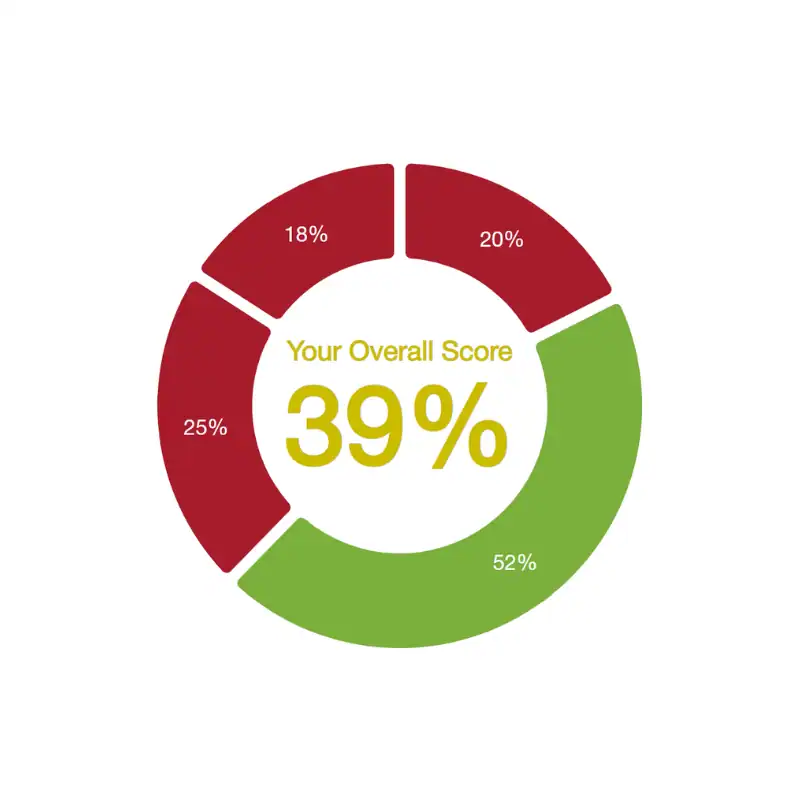
Where does your commercial organization stand? Benchmark your pricing and revenue growth analytics maturity in minutes with our Revenue Growth Analytics Maturity Scorecard, or download the 2025 Revenue Growth Analytics Maturity Report for benchmarks from more than 150 commercial leaders.
Finding Whitespace with a Pharma Pricing Analytics Engine
Pricing is also about finding where value is unclaimed. Whitespace analysis looks across the portfolio and the market for opportunities the brand has not yet pursued.
A practical whitespace module looks for therapeutic segments where competitors are active and the portfolio has limited presence. It flags forms, routes, strengths, release formats, pack sizes, countries, and channels where the company lacks a commercially relevant position.

Whitespace analysis maps each brand’s price-per-DDD position against the market, sizes segment opportunities, and ranks them so a global team prioritizes the moves that matter (illustrative data).
The analysis should not treat competitor presence as proof of opportunity. Some markets are small, supply-constrained, regulatory-heavy, access-limited, or structurally unprofitable. The engine’s role is to identify and size the opportunity, then route it through right-to-win and execution filters.
A pharma pricing analytics engine prioritization screen should include five dimensions: value pool size, right-to-win, data confidence, execution complexity, and timing. A large opportunity with weak access or a binding tender constraint should fall. A smaller opportunity that clears the filters should rise.
This is where pricing and commercial excellence connect. The engine should distinguish price leakage, pack architecture leakage, channel reach, access gaps, and portfolio participation gaps using the same product master and market logic.

The four modules of a pharma pricing analytics engine on one reproducible foundation.
Why Reproducibility Makes a Pharma Pricing Analytics Engine Work
The modules matter, but the engine’s value is that they run on one reproducible foundation rather than as disconnected workbooks. One product master. One competitor-matching logic. One DDD layer. One elasticity layer. One scenario engine. One governed recommendation workflow.
They become most valuable when they run together. DDD-equalized pricing identifies that a brand sits below competitors. Right-to-price confirms whether the brand has the position to support a move. Price pack architecture reveals where the action belongs. Elasticity sizes it, constrains it, or stops it.
Revology installs this by separating the pharma pricing analytics engine from the interface. The engine owns the data contract, transformations, analytical tables, scenario calculations, and output metadata. The interface, whether Excel, BI, or web, owns the user experience.
That separation makes the capability usable. Country teams keep a familiar workflow. Global pricing governs methodology. Regional teams scale the process. Finance can trace assumptions. Pricing committees compare scenarios rather than debate cell logic.
A Worked Example: The Recommendation the Engine Refused to Make
The strongest proof of a pricing engine is sometimes the move it declines.
1. Frame the decision. A global manufacturer reviewed a price-sensitive archetype across several emerging markets, with apparent headroom under simple competitor benchmarking.
2. Normalize the products. The PEM and price-per-DDD layer rebuilt the comparison on a therapy basis, correcting pack-level distortions that had overstated the gap.
3. Score the right to price. Right-to-Price found that the brands lacked a defensible worth advantage in the class.
4. Test the scenarios. The elasticity layer ran candidate increases against own-price and cross-price response. The brands failed the acceptance gate because projected volume loss erased the margin gain.
5. Return the recommendation. The engine returned a no-action recommendation and routed the market to monitor.
That discipline matters. A tool that always finds a price action gets discounted. A tool that can say increase, maintain, monitor, or hold earns trust.
Across the anonymized engagement, the same approach identified value pools in the mid-single-digit to low-double-digit range of in-scope revenue. That is an observed, anonymized range, not a universal uplift promise. Upside varied by market coverage, data quality, elasticity, regulation, and brand architecture.

The engine in one view: pricing posture, recommended actions, and value at stake across a market portfolio (illustrative data).
Go deeper into the methodology. For the full build behind the four modules – product equivalence, DDD-equalized pricing, right-to-price, price pack architecture, and price elasticity – download our PRISM pharma pricing engine whitepaper.
Governance for a Pharma Pricing Analytics Engine
A pharma pricing analytics engine is an operating model, not a software purchase. Three governance commitments make it stick. First, one owner for the product master and equivalence logic. Second, a standing pricing forum where pricing, market access, finance, and commercial leaders review the same engine outputs. Third, a documented decision trail that records the move, evidence, constraints, and final decision.
This is where compliance lives. Global price governance, tender commitments, reference pricing, and most-favored-nation exposure all demand explainability. A price move that looks profitable in one market may create downstream exposure elsewhere if the organization does not model the cascade.
Gross-to-net governance belongs here, too. List price is rarely the full economics. Rebates, discounts, chargebacks, distributor terms, tender concessions, and off-invoice adjustments can change the realized pocket price. A gross-to-net waterfall should sit beside competitor and elasticity views, not after them.
Good governance does not remove human judgment. It puts judgment where it belongs: competitor anchor approval, data-quality exception review, right-to-price interpretation, pack action review, elasticity scenario selection, regulatory feasibility, tender posture, and the final committee decision.
Pharma Pricing Analytics Engine Tradeoffs and Objections
The honest objection is that pharma already owns data platforms, syndicated subscriptions, contract systems, and BI. Why add an engine? Because those systems store and report inputs. They usually do not turn those inputs into reproducible recommendations that pricing, finance, market access, and country teams can defend together.
The second objection is build-versus-buy. The reproducible engine is less about a specific platform than a disciplined design: one product master, one equivalence layer, one elasticity layer, one workflow, and one decision record.
The third objection is local realism and compliance risk. Country teams may cite tender dynamics, supply constraints, pharmacist substitution, MFN exposure, reference-price spillover, or informal channel behavior. That pushback is often valid. The engine should turn those constraints into explicit inputs, flags, and review gates before a recommendation reaches the committee.
Building a Pharma Pricing Analytics Engine in 90 Days
You do not need a year-long platform program to prove a pharma pricing analytics engine. You do need the right scope. In 90 days, the goal should be a governed pilot engine tied to one live decision cycle, not an enterprise-wide replacement of every pricing process.
Weeks 1-3, the product master. Build the equivalence layer first, because every other module depends on it. Assemble molecule, strength, form, route, pack, release flag, channel, period, and DDD assignment into one product master. Reconcile the places where syndicated hierarchy, contract systems, and finance ledgers disagree.
Weeks 4-6, realization and architecture. Stand up the gross-to-net waterfall and the price pack architecture view on the new product master. Decompose net price realization into list, discount, rebate, chargeback, tender, and channel effects. Validate the pack ladder per standard unit, per strength, and per DDD where appropriate.
Weeks 7-9, worth and elasticity. Add right-to-price scoring and the elasticity layer. Score defensible position, estimate own-price elasticity for the largest brands, impute it for the long tail, and wire the result into a scenario simulator with acceptance gates.
Weeks 10-12, governance and the first decision. Connect the engine’s outputs to one live decision: the next list-price review, tender cycle, or pack-architecture correction. Assign a named owner for the product master, the recalibration calendar, and the committee output. The operating rhythm separates an engine that sticks from shelfware.
Frequently Asked Questions
What is a pharma pricing analytics engine?
A pharma pricing analytics engine is a governed decision-support system that combines data, rules, models, scenarios, and workflow across list price, net price, rebates, tenders, channels, and pack architecture.
How is a pharma pricing analytics engine different from a BI dashboard?
A dashboard reports what happened. An engine supports what to do next through rules, models, scenarios, confidence tags, and a reproducible decision workflow.
What does price per DDD mean, and why use it?
Price per DDD expresses price per Defined Daily Dose, a therapy-normalized unit independent of pack size and strength. It supports like-for-like comparison where DDD is available and appropriate.
What is a DDD-based competitive price index?
It is a brand’s price per DDD relative to the approved anchor competitors’ price per DDD. Above 100 signals premium positioning. Below 100 signals potential headroom, subject to confidence and other filters.
How do you model price elasticity for pharma?
By separating the price signal from promotion, sales-force activity, distribution, competitor movement, channel mix, and seasonality. DML can help when data is sufficient, but every estimate should pass confidence, plausibility, and governance gates before it drives a recommendation.
What signals tell you to adjust the price?
The five signals are price versus inflation and FX, the DDD-based competitive price index, the price-pack curve, the right-to-price gap, and the elasticity gate. A move survives only after gross-to-net, tender, regulatory, and MFN checks.
Do you need AI to run a pharma pricing analytics engine?
No. A pharma pricing analytics engine needs a reproducible operating model. Machine learning helps where confounders and scale demand it, but governance, source discipline, product equivalence, and pricing judgment matter more than any algorithm claim.
Diagnostic Checklist and Next Steps
Run the test on your current pricing process. Can you reproduce last quarter’s approved price decision from source data today? Do files agree on what a product is? Can you compare the price to competitors per DDD with a confidence tag? Does elasticity govern a decision before it is made?
Can you separate a real price increase from one inflation absorbed? Can you see which tender concessions changed net price? Can you identify downstream MFN or reference-pricing exposure? A no on any of these questions is where an engine pays for itself.
If you are weighing whether a reproducible engine fits your markets and data, book a pricing & revenue management diagnostic call with Revology Analytics. We install the operating model: equivalence, DDD-equalized pricing, worth scoring, price pack architecture, elasticity, gross-to-net governance, and whitespace, on the data stack you already run, so your teams own the pharma pricing analytics engine rather than only its output.
Further reading: the PRISM pharma pricing engine, our healthcare overview, an anonymized pharma case study, and our advanced price elasticity modeling capability.
Want a second opinion on your pricing?
Tell us what’s going on with your pricing. One of our partners will get back to you the same day or the next.