IV. Minimum Viable Analytics Solution (MVAS) (Weeks 7-16)
Weeks 7-10: MVAS buildout (and Pilot design) – For the Minimum Viable Analytics Solution (MVAS) phase, we did two iterative reviews and feedback sessions two weeks apart. Like the Concept & Design stages, we needed to drive full acceptance in the MVAS stage before piloting the solution and launching it nationally. For the MVAS, we delivered a semi-automated Markdown Price Optimization solution that was ~ 80-90% of full Production grade capability. The missing pieces mainly were automation and infrastructure-related).
Clearance prices were automatically calculated based on product category goals, inventory DOH thresholds, competitor prices, margin thresholds, and sellout thresholds. The MVAS Clearance Price Optimization components were simple, easy to understand, and co-created with Core team stakeholders:
We created a secure Excel file (aka. “Markdown Optimization Matrix”) in Sharepoint that housed key lookup tables for the Clearance Pricing algorithm. It included margin thresholds, discounting curves (discount levels and discount curve shape over N weeks), sellout quantity thresholds, inventory DOH goals, and others. This Excel file was only accessible by select people in the Revenue Management team.
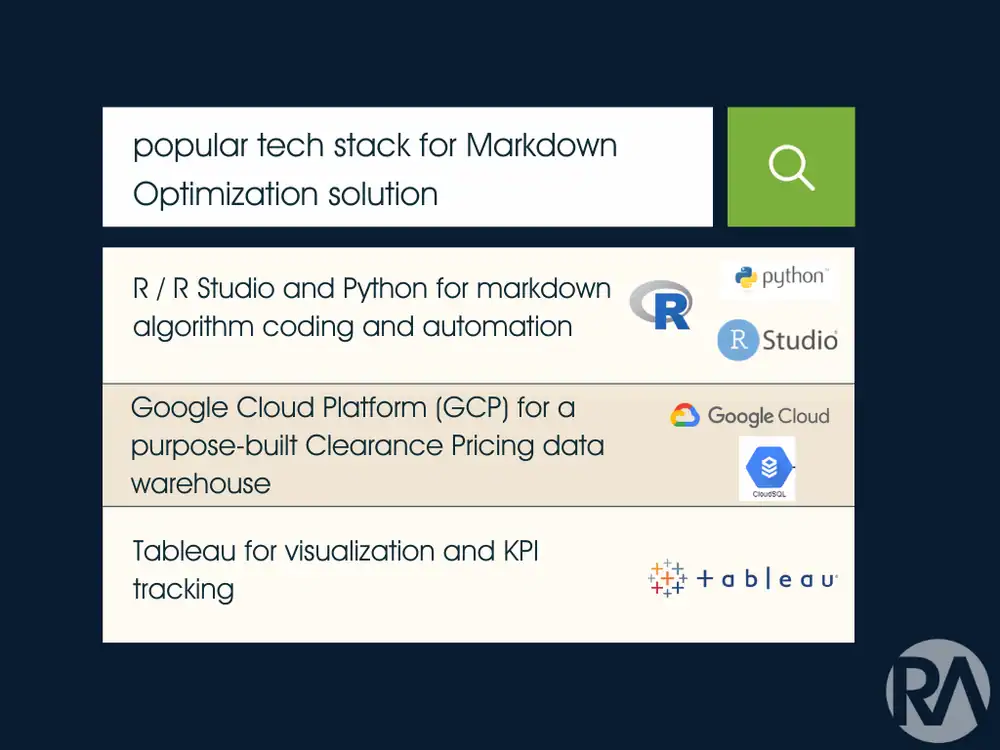
The Clearance Pricing algorithm was written in R, ingesting the “Markdown Optimization Matrix” along with relevant raw data from existing Oracle and MS SQL Server data warehouses. The R script was housed on GCP and ran each Thursday night automatically via a Cron Job.
The clearance pricing algorithm ingested Optimal Clearance Prices into a Cloud SQL database. A separate process created an Excel sheet on Sharepoint (for crucial product categories only) to be reviewed by the Regional Pricing Managers each Friday morning.
The Regional Pricing Managers uploaded the reviewed Clearance Prices into the Oracle Pricing Engine. Clearance prices for smaller product categories (99% of the items but ~ 50% of the revenue) were automatically ingested into the Oracle Pricing engine with no manual intervention or review.
Weeks 11-16: In-Market Pilot – Once finished with the MVAS build, we conducted a 6-week A/B price test in four different markets. Each Market consisted of Test and Control Distribution Centers (DCs) with similar seasonality and sales patterns. Test DCs were those that received automated clearance prices, and control DCs were those that still relied on manual Clearance prices.
During the pilot, our Markdown Optimization algorithms ran each week automatically, with discounted price recommendations integrated into the central pricing engine in Oracle. We also incorporated a manual review option for each Pricing Manager as needed.
A 6-week pilot showed the Test DCs outperforming the Control DCs in Unproductive Inventory performance by ~ +40% in Gross Profit $ and ~ +70% in Sales $.
V. Launch (Week 16+)
After our MVAS pilot, we convened the stakeholders for a post-mortem where we made another round of adjustments to the Markdown algorithm and added additional inventory categories to our scope.
We finalized the data flow with IT between the Pricing Engine in Oracle to our purpose-built Clearance Pricing data warehouse in Google Cloud SQL, and finally back to Oracle for Pricing Execution. As with most dynamic and automated Pricing solutions, a capable internal IT team can make all the difference to timelines and eventual outcomes.
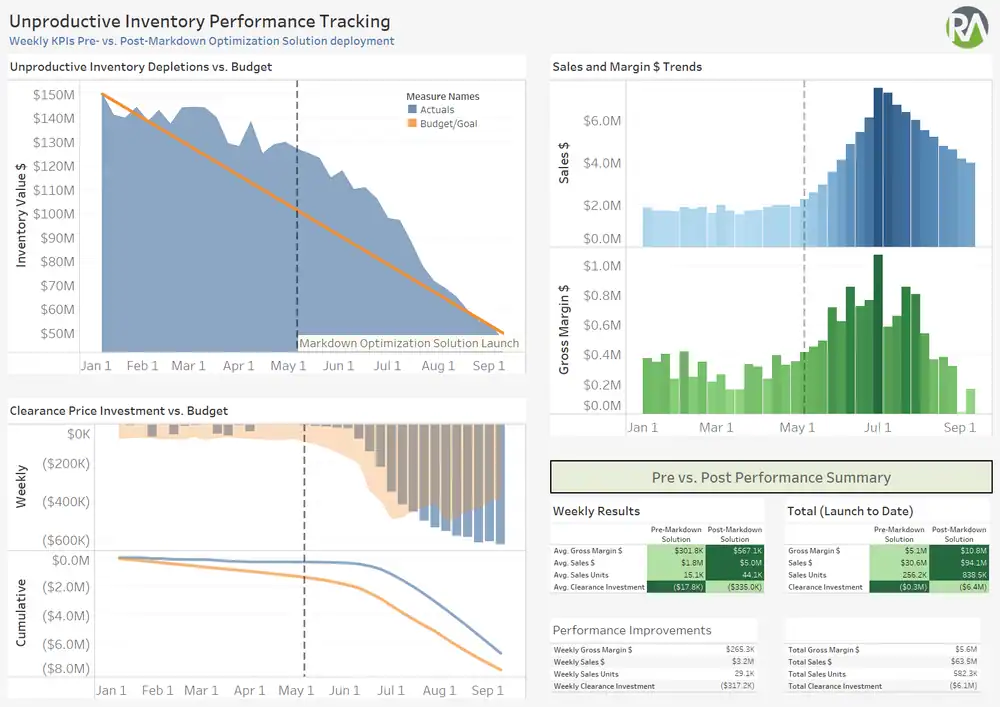
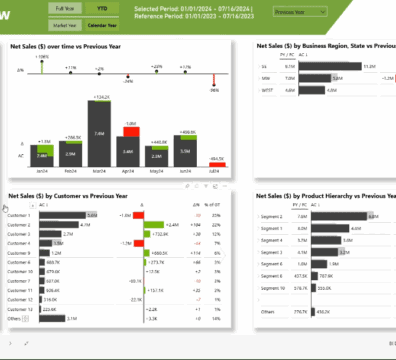
We launched our Clearance Markdown Solution nationwide across 120 Distribution Centers after just four months of project commencement. To ensure value realization and sustainment, we deployed a Tableau Online dashboard for all key stakeholders where they could track progress and critical KPIs.
VI. Assess
Ninety days after our national launch, we evaluated business outcomes and conducted another post-mortem with key Stakeholders.
We typically use this engagement phase to ensure that our Pricing or Sales Growth Analytics solution delivers on the initially outlined outcomes. Based on a 90-day post-mortem, we adjust the process or underlying algorithm as needed.
Provisions
Revology Analytics ensured that we seamlessly handed off the Markdown Optimization Solution to IT with the ability to maintain and improve over time. It created significant long-term savings for the Company by not having to spend on expensive vendor support.
As part of our final project deliverables, we shared a detailed Clearance Pricing architecture in Powerpoint that explained everything from Data Architecture to the underlying Clearance algorithm. It ensured that Company staff could go back and modify things very quickly. Additionally, we cross-trained an internal Data Scientist to become the Solution owner (updated underlying Price Elasticities once a quarter, re-wrote the parts of the Solution in Python, etc.).
We also created a transparent Clearance Pricing Guideline for the Commercial team to use and share with Customers if needed. This Pricing Guideline was updated weekly with new prices and explained clearly how various clearance discounts were set by Product and Customer category. It helped the Sales team tremendously since they could see how they could drive better outcomes through previously unproductive inventory. It enabled them to generate higher Sales and Gross Profits $ and ultimately increased bonuses.